


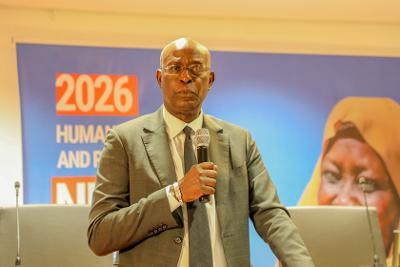
The United Nations, UN has reaffirmed continuous commitment to supporting Nigeria’s life-saving actions, defend humanitarian principles and place protection at the centre of its work.
The UN Resident and Humanitarian Coordinator in Nigeria, Mohammed Fall, stated this at the launch of the 2026 Humanitarian Needs and Response Plan (HNRP) in Abuja, Nigeria.
The launch of the 2026 HNRP underscored the need for coordinated action to save and protect lives through humanitarian action led by the Nigerian government, supported by national organisations and international partners.
The UN Resident Coordinator, explained that the 2026 humanitarian response plan focuses on Borno, Adamawa and Yobe states, while alternative response models are being explored for the North-West, North-Central and other parts of the country.
“As humanitarian partner, our focus will be on strengthening capacity of our national partner in coordination, planning, financing, and delivering humanitarian assistance. the UN’s role would increasingly focus on strengthening national capacity in coordination, planning, financing and service delivery,” he said.
Strong Collaboration
While calling for a decisive shift toward a nationally led and locally driven response, Fall stressed that progress depends on strong collaboration with Nigerian authorities and sustained donor support.
“We gather here today with purpose, The moments that we are today here matter to all of us. Nigeria’s humanitarian needs are rising. We will uphold the promise of leaving no one behind. We will invest in systems, strengthen partnerships and continue to mobilise resources. I call on governments to increase domestic financing, on states to strengthen coordination, on national organisations to lead with courage, and on donors to continue supporting the Nigeria Humanitarian Fund”, he said.
He noted that the approach is anchored on humanitarian, development and peace-building principles, drawing lessons from more than a decade of humanitarian operations in Nigeria.
“The plan we are launching today aims to reach 2.5 million people, down from 3.6 million in 2025, with life-saving assistance at a cost of $560 million. “This reflects a focus on the most life-saving activities and a sharp drop in the resources projected for 2026″, he explained.
According to him, the next phase of humanitarian action must be led by Nigerians.
“Business as usual is no longer an option, the era of internationally financed, internationally delivered and internationally led humanitarian assistance is ending in Nigeria.The next phase belongs to Nigeria. It belongs to national institutions, to state authorities, to civil society and to communities themselves, the transition to a nationally led and nationally resourced response is at the core of the 2026 plan”, he said.
Fall commended the Federal Government, particularly the Ministry of Humanitarian Affairs, for strengthening collaboration with humanitarian partners and increasing domestic resource mobilisation.
“Government leadership and investment are critical for a successful transition. Nigeria is a country which is rich in resources, but which is also rich in capacity. Federal and State governments are showcasing leadership at national level, and community-based organisations are working at the centre of the humanitarian response”, he added.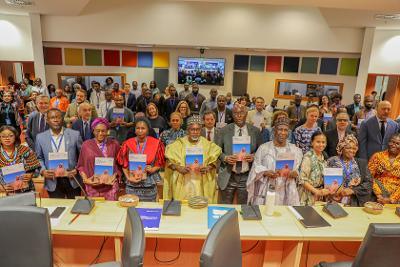
For his part, Nigeria’s Minister of Humanitarian Affairs and Poverty Reduction, Dr. Bernard Doro, reaffirmed the Nigerian Government’s leadership and ownership of humanitarian coordination and response.
“The Government would continue to provide policy direction, coordination leadership, and systems alignment ensuring that humanitarian efforts complement broader national reforms aimed at reducing poverty, strengthening human capital, and building resilient communities”, he said.
Dr. Doro, represented by the Minister of State for Humanitarian Affairs and Poverty Reduction, Dr Yusuf Tanko, noted that, over the years, humanitarian action has played a vital role in mitigating the impact of conflict, climate shocks, displacement and food security, particularly in Borno, Adamawa and Yobe.
He emphasised the need to adopt all the model that has been practiced to get a result in the North West.
“This effort has provided life-saving support to millions of Nigerians. However, under the New Hope Agenda of President Bola Tinubu, it is clear that humanitarian response must not remain as an end to itself. Humanitarian action must serve as a bridge supporting stabilisation, restoring dignity, and enabling households and communities to move permanently out of vulnerability and poverty,” he emphasised.
According to him, the 2026 HNRP, represents an important shift, reflecting a shared commitment to move from repeated emergency response towards prevention, resilience, recovery, and sustainable solution in alignment with national priorities and development objectives.
“Humanitarian intervention must be aligned with national policies, strengthening government systems at Federal, State, and Local Government levels, and contribute directly to poverty reduction, social protection, and inclusive growth”, he said.
In their messages, the Governors of the BAY states – Professor Babagana Zulum of Borno state, Ahmadu Umaru Fintiri of Adamawa state and Mai Mala Buni of Yobe reiterated their commitment to strengthen collaboration with humanitarian partners to deliver urgent assistance and advance durable solutions.
The launch of the 2026 Humanitarian Needs and Response Plan,(HNRP), underscored the need for coordinated action to save and protect lives through humanitarian action led by the Nigerian government, supported by national organisations and international partners.