


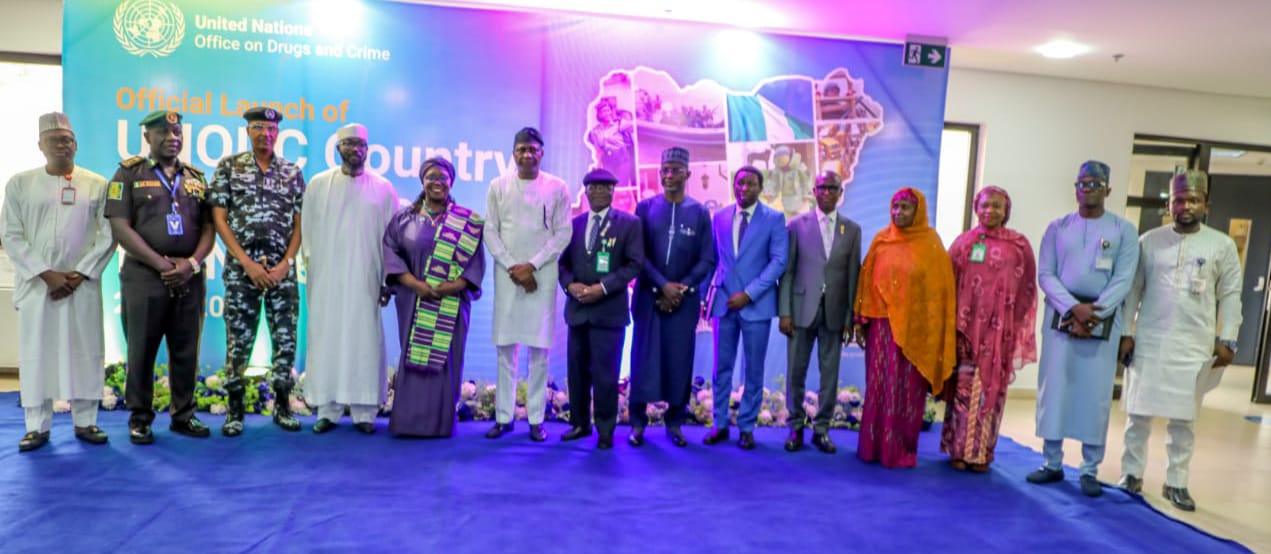
The United Nations Office on Drugs and Crime (UNODC) has launched a five-year Country Programme for Nigeria, aimed at strengthening criminal justice, countering organised crime, promoting public health, and reinforcing the rule of law.
The programme, covering 2026–2030, will further strengthen security, justice, and development.
Speaking at the launch in Abuja, Nigeria’s capital, the UNODC Country Representative to Nigeria, Cheikh Toure, described the initiative as a comprehensive and integrated framework designed to address the country’s most pressing security and development challenges.
Toure stressed that peace, justice, and development in Nigeria must be pursued together as one integrated agenda.
“The programme supports Nigeria’s efforts to prevent and counter terrorism, in ways that are effective and firmly grounded in the rule of law and human rights, it addresses organised crime in all its forms, from trafficking in persons and smuggling of migrants to maritime, cyber and environmental crime, recognising their impact on security, livelihoods, ecosystems and economic stability,” he said.
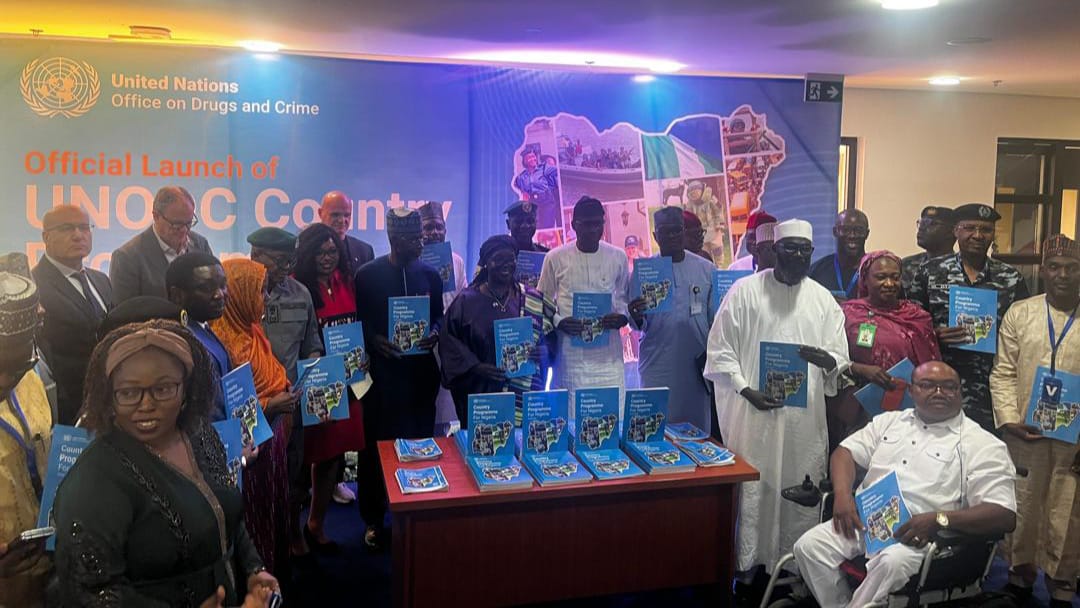
Toure emphasised Nigeria’s pivotal role on the global stage, noting that the country’s size, population, and economic influence place it at a defining moment in its history.
According to Toure, the newly launched programme is UNODC’s most comprehensive strategy for Nigeria to date, built on decades of collaboration and extensive consultations.
“The Programme reflects a simple but powerful idea: sustainable security and development must be addressed holistically,” he noted.
Toure also highlighted the importance of partnerships, commending the Nigerian Government, key institutions, and international development partners for their support.
He further called for sustained political commitment and increased domestic resource allocation to ensure the programme’s success.
“Every dollar invested in this Programme is a dollar invested in Nigeria’s stability, institutions and people. With the greatest respect, allow me therefore to advocate clearly: for strong political commitment and for the progressive allocation of domestic resources,” he urged.
Also speaking, the Chairman of the National Drug Law Enforcement Agency (NDLEA), Buba Marwa, explained that drug abuse and trafficking in Nigeria is evolving into a serious public health and national security crisis.
Marwa therefore called for a coordinated, multi-sectoral response to addressing the challenge.
He outlined a new strategy addressing the growing complexity of drug challenges, expanding focus from enforcement to prevention, counselling, and rehabilitation.
Murwa added that the programme, aligned with Nigeria’s priorities to implement data-driven interventions, strengthen institutional integrity, and adopt gender-sensitive approaches that recognise the unique vulnerabilities and roles of women in the drug landscape.
The Inspector-General of Police, IGP Olatunji Rilwan Disu, reaffirmed the commitment of the Nigeria Police Force to the programme’s objectives.
Disu said; “Security is a collective responsibility, Nigeria Police remains committed to combating transnational organized crime, cybercrime and terrorism.”
On her part, the Director-General, National Agency for the Prohibition of Trafficking in Persons (NAPTIP), Binta Adamu Bello underscored the importance of collaboration in combating human trafficking and related crimes.
Bello further reaffirmed NAPTIP’s commitment to ensuring the successful implementation of the initiative.
“As we embark on this new chapter, I reaffirm NAPTIP’s commitment to working hand in hand with all stakeholders,” she said.
The UNODC Country Programme for Nigeria (2026–2030) is expected to enhance institutional capacity, promote accountability, and foster safer communities across the country through coordinated national and international efforts.