

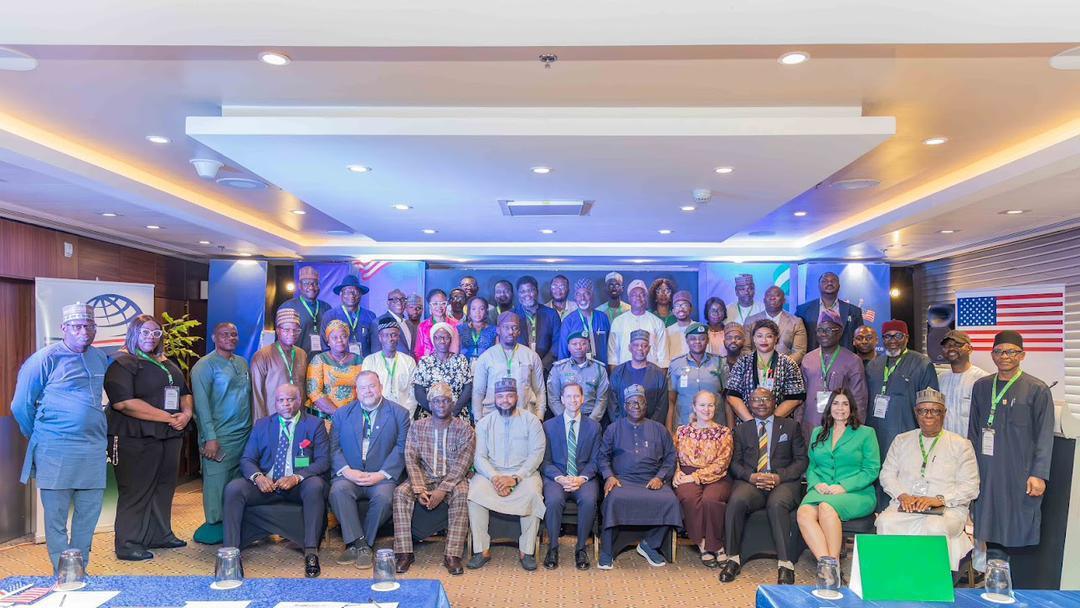
The U.S. Mission’s Foreign Agricultural Service (FAS), in partnership with the Nigerian-American Chamber of Commerce (NACC) Kaduna Chapter and the Nigeria Agribusiness Group (NABG), has convened a roundtable engagement to chart a new course for advancing innovative agricultural trade policies.
The initiative seeks to promote food security, attract investment, boost value-added processing, and strengthen trade between Nigeria and the United States.
Discussions at the forum focused on the impact of Nigeria’s agricultural trade restrictions on food prices, local production, and investment.
Chairman of the NACC Kaduna Chapter, Matthew Obogbaimhe, explained that the roundtable was organised to examine trade policies and restrictions on certain commodities produced in Nigeria, and to assess the implications of halting exports of produce critical to local consumption.
Obogbaimhe stressed the need for innovation and investment to ensure Nigeria’s agricultural sector meets global standards.
He said; “This engagement is essentially meeting to rub minds together to look at innovative approaches to the development of agriculture and how you can encourage growth in that sector here in Nigeria, and looking at various forms of the innovative capacity, to help deepen the resource in the agricultural sector.
“Revitalizing Nigeria’s agricultural sector requires more than trade restrictions; it demands innovation, sustainable practices, and investment in infrastructure. This vision is why the Nigerian-American Chamber of Commerce chose to partner with FAS to drive agricultural innovation and trade across Africa.”
Experts at the meeting presented examples of innovative agricultural trade approaches successfully applied in other countries which could be adapted to Nigeria to promote economic growth and food security.
Read Also: Nigeria Reaffirms Commitment to Ocean Stewardship, Security
The Agricultural Counsellor for the FAS office in Lagos, Mr Christopher Bielecki, described the forum as an opportunity to exchange ideas.
“The roundtable provided a unique platform to exchange ideas and explore innovative agricultural trade policies that benefit the consumers and farmers from Nigeria and the United States. By fostering dialogue, we discussed innovative solutions to strengthen agricultural trade, reduce costs for agribusinesses and consumers, and drive prosperity for American and Nigerian farmer,” Bielecki said.
Director-General of the NABG, Jafar Umar, noted that dialogue and partnership were key to achieving positive results.
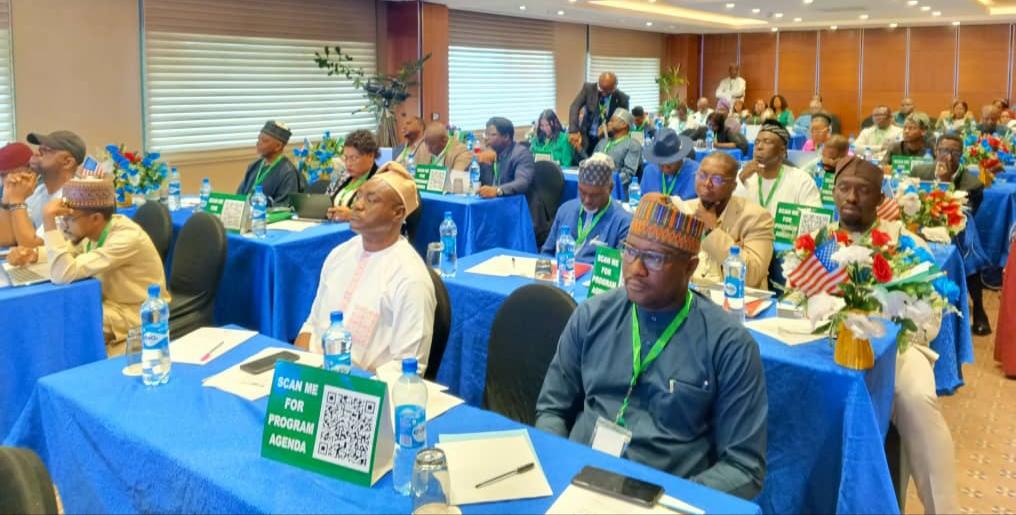
“As the leading voice of agribusiness in Nigeria, we believe this roundtable is both timely and highly relevant to the national discourse on advancing trade and strengthening food security. We are happy to partner with FAS on this important initiative, and we look forward to deepening our collaboration through many more impactful engagements in the future,” Umar explained.
Similarly, NABG President Kabir Ibrahim highlighted the growing importance of agribusiness to Nigeria’s economy.
“Nigeria’s agribusiness is fast growing, contributing 23 percent to the nation’s GDP, yet agricultural exports remain less than 20 percent of total exports, highlighting a vast untapped opportunity, hence the partnership with American people is critical. We are getting together with the USDA to promote agribusiness or agri-trade that will be symbiotic between Nigeria and the United States of America.
“We want to be able to harness those things that we can export, not necessarily in their raw form, but value-added to the United States, and then to buy what we probably have some weaknesses in from the United States into Nigeria, so that the agricultural ecosystem will be balanced, so that people like you will not be complaining about your inability to afford food,” he said.
The event also featured the presentation of Nigerian-led research, conducted with the National Institute for Policy and Strategic Studies (NIPSS), assessing the effects of agricultural trade restrictions.
Key findings revealed that such restrictions have led to “increasing food prices for consumers, shifting trade to informal channels which reduce government revenues and decrease food safety oversight, and a lack of regulatory clarity for Nigerian agribusinesses engaged in trade.”
The study recommended “adjusting trade restrictions to ensure long-term stability of food prices and raw material availability.”
Case studies of innovative trade mechanisms, including tariff rate quotas and private-sector-led export trading systems, were also presented as models for Nigeria.
The FAS Lagos office expressed its commitment to continue collaborating with the Nigerian government and agribusiness stakeholders to implement the recommendations from the roundtable.
With the theme “Innovative Approaches to Agricultural Trade for Economic Growth and Food Security,” the event was attended by trade policy advisers, legislators, agribusiness leaders, researchers, regulators, and U.S. agricultural trade associations.