

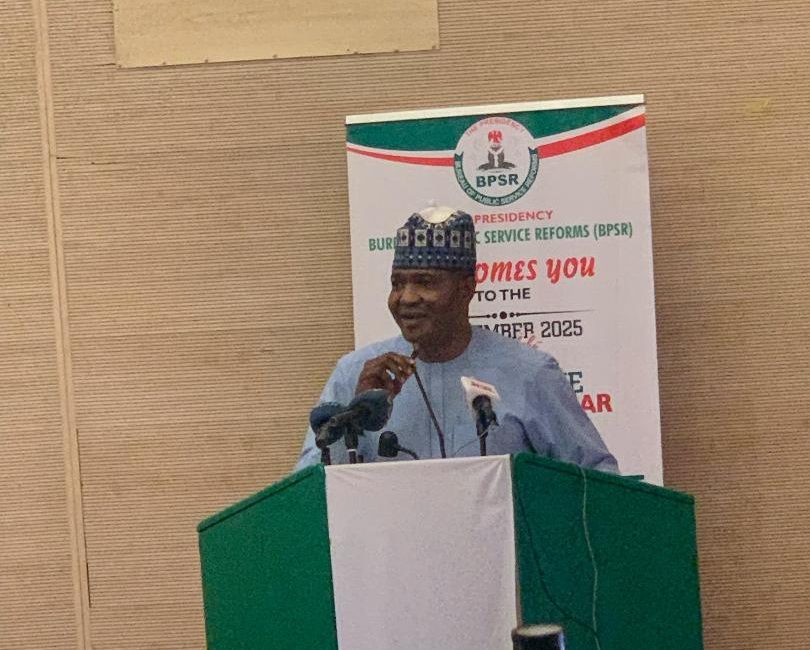
The Director General of Voice of Nigeria, Mallam Jibrin Baba Ndace, has underscored the critical role media literacy plays in addressing the challenge of fake news, misinformation and disinformation.
The DG disclosed this when he delivered a lecture at the September 2025 Edition of the Bureau of Public Service Reforms BPSR Lunch Time Seminar on “National Rebirth in the Digital Era” in Abuja, Nigeria’s capital.
The lecture with the theme: “National Rebirth in the Digital Era: Navigating the Information Conundrum-Challenges, Strategies and Best Practices for Effective Information Management in the Age of Social Media” highlighted some of the challenges encountered in the information space and recommended strategies for effective information management.
According to the DG:
“The age of social media is here. We must understand that we are in a changing environment. And the public service must embrace that. And in doing that, it’s a collective responsibility.”
“And the need for us to embrace media literacy, so that we understand when news is fake, what is disinformation, what is misinformation, what is outright lies.
“And then we must understand how we conduct ourselves as individuals within various social media spaces. Including WhatsApp, Facebook, Twitter, TikTok, and Instagram.
“Without media literacy, public officials are vulnerable to fake news, misinformation and disinformation. In this area that we are in, you need to empower yourself as a manager at whatever level. You must understand the content that you take in and how you are going to respond to it.”
The DG called on Nigerians to follow public media institutions as they are critical in propagating policies and programmes of government.
According to him, “we must also understand that public media institutions, Voice of Nigeria, NTA, FRCN, and News Agency of Nigeria, are all public media institutions funded by taxpayers’ money. So you don’t ignore them. You should also let them be part of whatever you are doing so that they can help in propagating policies and programmes of government.”
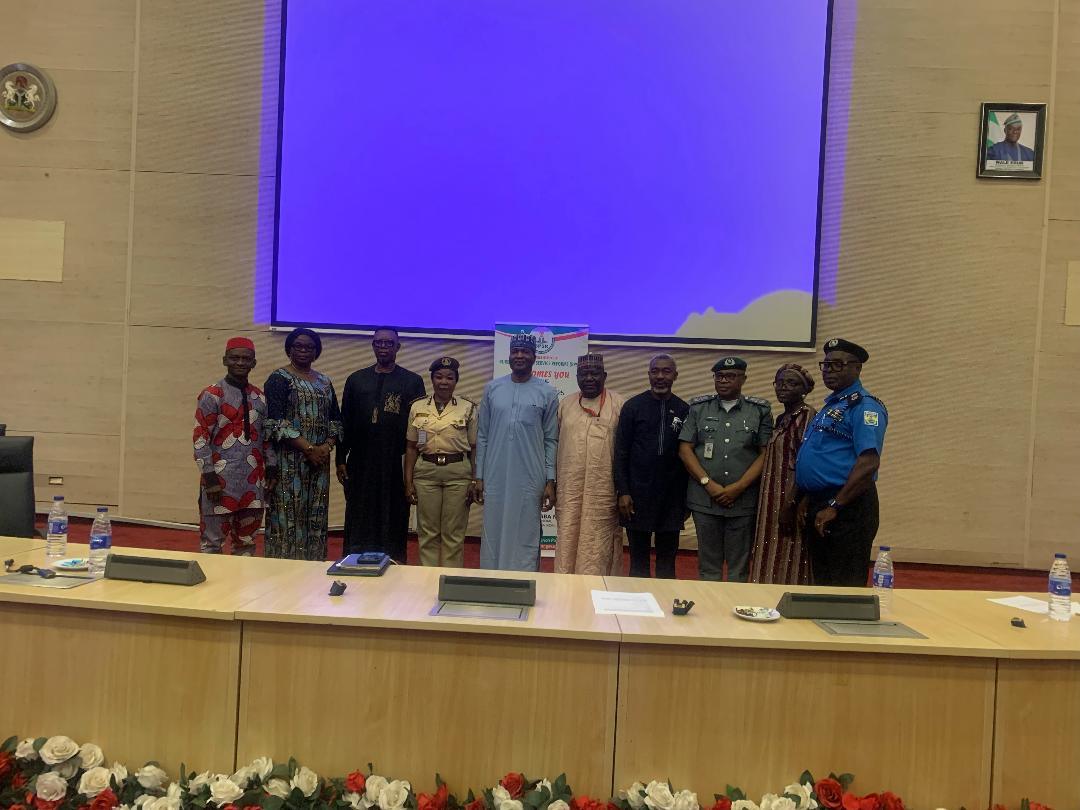
The DG further encouraged Nigerians to promote the country where necessary and shy away from criticising the country at every given opportunity.
“We are not saying Nigeria is perfect. But we are saying that a lot is happening both in the public service and in other sectors of Nigeria. Nigerians are doing well at home and abroad.
“We must celebrate that. We must not allow ourselves to be used as an instrument of denigrating and bringing down our country. We must own our country.”
Information Management
In his opening remarks, the DG of BPSR, Dasuki Arabi, highlighted the urgent need to improve information management in the public service.
According to him, “Effective information management goes beyond record keeping. It is about ensuring that data and communication are accurate, timely, consistent, and accessible.
“This is critical in building trust between government and citizens. Recent events in other parts of the world are calling on all of us to provide up-to-date information and to keep engaging agencies that are almost the majority in number in this country. This event is focused and is coming up in line with the recent directive of His Excellency President Bola Ahmed Tinubu GCFR to government officials, which emphasises responsible communication, fact-based reporting, and avoiding contradictory or misleading information.”
The BPSR DG further highlighted his organisation’s efforts in strengthening information reforms across the public service.
“We have developed a communication strategy that is geared towards promoting accountability and responsible use of information across ministries, departments, and agencies of government. The National Strategy of Public Service Reforms highlights ICT adoption, open government, and citizen engagement as key priorities. We have also provided frameworks for proactive disclosure of information in line with the Freedom of Information Act and the continuation to build trust of citizens, ministries, departments, and agencies of government.”