
 to reinvigorate diplomacy as the primary and)
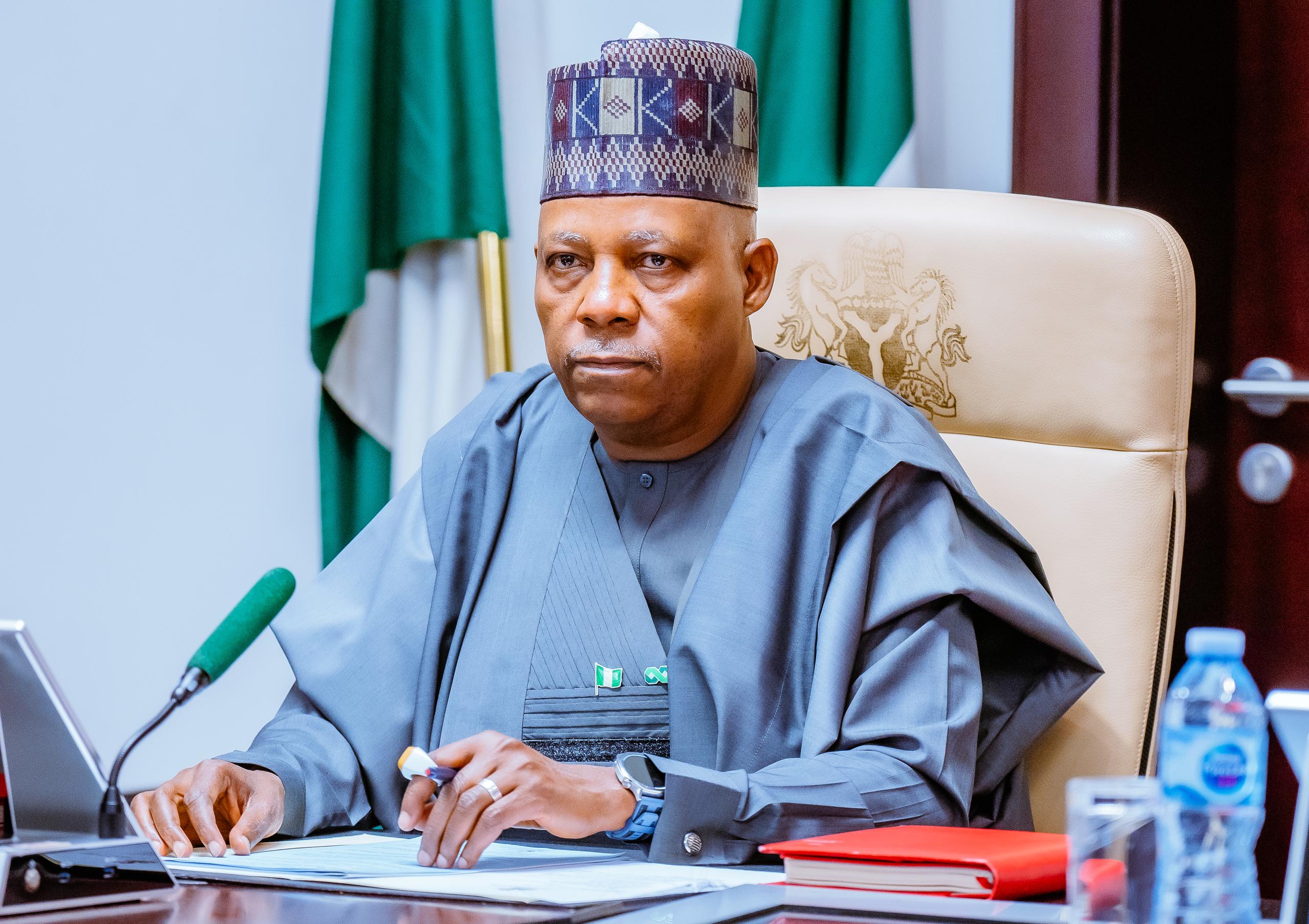
Vice President Kashim Shettima has implored the African Union (AU) to reinvigorate diplomacy as the primary and most effective means of conflict resolution on the African continent.
The Vice President made the call during a meeting of the AU Peace and Security Council at the level of Heads of State and Government, where he represented President Bola Tinubu.
The meeting was held on the sidelines of the 80th Session of the United Nations General Assembly (UNGA) in New York, United States.
He acknowledged the role played by the AU’s Peace Support Operations (PSOs), a unit designed to maintain, monitor, and build peace in Africa through peacekeeping and peace enforcement missions, observing, however, that the operation comes at a huge financial cost.
VP Shettima noted that with the current UN administration and growing interest by traditional partners in conflicts outside the African continent, it was becoming increasingly difficult for countries to shoulder the total cost of peace support operations on the continent.
He said, “Our continent must continue to maintain a diplomatic approach in its conflict prevention and resolution endeavours. Against this backdrop, we urge the Council to ensure that the concept of future peace operations, particularly those mandated by the UN, includes diplomatic and political strategies that ultimately address the root causes of conflict.
”We also urge the Council to ensure that the existing strategies for future AU PSOs include elements that would ensure that national and local institutions can effectively anticipate and manage shocks and relax tensions.”
The Vice President said this is the only way the continent’s peace support operations can leave behind resilient and self-sustaining infrastructure wherever they find themselves.
”We further wish to underscore the current practice of proliferation of numerous peace initiatives on our continent, which counter AU’s prevention and resolution processes,” he added.
Interference
VP Shettima warned that external interference in crises on the African continent, including the presence of foreign military forces, mercenaries and defence contractors in some member states of the AU, negates the spirit of African common defence and security policy.
Maintaining that meddling in crises on the continent is contrary to the African Conflict Prevention and Resolution Initiatives, the Vice President called on the Council to consider adopting a communique to address the loopholes in conflict resolution.
READ ALSO: Nigeria Devoted To Security In Gulf Of Guinea – VP Shettima
Accordingly, VP Shettima urged the council to consider the call for the immediate and unconditional withdrawal of foreign forces from member countries.
He also told the Council, “to expeditiously address obstacles to the operationalisation of the African Standby Force as well as adopt a strategy for the deployment of the African Standby Force in situations of conflict on the continent.”
Constant Engagement
The Vice President noted that the council would be more successful if it regularly coordinates, consults and strategically engages similar structures or mechanisms of regional economic communities.
”It’s our view that conflict prevention and resolution on the continent is a matter of solidarity, and working in silos should be avoided completely. The AU has adequate mechanisms for the prevention of the ever-changing conflict and crisis dynamics on our continent,” the Vice President stated.
Earlier, Mr Parfait Onanga-Anyanga, Special Representative of the Secretary-General to the African Union and Head of the United Nations Office to the African Union, who decried the surge in armed conflicts and dwindling funding for peace interventions on the continent, urged member countries to establish their own national peace-building and conflict prevention mechanisms.
”Prevention, indeed, must start at home and must be consistent with the United Nations Charter. Regional organisations such as the African Union, of course, regional economic commissions and regional mechanisms have a key role to play in this regard,” Onanga-Anyanga noted.