


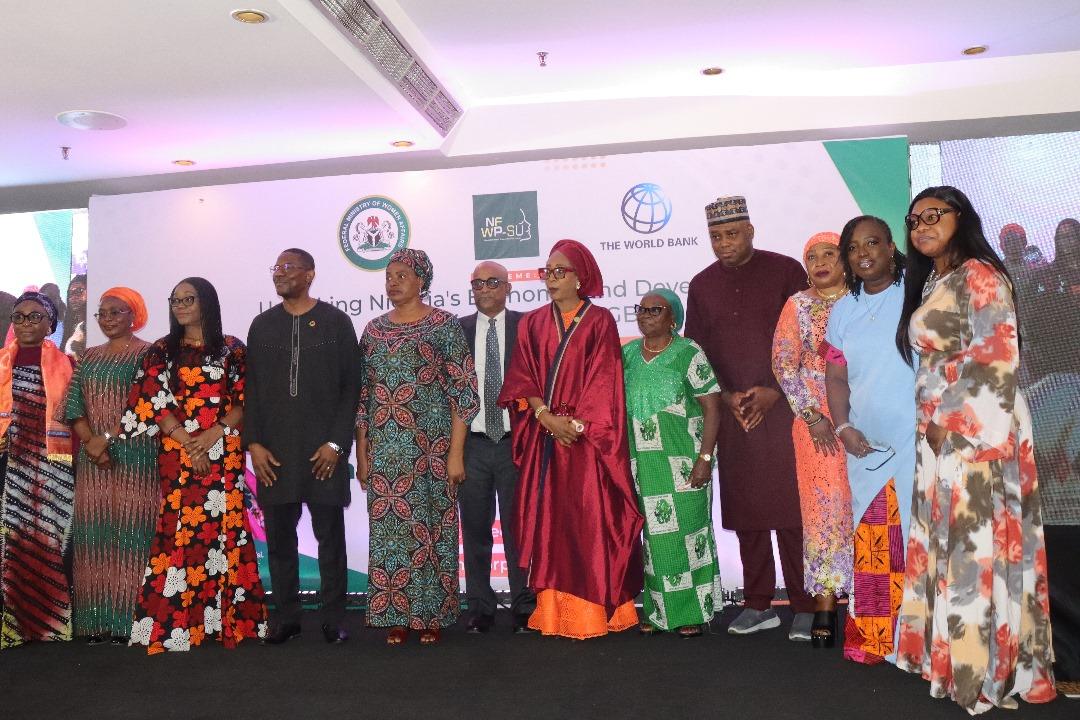
The Ministry of Women Affairs has called for faster prosecution of gender-based violence cases and strict adherence to standardised response protocols by all security agencies to strengthen justice for survivors in Nigeria.
The Minister of Women Affairs and Social Development, Hajiya Imaan Sulaiman-Ibrahim made the call in Abuja at the National Dialogue on Ending Gender-Based Violence organised in collaboration with World Bank Group Nigeria.
Represented by the Permanent Secretary, Mrs Esuabana Asanye, the minister said improving data and reporting systems, including strengthening the National GBV Data Situation Room, is critical to ensuring accountability and coordinated action nationwide.
She said the 2025 edition of the 16 Days of Activism, renewed national attention on the escalating threats faced by women and girls, particularly in digital spaces.
She highlighted alarming global figures, stating that over 830 million women have suffered intimate partner violence, while 250 million have faced sexual violence from non-partners.
She explained that one in every three women worldwide will experience violence in her lifetime.
According to her, Nigeria mirrors this reality, with 31 percent of women aged 15 to 49 having experienced physical violence, and one in four girls surviving sexual abuse before adulthood.
She described these girls as children who never had the chance to grow without fear, carrying physical, emotional, and psychological scars into adulthood.
The Minister warned that the nation loses trillions of naira annually to gender-based violence—funds that could build schools, equip hospitals, and create jobs.
She also noted that digital violence has risen by over 45 percent in the last four years, exposing girls to cyberbullying, blackmail, and humiliation that remain permanently online.
She said the Ministry, under President Bola Ahmed Tinubu’s Renewed Hope Agenda, is adopting a coordinated, evidence-driven response through improved laws, survivor support services, and expanded access to justice.
The Minister reported major progress in legal reforms, including the domestication of the Violence Against Persons Prohibition Act in 35 states and the FCT, as well as near-universal adoption of the Child Rights Act.
She explained that survivor assistance is expanding under initiatives such as the ProtectHer and Health Safeguard programmes, which provide medical, legal, and psychosocial support in safe, dignified spaces.
The Minister also emphasised the need to empower traditional rulers, religious leaders, and community groups to champion anti-violence campaigns at the grassroots.
She further called for stronger action against technology-facilitated abuse, including stricter penalties for cyberbullying, digital blackmail, and online exploitation.
According to her, expanding women-focused financing, supporting women-owned businesses, and providing economic reintegration programmes for survivors remain key to long-term protection.
The World Bank Country Director for Nigeria, Mr Mathew Verghis, said gender-based violence remains a binding constraint to development in Nigeria, warning that it erodes human capital, weakens productivity, undermines girls’ and women’s education, and strains health and justice systems.
Verghis noted that the Bank’s new Gender Strategy (2024–2030) places ending GBV as a core priority, following global evidence that violence is the most egregious manifestation of gender inequality and a threat to development.
He said that Nigeria is one of 16 fast-track countries implementing an integrated public and private sector approach, including legal reforms, survivor-centred response services, community prevention programmes, and anti-harassment mechanisms in schools and workplaces.
Also speaking, the Senior Social Development Specialist with the World Bank, Mr Michael Ilesanmi, noted that countries lose up to four percent of their GDP to gender-based violence.
He emphasised that economic empowerment, strengthened social norms, and the involvement of men and boys are essential to achieving lasting change in Nigeria.