

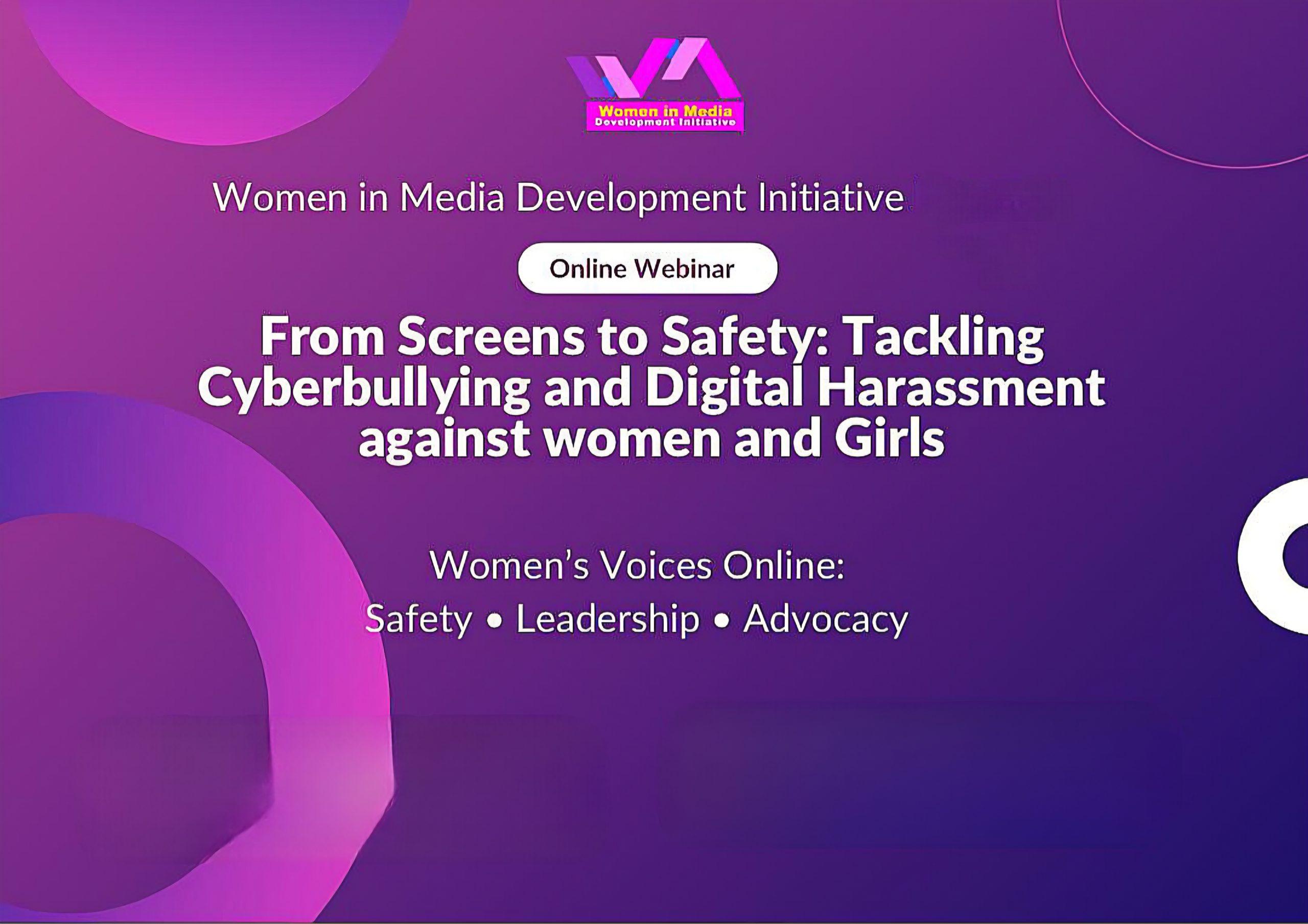
The Women in Media Development Initiative (WIMDI) has called for strengthened digital safety frameworks and enhanced protection of women’s agency within Nigeria’s media landscape.
This was the focus of a virtual webinar titled “From Screens to Safety: Tackling Cyberbullying and Digital Harassment Against Women and Girls,” held as part of WIMDI’s activities for the 2025 global 16 Days of Activism Against Gender-Based Violence.
The session sought to raise awareness on rising cases of online abuse targeting women, particularly female journalists, while equipping participants with digital security skills, promoting responsible online engagement, and amplifying women’s leadership in digital spaces.
Digital Safety
Speaking on “Personal Safety, Content Boundaries & Digital Discipline,” Digital Creator and Media Enthusiast, Esther Ilesanmi, highlighted the far-reaching consequences of cyberbullying, including emotional distress, depression, loss of confidence, sextortion, and public withdrawal.
She urged women to be intentional about online boundaries, saying, “Your personal life is not public property. Share what builds your brand, not what drains your emotions.”
Ilesanmi encouraged women to resist social media pressure and comparison, saying, “You are not in competition with anyone online. Post what reflects your purpose, not what exposes your peace.”
On privacy, she advised, “You don’t owe the internet every detail of your life. Protect your privacy the same way you protect your future.”
Ilesanmi outlined key digital safety measures including strong privacy settings, two-factor authentication, blocking toxic accounts, digital minimalism, and fostering positive online communities.
“Cyberbullies feed on access. Once you control your access, you reduce their power,” she noted.
Online Harassment
Media Professional and Women’s Advocate Adaora Onyechere Sydney-Jack, speaking on “Digital Abuse, Psychological Impact & Strengthening Women’s Digital Agency,” identified prevalent forms of digital violence such as impersonation, image-based abuse, psychological attacks, and orchestrated “troll farm” harassment.
She stressed the role of media and cultural change, noting, “Culture change is slow, but digital media is the accelerant.”
Sydney-Jack warned about the psychological burden of online abuse, “Online abuse is not just on the screen—its effects sit in the mind. It can trigger social anxiety, identity withdrawal, and fear of visibility.”
She urged transparency, accountability, and bolder responses to online violence, “We must begin to expose anonymous troll farms. Silence only protects offenders.”
Calling for collaboration and male allyship, Sydney-Jack encouraged collective responsibility, “When you feel something, when you see something, say something. Follow it to the end. Do not normalise abuse.”
She also pushed for survivor-centred reportage and updated, enforceable cyber protection laws that are simplified for public understanding.
Broader Collaboration
Participants described the session as insightful and solution-driven, underscoring the need for wider partnerships to strengthen digital protection frameworks for women, particularly those working in the media.
WIMDI reaffirmed its commitment to promoting safe, inclusive, and empowering digital spaces for women and girls across Nigeria.