

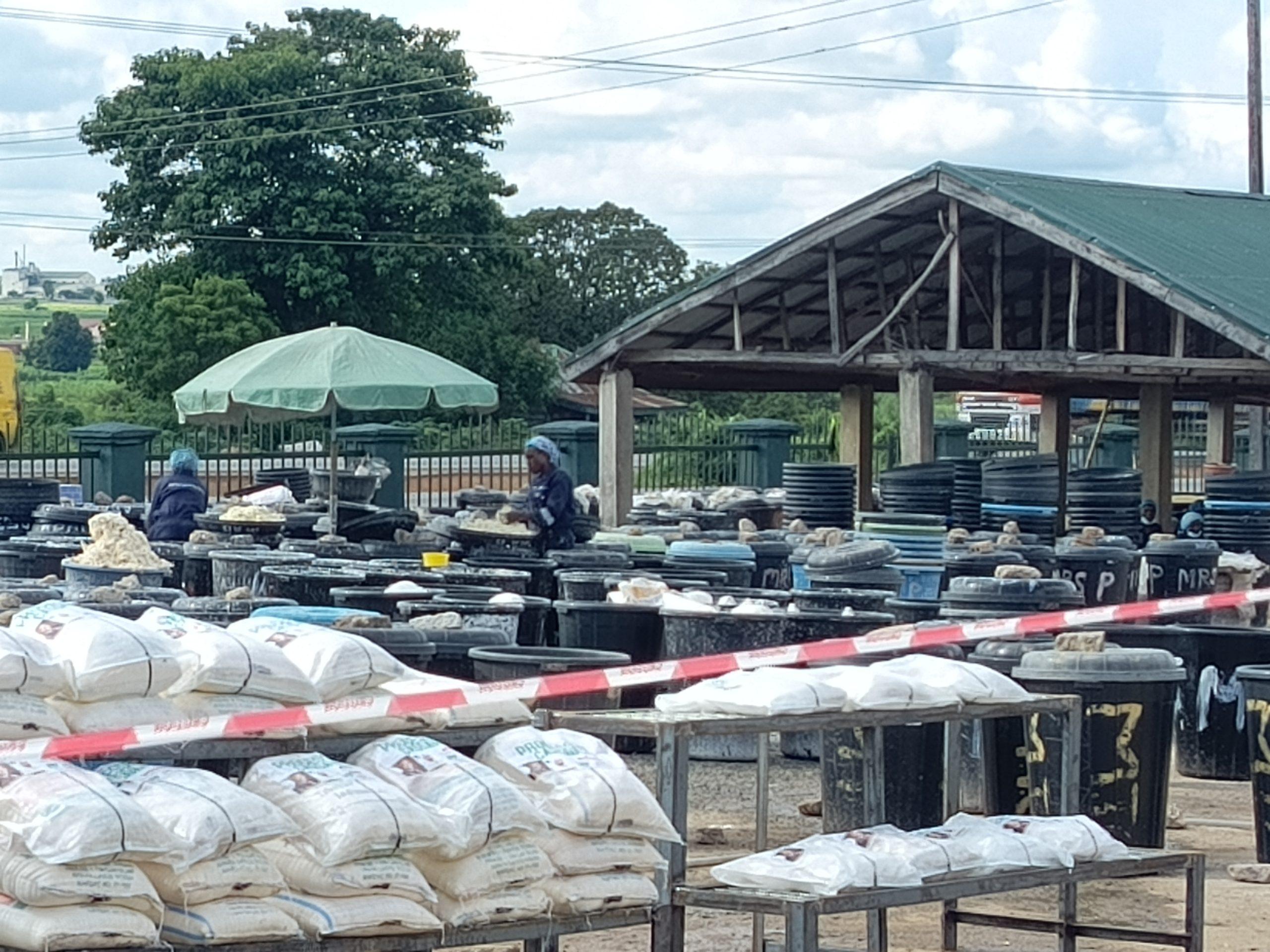
The World Bank has described Nigeria’s Agro-Climatic Resilience in Semi-Arid Landscapes (ACReSAL) project as a model for Africa, ranking it among the institution’s most successful interventions in recent years.
Speaking during an engagement with residents of Kwali in the Federal Capital Territory, the Bank’s Practice Manager for Environment in West Africa and the Sahel, Ellysa Baroudy, said the project stands out for integrating climate action, landscape restoration, and livelihood support to deliver tangible results for communities.
Baroudy explained that “while the Bank often struggles to achieve lasting success in large-scale development programmes, ACReSAL in Nigeria had exceeded expectations by tackling land degradation, empowering women, boosting food production, and transforming vulnerable communities into active participants in climate resilience.”
She said, “It is always difficult to implement a program but ACReSAL has succeeded in Nigeria. I’m truly amazed by the diversity of the cultures, the diversity of agriculture, the diversity of states presented, of which also you’re a microcosm.
“I was touched by the women’s voices and hearing how this project had made a change to the livelihoods. I was impressed with seeing before and after photos of the changes in the landscape and the reduction in the gullies. So I know that you’ve all done tremendous amounts. We’ve only been the financiers, but we don’t always have successful projects. But this is a successful project. You knew how to deploy the resources and they are really there to make a difference to people’s lives.”
She thanked the “ACReSAL family” for their efforts and described the warm welcome in Kwali as “a reflection of the project’s strong community ownership.”
Also speaking, Dr. Joy Agene, the World Bank Task Team Leader for ACReSAL, said the presence of the Practice Manager in Nigeria underscored the Bank’s deep commitment to mobilizing resources for climate resilience, water resources, forestry, and environmental sustainability.
“The one that sits in high places to speak about development issues facing Nigeria is here today. The one that represents Nigeria and 22 other countries in West Africa and Central Africa, she’s here today,” Agene told the gathering, acknowledging the support of traditional rulers for the project.
The Mandate Secretary of the FCT Agriculture and Rural Development Secretariat, Comrade Abdullahi Suleiman Ango, described ACReSAL as a “game-changer” for the territory, particularly in tackling land degradation, population pressures, and declining agricultural productivity.
“Building on the solid foundation laid by the governance structures, I am pleased to inform you that the Federal Capital Territory is already witnessing the transformative impact of the project in numerous ways,” he said.
Ango cited the provision of machinery and agricultural inputs to farmers, solar-powered boreholes and lighting, and the Community Revolving Fund as key interventions lifting families out of poverty and stimulating growth.
Ango promised that the FCTA would continue to encourage Area Councils to cooperate with project teams for effective delivery.
Earlier, the Project Coordinator of FCT ACReSAL, Mrs. Caroline Opara, welcomed the delegation to Kwali, noting that the area had become “the heart of ACReSAL intervention programmes.”
Opara said that, “Every component of the project has been implemented here, as you will see.”
The Coordinator added that, “Many of the successes we are here to witness in Kwali would not have been possible without the personal involvement and leadership of His Royal Highness. His direct engagement has been the catalyst for community ownership, participation and the positive results we are here to witness.”
In his remarks, the Etsu of Kwali praised the World Bank for investing in a “noble venture with good results,” pledging the community’s commitment to sustaining the project beyond its current life cycle.
According to him, “We are ready to give more support to this project. We are committed to ensuring that every part of this project is not just implemented but implemented appropriately.
“We don’t just want to be part of the project, but we want to own it. This will make the project sustainable. We don’t just want to have you leave after the program expires. We want you to return even after that, make a review and see if it’s working better than you left there. We want to build a culture of sustainability.”
The traditional ruler promised that community leaders would continue to guide and safeguard the interventions to ensure they reach the intended beneficiaries.
The ACReSAL project, supported by the World Bank, is being implemented across 19 northern states and the FCT to address environmental degradation, promote climate resilience, and improve livelihoods in semi-arid regions of Nigeria.
Olusola Akintonde