

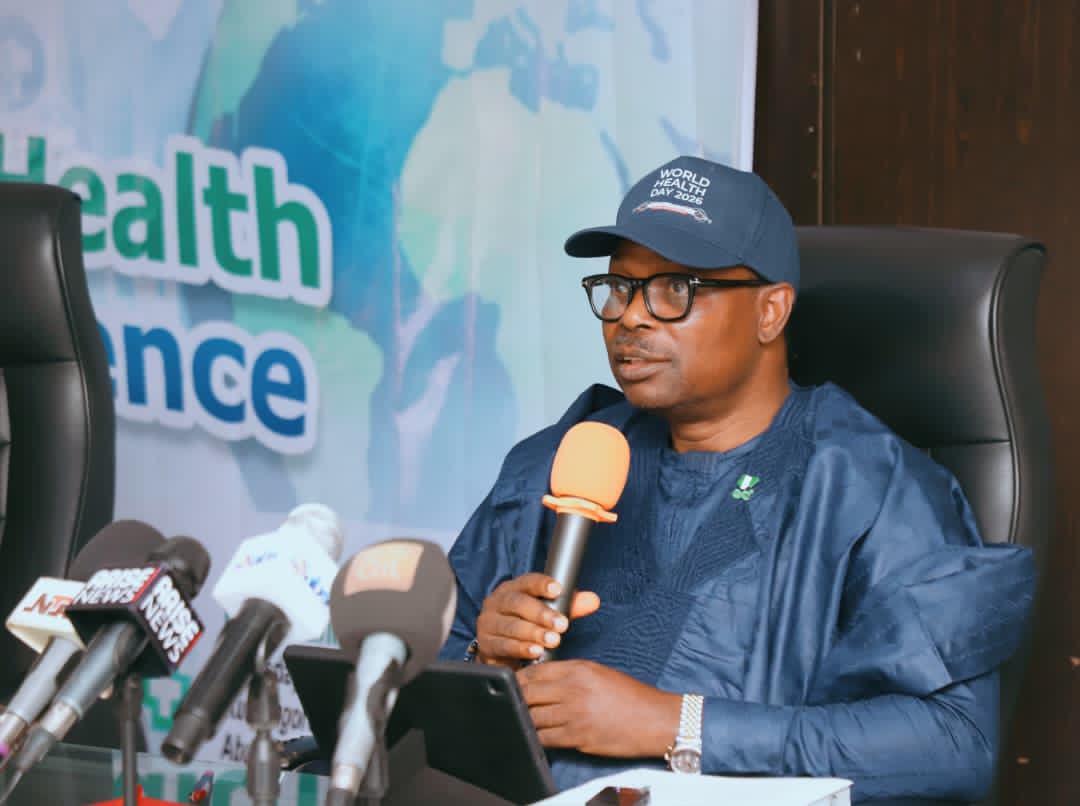
Nigerian Government has reaffirmed its unwavering commitment to the health and well-being of all citizens, stressing that healthcare remains a central pillar of national development under the Renewed Hope Agenda of President Bola Ahmed Tinubu.
The Minister of State for Health and Social Welfare, Dr Iziaq Adekunle Salako, made this known in Abuja during a ministerial press briefing to commemorate the 2026 World Health Day, observed annually in April to mark the founding of the World Health Organisation.
Speaking on the theme, “Together for Health: Stand with Science,” the Minister described it as timely and significant, noting that it calls for stronger collaboration among governments, scientists, health professionals, and communities to ensure that health policies are guided by evidence, research, and innovation.
“Science remains the foundation of public health progress, modern diagnostics, pharmaceuticals, and digital health systems are critical tools that continue to save lives globally” he said.
According to him, Nigeria is committed to ensuring that all health interventions and policies are driven by credible data and scientific evidence.
Dr Salako further highlighted Nigeria’s adoption of the One Health approach, which recognises the link between human, animal, and environmental health.
He said this integrated strategy would strengthen collaboration across sectors and improve the country’s ability to detect and respond to emerging health threats.
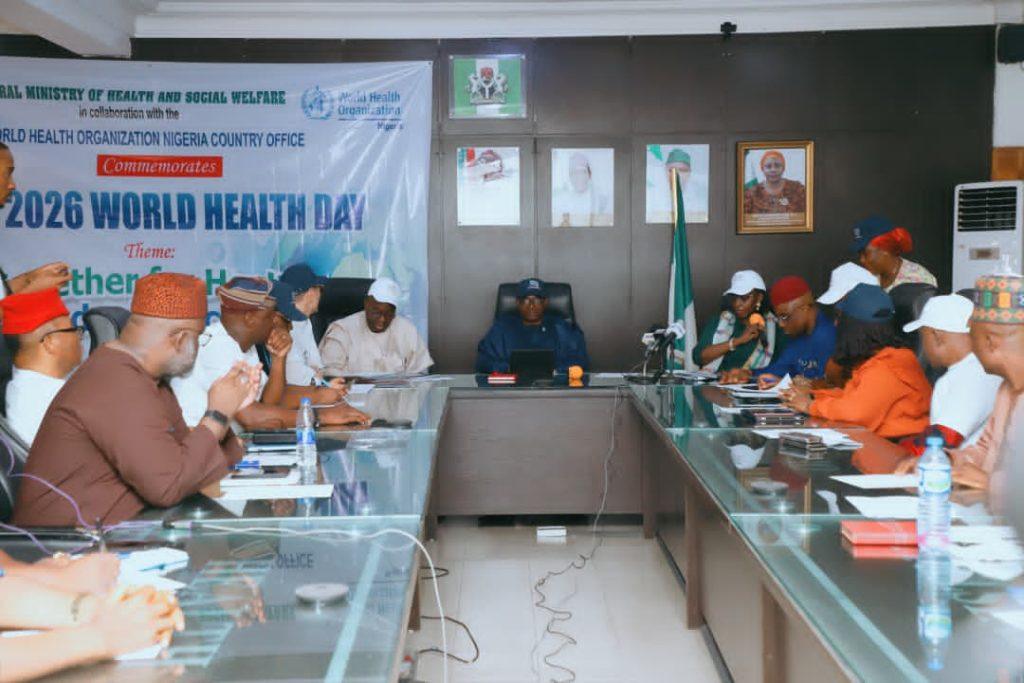
The Minister also acknowledged the longstanding partnership with the World Health Organisation, noting that its support has contributed significantly to strengthening disease surveillance, emergency response systems, immunisation coverage, and maternal and child health outcomes in Nigeria.
While noting that Nigeria’s health sector still faces structural challenges, he assured that the government is addressing them through strategic reforms, investments, and partnerships under the Nigeria Health Sector Renewal Investment Initiative.
He reiterated the government’s vision of ensuring that every Nigerian has access to quality healthcare services without financial hardship.
Highlighting key achievements, Dr Salako said primary healthcare remains the foundation of the health system, with increasing access to essential services across communities.
He disclosed that utilisation of primary healthcare services has risen significantly from about 10 million visits in early 2024 to approximately 45 million by mid-2025.
He also reported progress in immunisation, stating that over 14 million girls have received the Human Papillomavirus (HPV) vaccine, while more than 102 million children have been reached in the measles-rubella vaccination campaign, representing near-universal coverage.
Maternal and Child Health
On maternal and child health, the Minister said targeted interventions under the Maternal Mortality Reduction Innovation Initiative have led to about a 17 percent reduction in maternal deaths in participating health facilities.
Addressing financial protection, he noted that over 21.7 million Nigerians are now enrolled in health insurance schemes, representing a 33 percent increase since late 2023, with ongoing efforts to expand coverage through innovative programmes targeting vulnerable populations.
Dr Salako also commended the role of state governments and sub-national health institutions in bringing healthcare services closer to the people, noting that their contributions are critical to achieving national health goals.
Sustained Collaboration
In her welcome remarks, the Permanent Secretary of the Ministry, Daju Kachollom, described health as a key driver of economic productivity, social stability, and national development.
She reaffirmed the Ministry’s commitment to strengthening primary healthcare, expanding insurance coverage, and advancing digital health initiatives.
Also speaking, the WHO Country Representative, Pavel Ursu, commended Nigeria’s progress in improving disease surveillance and outbreak response, noting that investments in laboratory systems and data management have strengthened the country’s capacity to tackle diseases such as polio, measles, Lassa fever, and cholera.
He, however, warned that persistent inequalities and declining trust in science could slow progress, calling for sustained collaboration and commitment across sectors.
Goodwill messages were also delivered by development partners, including representatives of the United Nations Population Fund, who stressed the importance of science, evidence-based decision-making, and collective action in sustaining health gains.
The event also featured the unveiling of the 2025 National Health Facility Survey, with the Statistician-General of the Federation, represented at the occasion, revealing that about 70 percent of public health facilities now provide delivery and antenatal services, reflecting progress in expanding access to essential healthcare nationwide.