


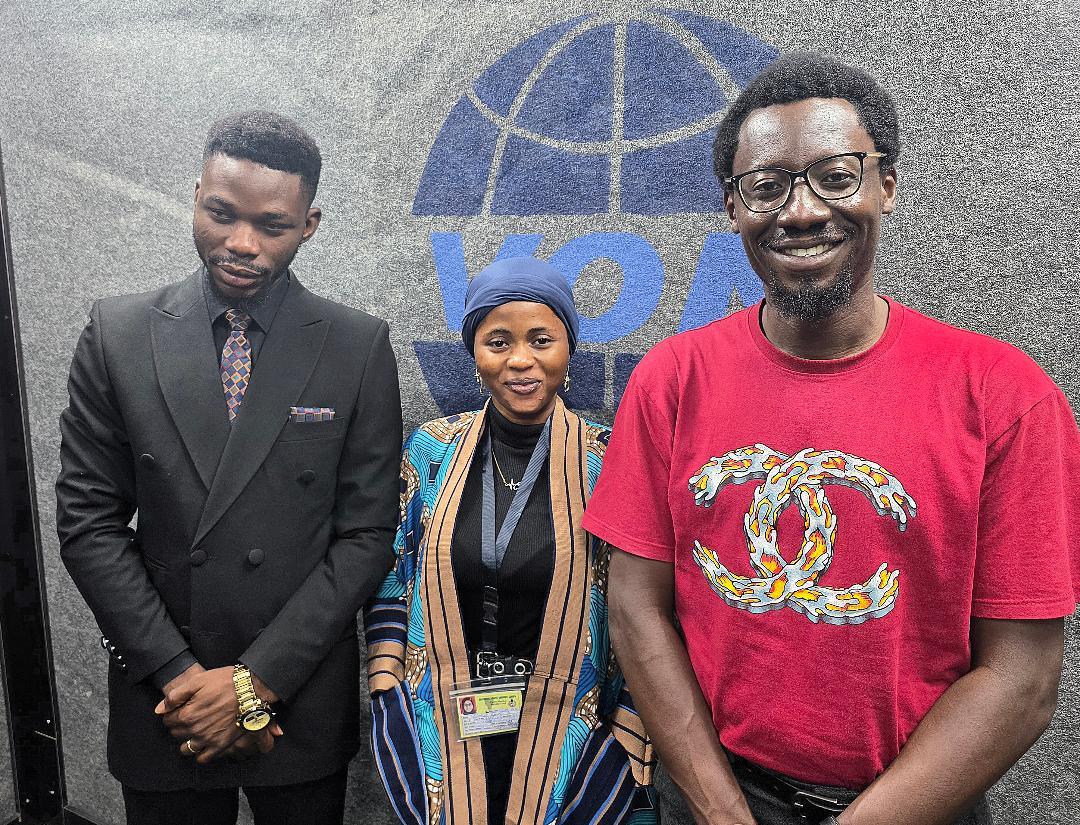
Young Nigerian advocates have called for actions, accountable leadership, and youth-driven investment in agriculture as essential pathways to achieving the Sustainable Development Goals (SDGs).
Speaking to Voice of Nigeria during the 2025 International Youth Day commemoration programme, Youth Forum themed “Attaining Local Youth Actions for SDGs and Beyond,” they stressed the need for partnerships to meet the 2030 SDG deadline.
Rahama Ibrahim, a strategic communication practitioner, emphasised that achieving the SDGs begins with individual commitments.
“We are doing it through every one of us, me and you, taking actions in achieving the goal, partnering to achieve the goal,” she said.
Ibrahim highlighted the crucial role of Nigerian youth, particularly young women, in embedding the SDGs into daily life.
“In attaining these goals, I will still focus on actions. Nigerian youths need to get into actions, putting all of these goals into their daily lives, what they do and everything about them,” she added.
On leadership, technology, and accountability, advocate Fred Ogbole described leadership as “the fulcrum at which every individual life exists,” emphasising that leadership starts at the family level with positive ripple effects on society.

“At the lowest level of leadership is the family, whereby leadership are provided. If leadership are not provided in family, you see how children go astray. We don’t have people who hold them accountable when they misbehave,” he noted.
Ogbole warned against a culture of selective accountability.
“If we adopt the formula of accountability across all phases of life; in business, in empowerment, in community, in government—we will achieve whatever we want,” he said.
He cited examples of Singapore and China’s intentional leadership as drivers of national transformation, contrasting with Nigeria’s ongoing politicisation of governance.
“Countries like Singapore achieved transformation because of intentional leadership. Lee Kuan Yew was called a dictator, some even said a soft dictator, but he lived that legacy of not controlling, but mitigating risk in terms of abusing leadership. China did that too—closed their borders for 10 years and figured their country out. Our country has not been figured out since independence because we keep politicising everything.”
Ogbole urged Nigerians to separate politics from governance.
“Politics comes before you enter into office. Governance comes when you enter into office. For us, politics continues when you enter into office, and we can never get it right when we continue politics while in governance,” he said.
He further stressed the need for governance focused on improving livelihoods rather than superficial empowerment programs.
“If livelihoods are improved, we don’t need to send empowerment out, we don’t need to send palliative, we don’t need to do any charade to make people feel that we are doing our work. We just need good electricity, good power supply, good systems that empower people. Through that, we can do anything that we want to achieve as a nation.”
Agribusiness advocate, Echefu Chidozie, urged Nigerian youth to embrace agriculture across its value chain beyond farming.

“As young youths, we must start practising agriculture, no matter how little. Agriculture cuts across various value chains and commodities. There’s the service-providing chain, where you come to teach, sell, or do your marketing; the production chain, where you do the actual farming, growing of plants, or rearing of birds or animals; and the processing chain.”
He spotlighted food processing as an overlooked but profitable area for youth investment.
“I’m advocating for youths to look at the area of food processing because we still consume a lot of things that come from different countries. It will wow you that we buy palm oil from the Indonesians and the Malaysians even though we claim that we produce a lot of oil. We don’t have enough oil. Why?” he queried.
Chidozie explained the broad uses of palm oil beyond cooking.
“So many Nigerian youths do not know that palm oil is needed for soap production, for production of cream, cosmetics, so many things—not just cooking your egusi soup or whatever,” he said.
He linked fighting hunger with boosting youth capacity and productivity.
“When you eat proper, you think proper. If you don’t eat proper, you won’t think proper. So please, young people, come into agriculture. Let’s do agribusiness,” he urged.
Together, the advocates underscored that youth-led action, transparent leadership, and strategic economic engagement—especially in leadership, technology, education, and agriculture—are critical for Nigeria to meet its SDG targets and sustain progress beyond 2030.
PIAK