
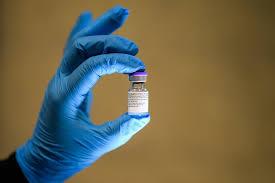
Renowned virologist Dr Simeon Agwale has hinted that the Lassa fever vaccine produced by a Nigerian has scaled through preclinical trials involving mice and non-human primates.
Agwale, the Chief Executive Officer of Innovative Biotech, disclosed this in an interview with News Agency of Nigeria, NAN, on Saturday in Abuja,
He said that this development has raised the hope for controlling the Lassa fever among deadly viral diseases, which is sometimes recorded in Nigeria.
Agwale said that the vaccine, licensed from the University of Melbourne by Pac-Man Biologics, demonstrated 100 per cent protection during trials,” he said.
He explained that five out of five unvaccinated mice died after being challenged with the virus, while all vaccinated mice survived.
“Similar results were recorded in a non-human primate study, where all unvaccinated animals died on day 22, but all vaccinated ones survived.
“This is 100 per cent protection. It shows great promise, and we hope to complete the Phase 1 clinical trials soon,” he added.
He also stated that the vaccine doses for clinical trials are being produced in the United States under a technology transfer arrangement, pending the completion of Nigeria’s vaccine production facility.
”Beyond the vaccine success, the experts strongly criticised Nigeria’s outdated academic system, especially in postgraduate training and research.
“We spent millions sending lecturers abroad for postdoctoral trainings without results.
“Every postdoctoral position in the U.S. is funded already, so why send people with extra funds and no structure back home to apply their skills?” he queried.
Revamps University Curricula
He warned that unless Nigeria revamps its university curricula to focus on specific, market-relevant training like “vaccinology and drug development,” the country would continue to lag in science and innovation.
“We still run masters in microbiology with nine courses per semester, what’s the purpose of that? We need focused programmes.
“A graduate in vaccinology should understand how vaccines are developed, tested, and manufactured,” he said.
He urged universities to take ownership of research by generating funds through problem-solving innovations rather than relying solely on government support.
“We must build research centres and retain talent. Innovation must solve national issues, not just earn foreign degrees,” he said.
He said that collaboration with global partners and deployment of local capacity was critical to achieving health security and scientific self-reliance.
“This is not about being a local champion. You must compete with the best globally because health emergencies don’t wait,” he said.
NAN/Shakirat Sadiq

