By: Margaret Ebeshi, Abuja
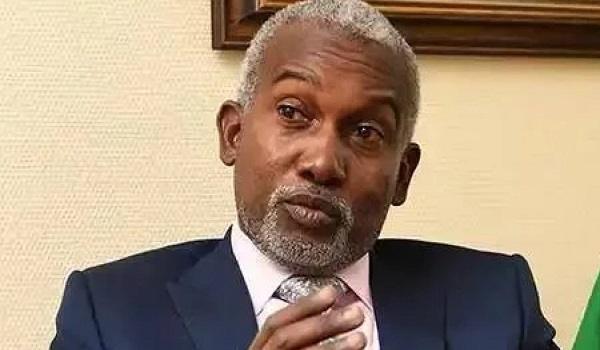
Nigeria’s Minister of Foreign Affairs, Ambassador Yusuf Tuggar, has emphasized the need for strategic economic diplomacy, stronger regional integration, and evidence-based policy intelligence as key drivers of Nigeria’s transformation agenda.
Speaking at the 31st Nigerian Economic Summit (NES#31) in Abuja, Nigeria, Ambassador Tuggar lauded the Nigerian Economic Summit Group (NESG) for sustaining over three decades of constructive public-private dialogue, describing it as “a cornerstone of Nigeria’s development architecture and a vital pillar of governance and reform.”
He commended the Federal Ministry of Budget and Economic Planning and the NESG for maintaining a tradition of collaboration that continues to shape the nation’s economic policy landscape.
“Over the past thirty years, the Summit has evolved from an annual event into an institution of renewal, an arena where ideas meet action and where the public and private sectors chart a shared future for Nigeria,” he noted.
Highlighting this year’s theme: “The Reform Imperative: Building a Prosperous and Inclusive Nigeria by 2030,” Tuggar described it as timely and visionary, adding that Nigeria is at a transformative juncture where reforms are indispensable for restoring macroeconomic stability and rebuilding investor confidence.
He stated that under President Bola Tinubu’s Renewed Hope Agenda, the administration is implementing bold, pragmatic, and people-centered reforms that are already yielding tangible results.
“These reforms are catalyzing growth, enhancing investor confidence, and reigniting the productive capacity of this great nation. Most importantly, they are beginning to deliver results that are visible not just in data, but in the lived experiences of our citizens.” Tuggar affirmed.
Ambassador Tuggar stressed that Nigeria’s foreign policy must align with its economic objectives, reaffirming that the Ministry of Foreign Affairs is actively unlocking trade corridors, securing partnerships, and attracting investments to strengthen the domestic economy.
He outlined the Ministry’s commitment to advancing economic diplomacy through Nigeria’s 4D Foreign Policy Doctrine—Democracy, Development, Demography, and Diaspora.
“Under President Tinubu’s leadership, Nigeria’s foreign policy is defined by strategic autonomy. We pursue partnerships of purpose, not alliances of obligation. Nigeria must reject binary ideological alignments and instead embrace issue-based relationships that advance national interest. We are too significant a nation to engage in bandwagon diplomacy.” He said.
The Minister also underscored the importance of deepening regional cooperation, citing the newly launched West Africa Economic Summit (WAES) as a key initiative aimed at driving cross-border industrialization, trade, and infrastructure development.
“Nigeria’s prosperity is tied to West Africa’s progress. The more we invest in regional value chains and policy harmonization, the more resilient and competitive we become as a bloc.” He declared.
Drawing parallels with successful global models, Tuggar referenced lessons from emerging economies such as MIKTA—Mexico, Indonesia, Korea, Turkey, and Australia, and the East Asian “Flying Geese” paradigm, where nations industrialized in coordinated progression.
“With our demographic weight, market size, and strategic geography, Nigeria has the scale and capacity to lead Africa’s own ‘flying geese’ formation,” he said. “But leadership must be earned through sound policies, productive investment, regional coordination, and institutional credibility.”
Ambassador Tuggar also called for stronger collaboration between Nigeria’s policy and research institutions, stressing that an evidence-based strategy must guide both domestic reforms and international engagement.
He highlighted the role of the Nigerian Institute of International Affairs (NIIA) and other government think tanks in translating research into actionable foreign policy.
“We must invest in policy intelligence,” he urged. “That means building a pipeline of ideas, innovation, and informed foresight through collaboration between government, academia, civil society, and research institutions. Geopolitics today is the realm of weaponized interdependence—we must be smarter, faster, and more strategic.”
Reaffirming the Foreign Ministry’s commitment to a results-driven foreign policy, Tuggar stated that “Nigeria’s diplomacy must always serve the people and priorities of the nation.
“Whether through advancing trade under AfCFTA, facilitating investment flows, supporting climate finance, or championing Africa’s voice in global fora, our diplomacy must deliver concrete benefits to Nigerians,” he said.
In closing, the Minister expressed optimism that the deliberations at NES #31 would go beyond rhetoric to yield actionable reforms and shared responsibility among stakeholders.
“Our challenge is to turn dialogue into delivery. If we align our ambition with implementation, Nigeria will not only reform but lead—regionally, globally, and in the hearts of our people,” he said.
Olusola Akintonde