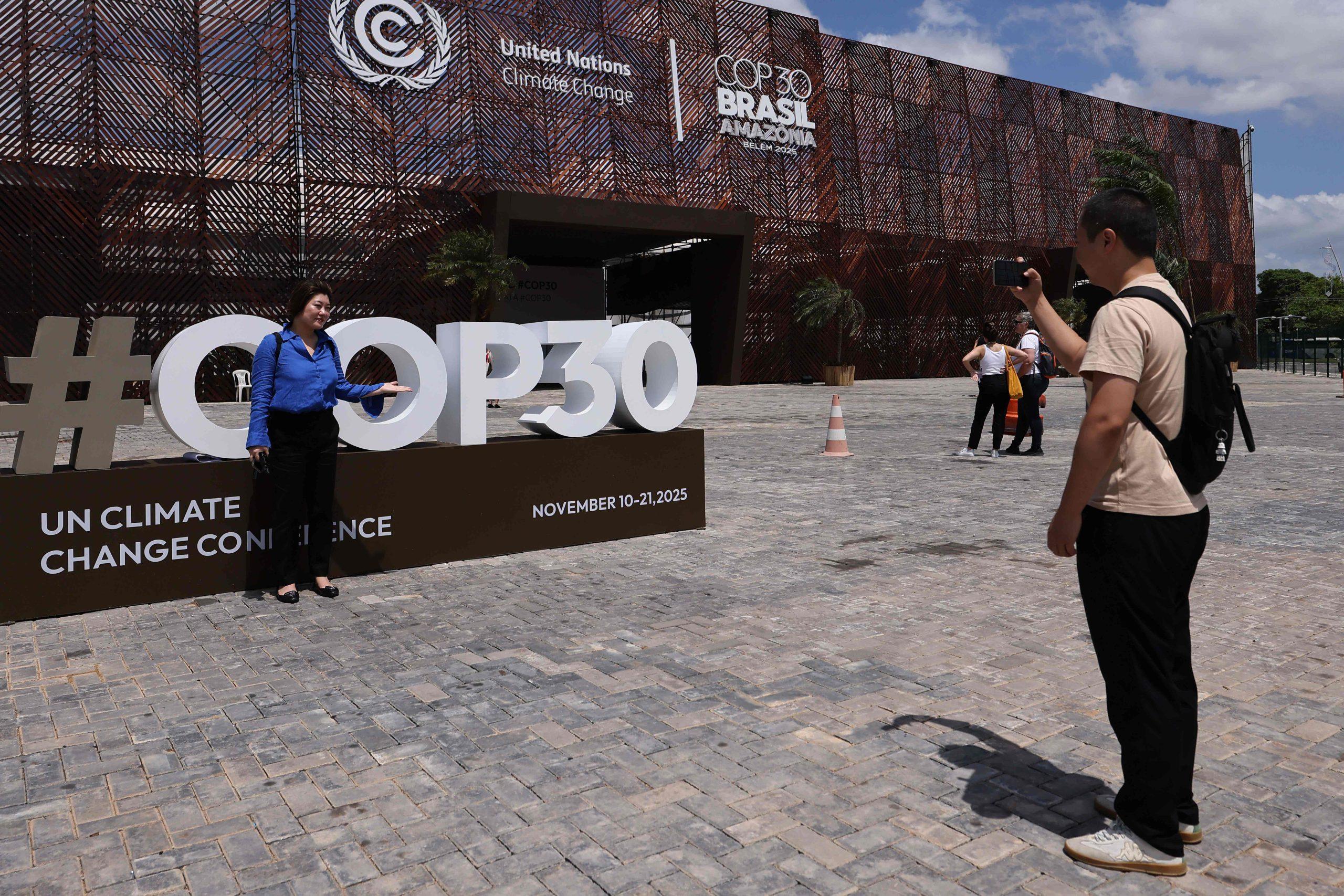
COP 30 opens on Monday with an urgent call to deliver on climate promises and accelerate the implementation of the Paris Agreement across all sectors. It will run from November 10, to November 21.
Diplomats and climate experts are gathering in Belém, Brazil’s Amazon, for COP 30, the latest round of UN climate talks. Their task couldn’t be clearer: turn promises into action and agree on tougher plans to cut greenhouse gas emissions.
After decades of pledges and annual summits from Kyoto to Sharm el-Sheikh, the planet continues to warm, and pressure on governments and big business to act – not just talk has never been greater.
Holding COP 30 in Belém underscores the stakes: the Amazon region is both a vital carbon sink and a frontline in the fight against deforestation and climate change.
This year’s meeting is aimed at shifting gears. Delegates will review national climate plans, push for $1.3 trillion a year in climate finance, adopt new measures to help countries adapt, and advance a ‘just transition’ to cleaner economies.
COP30 has been billed as a moment of truth and a test of global solidarity. Scientists say the planet is on course to temporarily breach the 1.5°C warming limit set by the Paris Agreement.
Speaking at the Leaders’ Summit, UN Secretary-General Antonio Guterres said “It’s no longer time for negotiations. It’s time for implementation, implementation and implementation.”
Under Brazil’s presidency, COP30 will revolve around an action agenda of 30 key goals, each driven by an ‘activation group’ tasked with scaling up solutions.
The effort has been dubbed a mutirão – an Indigenous word meaning “collective task” – reflecting Brazil’s push to spotlight Indigenous leadership and participation at the conference and in the global fight against climate change.
Action agendas at COPs are built on voluntary pledges rather than binding law. But the scale of change needed is enormous: at least $1.3 trillion in climate investments every year by 2035.
Another key focus in Belém is the latest round of Nationally Determined Contributions (NDCs) – national climate plans that spell out how countries intend to cut emissions. To keep warming below 1.5°C, global emissions must fall by 60 per cent by 2030. Current NDCs would deliver only a 10 per cent cut.
Of the 196 Parties to the Paris Agreement, just 64 had submitted updated NDCs by the end of September. At preparatory talks in Germany in June, many countries warned that this ambition gap must be closed at COP30.
Delegates are also expected to approve 100 global indicators to track progress on climate adaptation, making results measurable and comparable across nations.
172 countries have at least one adaptation policy or plan, though 36 are outdated. The new indicators should help shape more transparent and effective policies.
With the planet heating faster than ever, adaptation is now a central pillar of climate action. But the UN Environment Programme (UNEP) warns adaptation finance must rise twelvefold by 2035 to meet developing countries’ needs.
COP30 will also push forward the Just Transition Work Programme aimed at ensuring climate measures don’t deepen inequality. Civil society groups are calling for a “Belém Action Mechanism” to coordinate just transition efforts and expand access to technology and finance for the most vulnerable nations.
Over the years, COPs have delivered landmark deals. In 2015, the Paris Agreement set the goal of keeping global temperature rise “well below 2°C” while striving for 1.5°C.
NAN