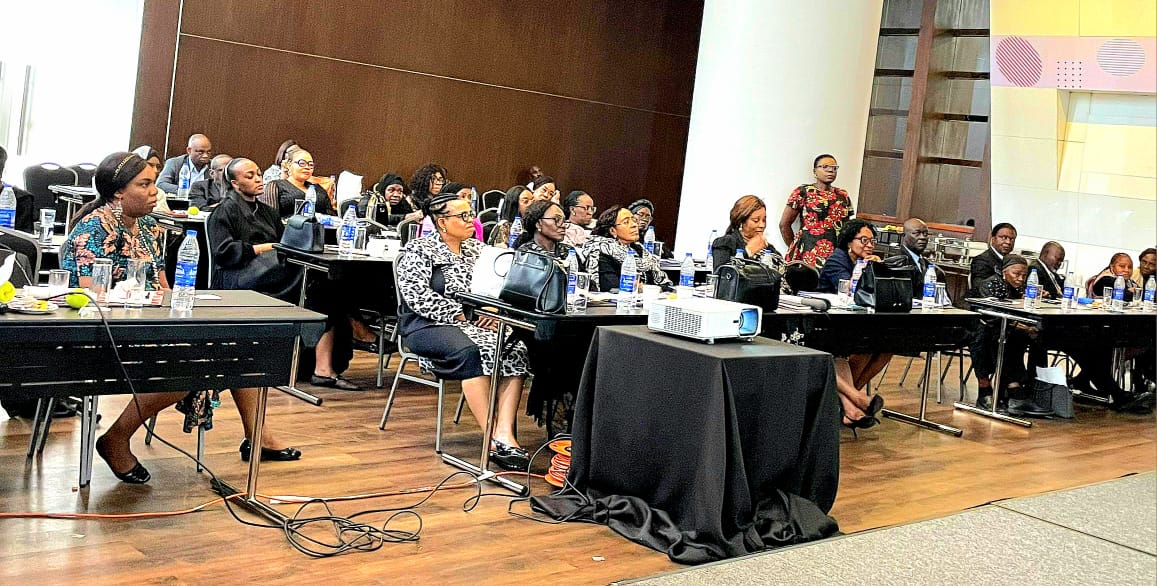
Experts at a three-day capacity-building workshop for judges and family court magistrates on sexual offences and trauma-informed justice in Lagos have explored the policy, evidentiary and psychological implications of emerging technologies on survivor-centred adjudication.
Presenting on “Artificial Intelligence, Deep Fakes and Gender-Based Harm”, Special Adviser to the President on Justice Sector Reforms and ICT, Fernandez Marcus-Obiene, warned that the threat is immediate and already confronting courts.

“Deepfakes require zero technical skill to create. The barrier to weaponising AI against someone is essentially gone. Free tools, a smartphone, and a 2-minute public video are all a perpetrator needs. This is not a future threat. It is a present one that courts are already encountering.”
He underscored a critical gap in Nigeria’s legal framework.
“Authenticity is the new battleground in evidence law. Nigeria’s Evidence Act 2011 predates deepfake technology entirely, leaving a critical gap. The burden of proving a video is authentic should rest on the party submitting it, not on the survivor to disprove it.”
Marcus-Obiene highlighted risks accompanying virtual hearings.
“The shift to virtual hearings created three fresh risks: impersonation of participants, false denial of appearance, and judicial impersonation. Identity verification protocols before every virtual session are now a core judicial responsibility. Survivors must be actively protected, not passively accommodated.”
International IDEA Communications Manager Mukthar Suleiman said, “AI is here to stay, so your aversion to it will not eliminate the presence of it,” stressing that “moderate utilisation with human oversight is always very, very key, and it’s very, very pertinent for the work that they are doing because of the sensitivity of it.”

He also pointed to practical safeguards in handling sensitive evidence, including the use of AI tools to protect identities.
“You can go ahead and use AI to distort the voice, distort the faces and give out just the testimony as it is without having the original voice or faces of the persons who participate, and that would be very helpful in protecting the identities of survivors where necessary and in trauma-informed justice.”
Executive Director of Cece Yara Center, Bisi Ajayi-Kayode, advanced reforms on forensic interviews, data systems, funding, training, child witness protection, Guardians ad Litem, curriculum integration, remote testimony, and specialised courts.
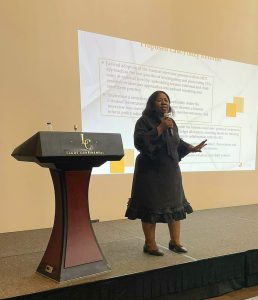
“Judicial adoption of the forensic interview process with its Minimal Delay Time approach as the best practice of investigating and prosecuting Child Sexual Assault cases at a national level by embedding trauma-informed and child-sensitive evidentiary approaches into judicial reasoning and courtroom practice,” she submitted.
Head of Psychology Department at Neem Foundation, ThankGod Ocheho warned: “Unaddressed trauma does not stay personal; it becomes institutional, with Impact on Justice Delivery resulting in Reduced empathy – affects survivor experience; cynicism – affects credibility assessments, fatigue – affects decision quality; and Emotional detachment – affects courtroom tone.”
He set out five measures central to sustaining sound judgment, strengthening empathy, and preserving the integrity of courtroom interactions to include prioritisation of self-care despite workload pressures, engaging in regular peer debriefing to process case exposure, adoption of healthy coping mechanisms and cultivating self-awareness to recognise early signs of stress
The workshop, convened by the Federal Ministry of Women Affairs in collaboration with International IDEA’s Ending Sexual and Gender-Based Violence Programme and the Rule of Law and Anti-Corruption Programme funded by the European Union, continues to foreground policy reforms aimed at strengthening survivor protection, evidentiary integrity, and judicial resilience in Nigeria’s justice sector