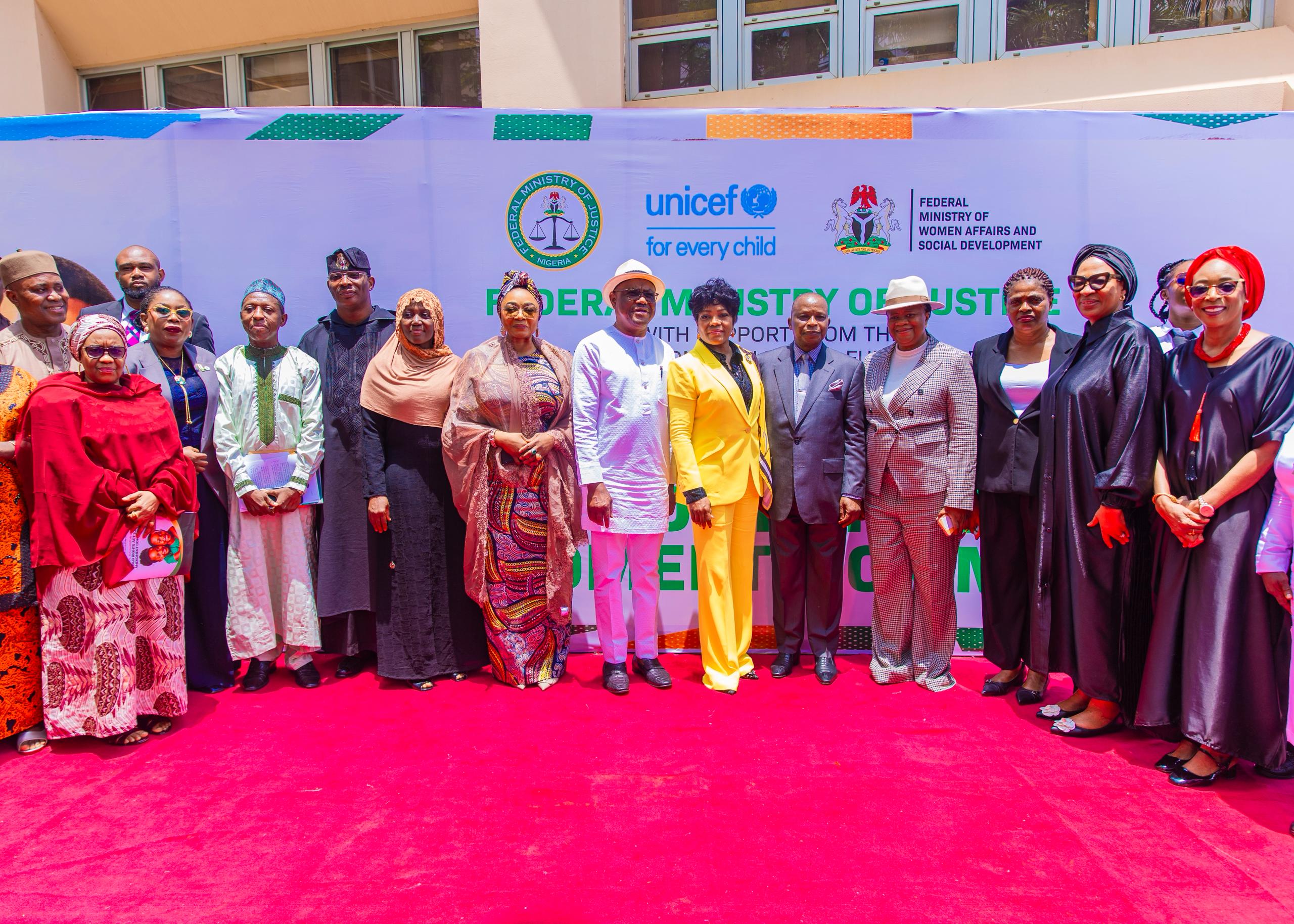
Nigeria’s Minister of Women Affairs and Social Development, Hajiya Imaan Sulaiman-Ibrahim, has described the inauguration of the Child Rights Act Amendment Committee as “a defining moment” to strengthen legal and institutional safeguards for Nigerian children.
Speaking at the Federal Ministry of Justice, Abuja, the minister emphasised the urgency of reforming the Child Rights Act 2003 to reflect current realities and close existing protection gaps.
“This gathering represents a defining moment in our collective national resolve to strengthen the legal and institutional framework for the protection of Nigeria’s children.”
She noted that while the Act remains Nigeria’s most comprehensive legal instrument on child protection, “Full domestication and consistent implementation remain uneven across the Federation, thereby creating disparities in the level of protection afforded to children depending on their location.”
Aligning the reform with the Renewed Hope Agenda of President Bola Ahmed Tinubu, the Minister stressed, “Since the passage of the Act in 2003, our social realities have evolved significantly, and the law must now evolve with them in order to remain effective, relevant, and enforceable.”
She identified critical gaps requiring legislative attention and emerging threats such as digital exploitation and trafficking.
“Emerging challenges such as digital exploitation, online grooming and abuse… have exposed new vulnerabilities that were not fully anticipated at the time of drafting the original Act.”
On child protection systems, the Minister urged, “No child who has suffered harm should be left without immediate protection, dignity, and structured care at the moment of need. In many cases, rescued children are left in transitional uncertainty due to limited emergency care infrastructure and fragmented referral systems.”
Highlighting the broader policy objective, Minister underscored that child protection requires coordinated national effort across institutions and stakeholders, with the amendment presenting an opportunity to build a more proactive system.
“The protection of children is not the responsibility of one institution alone. It is a shared national duty. In doing so, we move from a reactive system to one that is proactive, preventive, and transformative.”
Reaffirming the Ministry’s commitment, she assured technical leadership and coordination to deliver a workable outcome.
“Our objective is clear: to ensure that the amended Child Rights Act becomes a stronger, more responsive, and future-fit instrument.”
Reiterating the government’s commitment under the Renewed Hope Agenda, the Minister urged committee members to approach their task with urgency and responsibility.
“We are committed not only to protecting our children but also to building systems that enable them to live in safety, grow in dignity, and reach their fullest potential. The decisions and recommendations that emerge from your work will shape the safety, dignity, and future of millions of Nigerian children.”