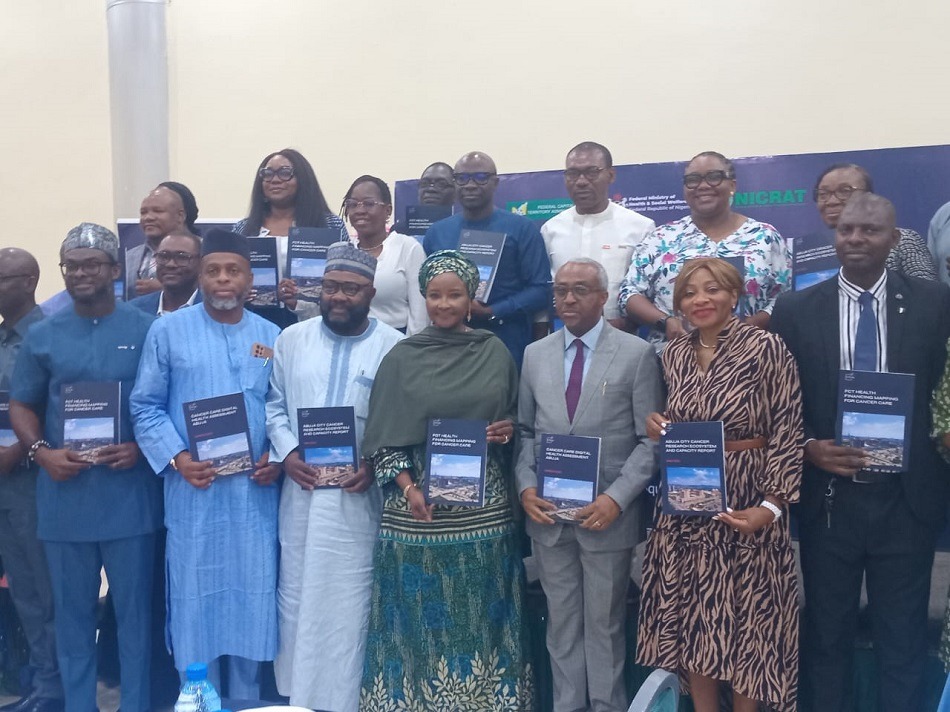
The Nigerian Government has inaugurated nine priority projects under the Abuja City Cancer Programme.
The project, commissioned through the Federal Capital Territory Administration, aims to strengthen prevention, diagnosis, and treatment of cancer across the city.
At the inauguration, Mandate Secretary, FCT Health Services and Environment Secretariat, Dr Adedolapo Fasawe, said the initiative marked a shift from planning to implementation after more than 30 months of preparation and stakeholder engagement.
“Today marks a pivotal transition from planning to action. We are moving from design to implementation, from ideas to impact,” she said.
Fasawe, who also chairs the City Executive Committee, said the projects were developed through a city-wide needs assessment and a structured co-creation process involving multiple stakeholders.
She said, “Through this process, we generated strong, evidence-based insights into the gaps and challenges that exist across the cancer care continuum.”
According to her, the nine projects cover health systems coordination, quality of care, imaging, pathology, laboratory services, systemic therapy, radiotherapy, and cancer surgery.
“Together, they form a coordinated framework that will strengthen our health system and improve access to quality cancer services for residents of Abuja,” she explained.
Fasawe described cancer as a growing public health challenge, emphasising that effective implementation would require discipline, accountability, and sustained collaboration among stakeholders.
“As a government, we are fully committed to driving this agenda forward and ensuring that these projects translate into measurable improvements in patient outcomes,” she said.
She also raised concerns over the burden of out-of-pocket payments, noting that many patients from low-income households struggled to afford treatment.
“Out-of-pocket is hard, almost impossible. Hence, people carry their loved ones and go to traditional healers and faith-based organisations,” she noted.
She said increased education and advocacy were essential to improve health-seeking behaviour and reduce delays in accessing care.
Fasawe commended partners, including the Federal Ministry of Health and Social Welfare, Medicaid Cancer Foundation, Clinton Health Access Initiative, and City Cancer Challenge (C/Can) for their support.
Equitable Access to Quality Cancer Care
Earlier, C/Can Director for Africa and Europe, Ms Sophie Bussmann-Kemdjo, said the initiative aimed to ensure equitable access to quality cancer care across Abuja.
Ms Sophie said Abuja joined the global network in 2023, gaining technical support and a structured framework for strengthening cancer care systems.
“The aim is to make sure that all cancer patients receive the same level of standard of care within the city,” she emphasised.
She explained that a governance structure had been established to oversee implementation and ensure all areas of cancer care were addressed.
“This is just the beginning. The projects will also drive resource mobilisation and support future expansion beyond Abuja to other parts of Nigeria,” she said.
Nigeria’s National Cancer Control Plan
The National Coordinator of the National Cancer Control Programme, Dr Uchechukwu Nwokwu, said the projects aligned with Nigeria’s National Cancer Control Plan (2026–2030).
“These projects properly align within key pillars of the national plan, including diagnosis, treatment and palliative care, as well as governance and partnerships,” he maintained.
He stressed the importance of aligning all interventions with government priorities to ensure coordinated cancer control efforts nationwide.
Nwokwu highlighted patient navigation as a key gap, noting that many patients abandoned treatment due to complex care pathways.
“Patients can be supported to navigate the system, access resources and remain on treatment. This will make cancer care less burdensome,” he affirmed.
The Founder of Medicaid Cancer Foundation, Dr Zainab Shinkafi-Bagudu, said the programme would improve access to diagnostic and treatment infrastructure in Abuja.
“We will begin to see tangible interventions such as cancer treatment and diagnostic equipment coming into the city,” she highlighted.
She encouraged patients not to lose hope, saying access to care was gradually improving with ongoing interventions.
“With more projects like this, there is hope. We will continue to push for more solutions to improve access and affordability,” she said.
According to reports, City Cancer Challenge is a global organisation supporting cities in low- and middle-income countries to improve cancer care through data-driven planning and capacity development.
NAN/Christopher Ojilere