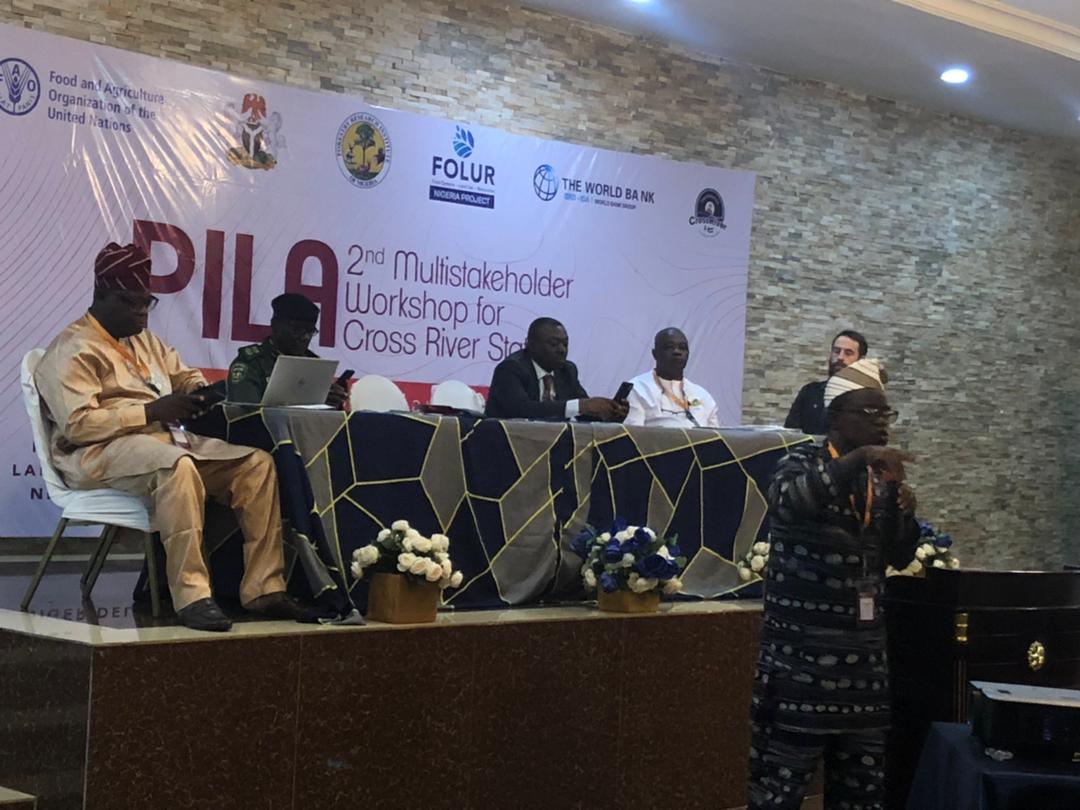
Agriculture and Environment stakeholders have called for urgent and coordinated action to address the rising impact of deforestation and food insecurity in Cross River State, Southern Nigeria.
The call was made during the second multi-stakeholder workshop on the Participatory Integrated Landscape Approach under the GEF7 FOLUR-NG project, organised by the Food and Agriculture Organisation in partnership with the Nigerian and Cross River State governments.
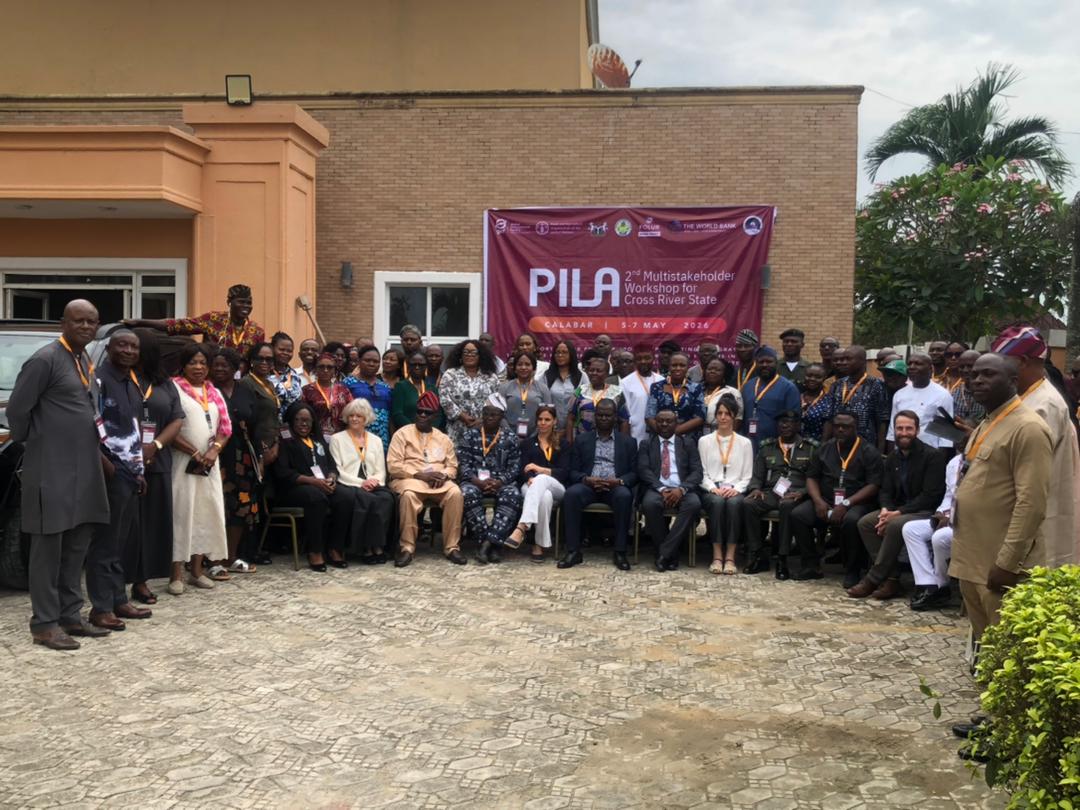
The workshop brought together policymakers, development partners, researchers, and community representatives from both sectors to review progress made following the first phase of the project, strengthen collaboration toward sustainable land use, and improve food systems.
Speaking at the event, the Secretary to the Government of Cross River State, Professor Anthony Owan-Enoh highlighted the importance of agriculture and sustainable land management in addressing food challenges, noting that “environmental degradation poses a serious threat to livelihoods.”
Enoh, who described himself as a farmer and academic, emphasised the need to replenish degraded lands and adopt practical solutions that would support rural communities, particularly women and smallholder farmers.
He said, “as our land gets depleted, we must deliberately restore it. Our farmers, especially those in rural areas, depend heavily on the land and without conscious efforts to sustain it, food production will continue to decline.”
Also speaking, the Chief Technical Adviser for the project, Professor Adebayo Shittu said Cross River was selected as a pilot state due to its vast forest resources and strategic importance to Nigeria’s biodiversity.
According to him, “Most of the remaining forests in Nigeria are found in Cross River State, but they are being lost at an alarming rate. This project is designed to promote sustainable food systems, land use and restoration of degraded landscapes.”
He explained that the initiative, which also covers Ondo State, aims to enhance food security, create jobs, and ensure the sustainable use of natural resources across the Niger Delta region.
Agricultural expansion
During a keynote address, the Technical Director in the Cross River State Ministry of Agriculture and Irrigation Development, Dr. Dan Obun, who represented the Commissioner, noted that increasing pressure from agricultural expansion and deforestation is threatening ecosystems and livelihoods.
He observed that the FOLUR-NG project provides a strategic framework to balance productivity with environmental sustainability through inclusive and evidence-based approaches.
“The challenges of land degradation require deliberate, coordinated, and inclusive actions. This project creates an opportunity to strengthen collaboration among stakeholders, while promoting climate-smart agricultural practices,” Obun said.
He reaffirmed the state government’s commitment to sustainable land use and agricultural transformation, noting that efforts were underway to modernise farming systems, improve data management, and attract investments into agriculture.
Mitigation
The PILA Coordinator, Saren Miller highlighted the importance of the Participatory Integrated Landscape Approach, noting that “sustainable solutions can only be achieved when local communities, policymakers, and scientists work together.”
He said the approach encourages shared decision-making and ensures that interventions are tailored to the needs of affected communities.
At the end of the three-day workshop, participants are expected to proffer recommendations and develop a roadmap for future implementation.