

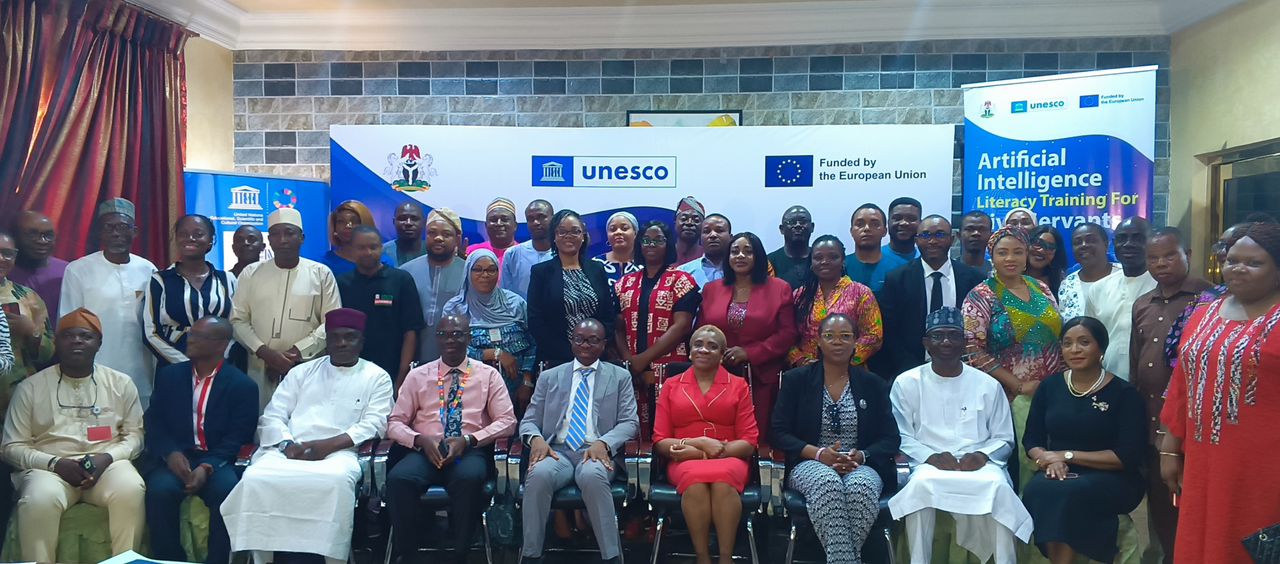
The United Nations Educational, Scientific and Cultural Organisation (UNESCO), in partnership with the Nigerian government, has launched a three-day Artificial Intelligence (AI) literacy training programme for Senior Civil servants.
The training aimed at strengthening governance and promoting the ethical use of emerging technologies.
It is designed to equip public officials with the knowledge and skills required to effectively integrate AI into public administration.
Speaking at the opening, the Head of Education Sector at UNESCO Abuja, Oladeji Adeyemi, described the initiative as a critical step toward preparing Nigeria’s workforce for a rapidly evolving digital future.
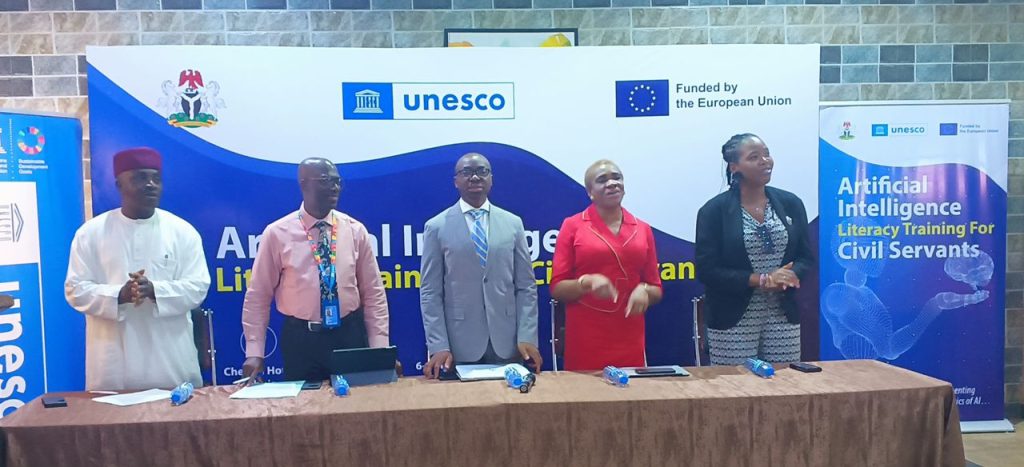
“Our gathering today symbolises a powerful synergy of action and commitment between the Nigerian Government and international development partners. This partnership will equip civil servants with the essential knowledge to navigate governance and make informed decisions for an inclusive and responsible use of Artificial Intelligence,” Adeyemi said.
Also read: Experts Advocate Responsible Adoption of Artificial Intelligence
He stressed that AI has become a major driver of the global digital economy, transforming how societies function and how governments deliver services.
“Artificial Intelligence has emerged as one of the key drivers of the global digital economy, reshaping economies, societies, and human interaction. Today, AI skills are increasingly synonymous with economic readiness,” he said.
Adeyemi also highlighted Nigeria’s alignment with global ethical standards, referencing UNESCO’s framework on responsible AI.
“While AI offers immense benefits such as efficiency, job creation, and improved access to information, it also carries significant risks that must be addressed through strong ethical guidelines. This is a moment to strengthen our skills, embrace collaboration, and build the capacity needed for greater national impact,” he explained.
Adeyemi commended the workshop, noting that it symbolizes synergy between Nigeria and international development partners in advancing governance.
“Such partnership is set to equip civil servants of this great country with essential knowledge, to navigate governance and needed critical decisions-making skills, for inclusive and responsive AI in evolving civilization. This reality is reflected in Nigeria’s National AI Strategy and Nigeria Digital Economy Plan, which seeks to leverage AI to boost productivity, improve public service delivery in education, healthcare, and governance, enhance security, and develop local talent,” Adeyemi said.
Declaring the workshop open, the Head of the Civil Service of the Federation, Didi Esther Walson-Jack, said the programme aligns with ongoing reforms to modernise the public service.
“This programme is timely, strategic, and deeply aligned with our efforts to reposition the Federal Civil Service as a modern, technology-enabled and globally competitive institution. Under the Renewed Hope Agenda of President Bola Tinubu, we are advancing reforms that place efficiency, transparency, performance, digitalisation, and improved service delivery at the centre of governance,” Walson-Jack said.
Represented by Dr Gideon Adogbo, she emphasised that AI is now central to governance and public administration.
“Artificial Intelligence is no longer a distant concept reserved for experts. It is now a governance tool that can improve planning, automate processes, and strengthen service delivery. In the OHCSF, digital transformation has remained a major strategy of this reform journey, not as a slogan, but as a practical tool for changing how we work,” she noted.
Walson-Jack, however, cautioned against unregulated adoption of AI technologies.
“If Artificial Intelligence is not properly governed, it can create risks relating to bias, privacy, misinformation, and weak accountability. This is why AI literacy is essential for today’s civil servant,” she warned.
Highlighting ongoing innovation within the civil service, she pointed to the introduction of Service Wise GPT.
“It is not a replacement for human judgment, It is a support system designed to help officers work smarter, reduce delays, and improve access to institutional knowledge,” Walson-Jack added.
In her welcome address, the Director overseeing the Office of the Permanent Secretary, Special Duties Office, Joy Baderin described the training as both timely and impactful.
“Digital transformation is no longer optional but essential for effective governance and service delivery. Artificial Intelligence presents immense opportunities for improving efficiency, decision-making, and responsiveness within the Federal Civil Service,” she said.
According to her, the programme adopts a “train-the-trainers” approach to ensure sustainability.
“This strategy ensures that the knowledge and skills acquired here will be cascaded across Ministries, Departments and Agencies, thereby expanding its impact,” Baderin stated.
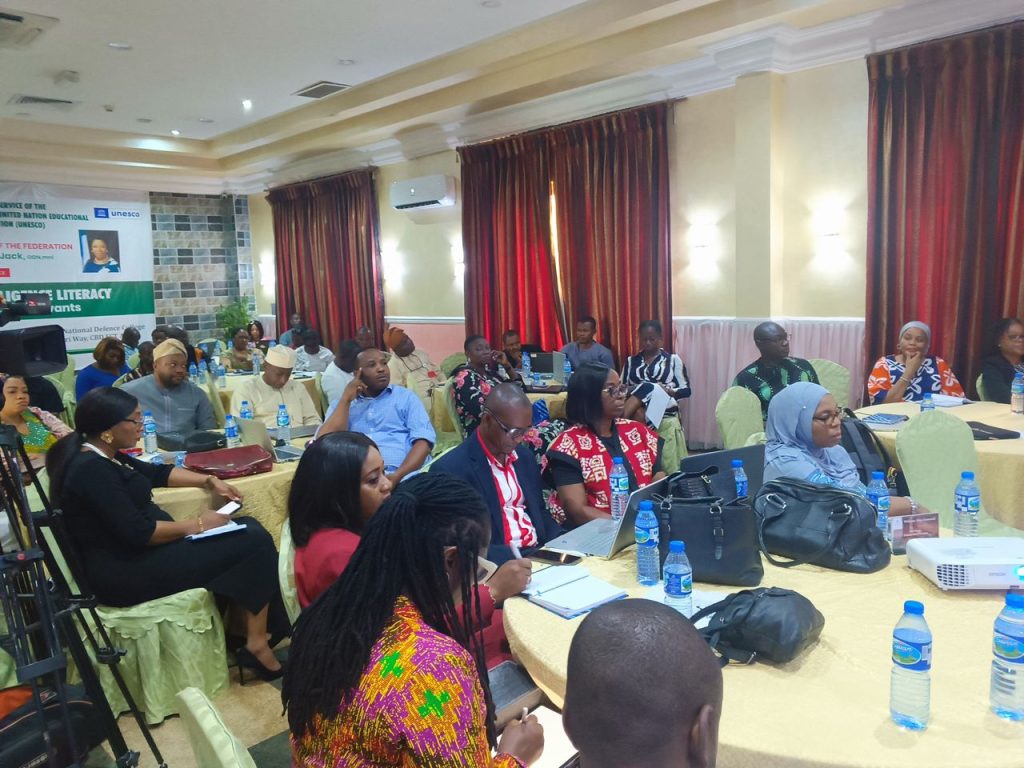
Participants, drawn from various government institutions, are expected to gain practical insights into AI tools, governance frameworks, and ethical considerations, aimed at improving service delivery and institutional performance.
The training, which runs from May 6 to May 8, 2026, underscores Nigeria’s commitment to leveraging digital innovation while ensuring accountability, transparency, and inclusiveness in governance.


I am interested in Ai training.