China’s zero-tariff policy for African exports is set to unlock fresh opportunities for growth, deepen economic cooperation, and improve livelihoods across the continent, analysts have said.
The policy takes full effect for 53 African countries with diplomatic ties to China. Announced earlier by President Xi Jinping, the initiative is expected to remove longstanding trade barriers and expand market access for African goods.
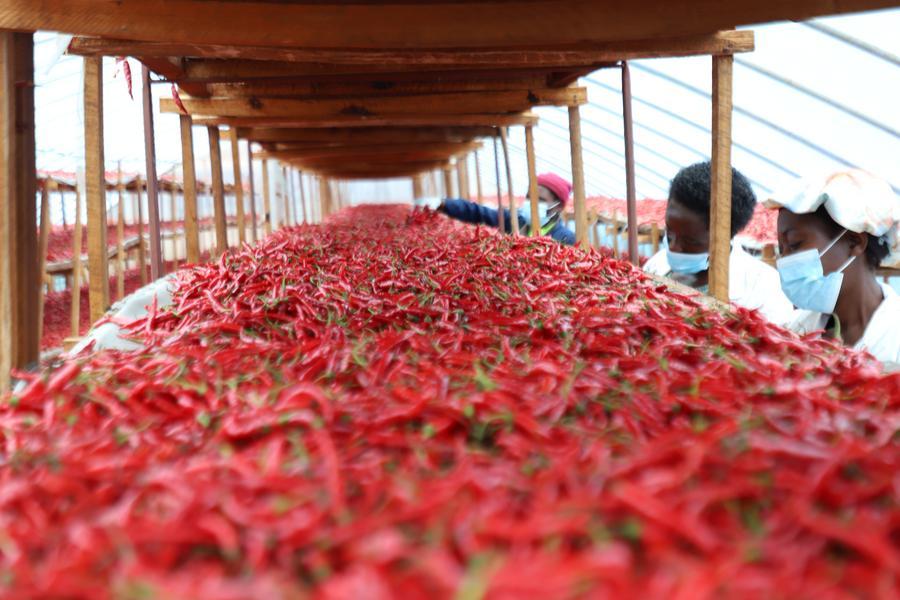
In eastern Rwanda’s Kayonza District, farmers in Ibiza Village are already seeing the benefits. Demand from China for red chilli peppers is rising, creating new income streams for smallholder farmers. What began as modest cultivation has quickly developed into a viable export-driven enterprise.
For many farmers, the expansion of chilli exports offers a pathway out of poverty. Companies such as Fisher Global, which began exporting dried chilli to China in 2022, are scaling up production significantly. The firm has expanded its cultivated land from 15 hectares to 300 hectares, while creating dozens of permanent jobs and hundreds of seasonal roles.
According to the company’s management, access to China’s vast and stable market has encouraged increased investment and higher production targets. Exports have grown from a single container in 2022 to around 10 in 2023, with annual volumes now reaching about 300 metric tonnes. The company aims to exceed 1,000 tonnes in the coming years.
The impact is also evident at the household level. Farmers report substantial increases in income, enabling them to acquire land and improve their living standards. For many rural communities, chilli farming has become a transformative economic activity.
Beyond agriculture, China has widened market access for African products through streamlined customs procedures and participation in major trade fairs such as the China International Import Expo. These efforts have helped connect African goods to global supply chains.
Trade between China and Africa continues to grow strongly. In 2025, total trade rose by 17.7 per cent to 348 billion dollars, with African exports to China surpassing 123 billion dollars.
Experts believe the zero-tariff policy will encourage diversification and industrialisation across Africa. By lowering entry barriers, it provides exporters with access to a vast consumer base and reduces dependence on traditional markets.
The initiative also builds on broader cooperation frameworks, including commitments made under the Forum on China-Africa Cooperation. Across sectors such as mining and agriculture, Chinese-backed projects are supporting value addition and technology transfer.
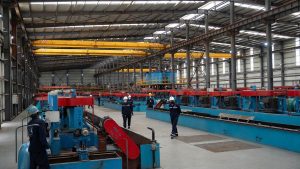
In Mozambique, a new graphite processing plant is expected to boost industrial output, while agricultural partnerships have significantly increased rice yields through improved farming techniques and seed quality.
Analysts say the policy comes at a critical time, as global trade faces increasing protectionism. China’s approach, centred on openness and collaboration, is being viewed as a stabilising force for developing economies.
International leaders have welcomed the move, noting its potential to promote inclusive growth and strengthen South-South cooperation. African policymakers have also described it as timely, particularly as many economies grapple with global uncertainties.
For African businesses, the Chinese market is becoming central to future expansion plans. Exporters are increasingly targeting Chinese consumers, highlighting the quality and uniqueness of their products.
With rising demand and improved access, stakeholders remain optimistic that the zero-tariff policy will deliver long-term economic gains, strengthen partnerships, and accelerate Africa’s development trajectory.
Source: Xinhua