
The Cross River State Government, in partnership with a German development organisation, has trained more than 5,300 farmers in good agricultural practises, financial literacy and modern farming techniques aimed at increasing productivity and reducing post-harvest losses.
The training was one of the major achievements of Project Grow, an agricultural market systems development initiative designed to transform the agricultural sector in Cross River State.
Speaking with journalists in Calabar, the capital of Cross River State, the Commissioner for Crops and Irrigation Development, Mr. Johnson Ebokpo, said Project Grow was established to transition agriculture from subsistence farming to a viable economic sector capable of creating jobs, attracting investment and strengthening food security.
“The initiative is part of the administration’s broader effort to reposition agriculture from subsistence farming to a viable economic sector that creates jobs, improves incomes, attracts investments and strengthens food security across the state,” Ebokpo said.
READ ALSO: Cross River Government Task Experts On Agricultural Transformation
According to him, since the project’s launch in 2023, implementation has recorded steady progress across key farming clusters in Odukpani, Ogoja, Obubra, Yakurr, Yala, Ikom, Obudu and Obanliku Local Government Areas.
He noted that one of the programme’s major milestones was the training of over 5,300 farmers in partnership with AFOS Foundation, a German non-governmental organisation operating in Nigeria through the African Trust Fund for Entrepreneurial Development.
“The farmers were trained in good agricultural practices, financial literacy and modern farming methods aimed at improving productivity and reducing post-harvest losses. The project also supported the cultivation of 450 hectares of maize and soybean farms,” he said.
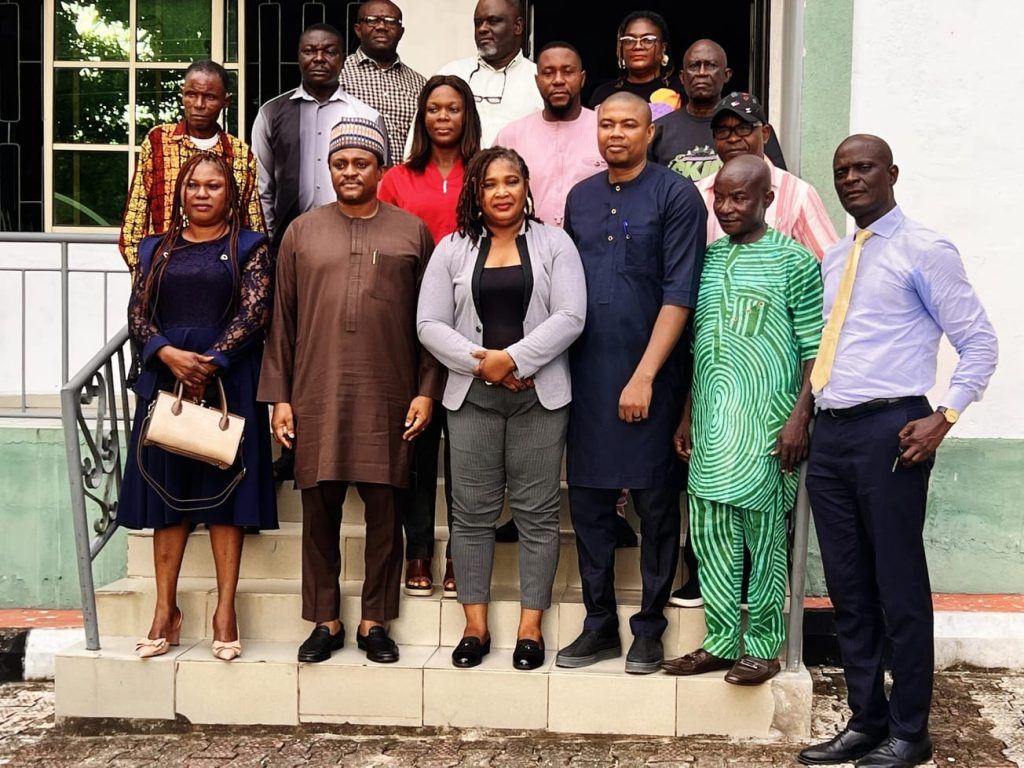
Ebokpo further disclosed that Project Grow has created 391 direct jobs, facilitated the emergence of 28 agribusinesses and strengthened existing farmer cooperatives as part of efforts to transform the state’s rural agricultural economy.
He said, “beyond production, Project Grow has begun to reshape the rural agricultural economy. Twenty-eight agribusinesses, including aggregators and service providers, have emerged alongside the restructuring and strengthening of several farmer cooperatives. Collectively, these developments have created 391 direct jobs across various agricultural value chains.”
The commissioner identified the project’s primary value chains as rice, maize, cassava, animal fodder and aquaculture, while secondary value chains include soybean, cowpea, wheat, sorghum and orange-fleshed sweet potato.
He further stated, “these value chains were selected based on their economic potential, market demand and capacity to drive inclusive agricultural growth in Cross River State.”
Also speaking, the Director of Project Grow, Mr. Denis Ikpali, described the initiative as a market systems programme specifically designed to address structural challenges within the agricultural sector.
“Project Grow is deliberately structured to tackle critical gaps in agriculture, particularly in market access, aggregation, financing, input supply and reliable demand,” Ikpali said.
Ikpali noted that efforts to transform agriculture into a thriving economic sector had encountered challenges, including rising inflation, increasing production and transportation costs, limited access to structured finance and fluctuations in commodity prices.
He said that these challenges were being addressed through data-driven market analysis, stronger stakeholder partnerships and adaptive implementation strategies aimed at improving project performance during the 2026 farming season.