
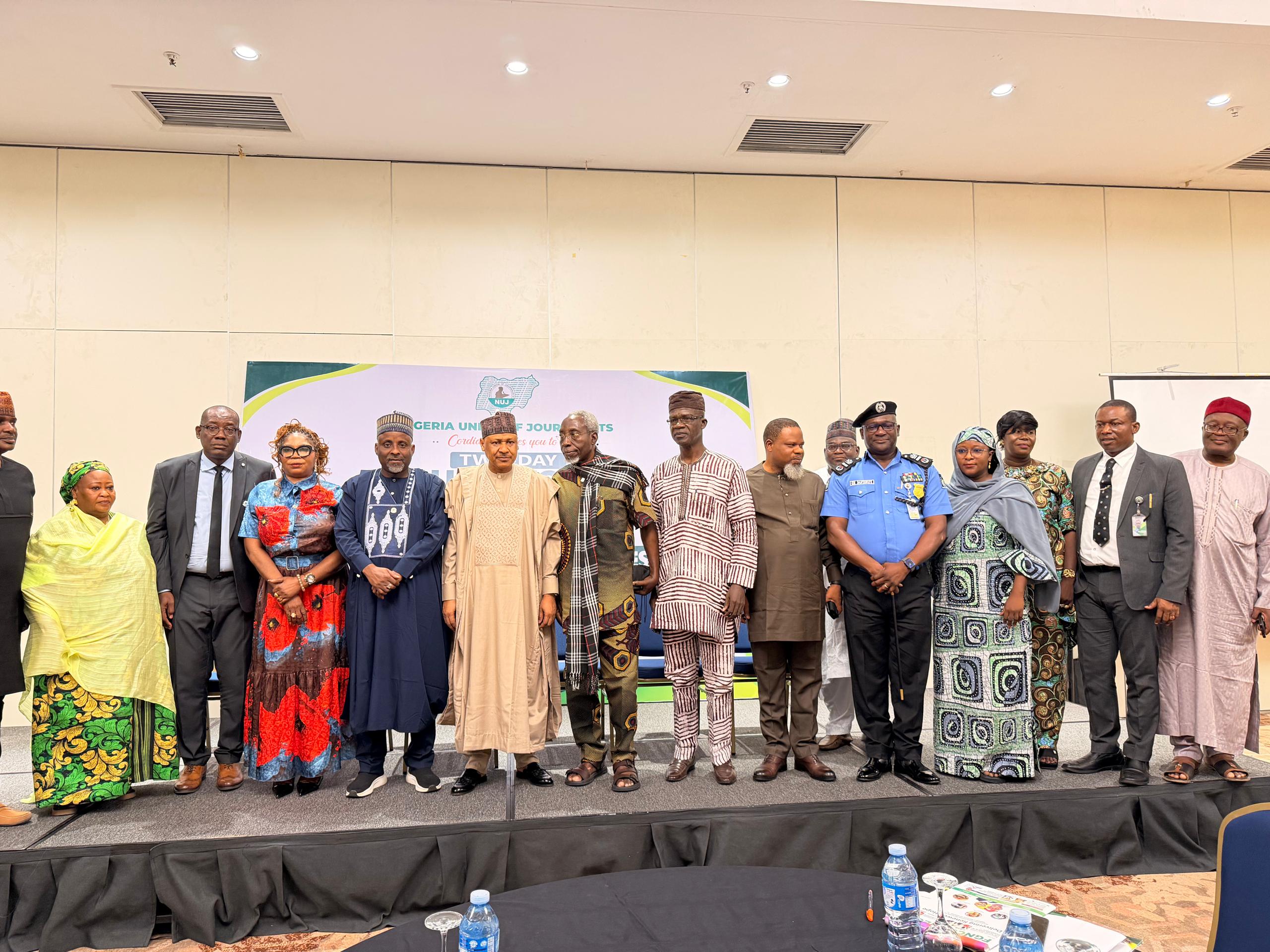
Minister of Information and National Orientation, Mohammed Idris, and the National Security Adviser (NSA), represented at Thursday’s National Security Summit by his aide on strategic communication, Chido Onumah, have called for deeper collaboration between security agencies and the media as a key component of Nigeria’s strategy to tackle insecurity.
Speaking at the summit organised by the Nigeria Union of Journalists (NUJ) in collaboration with the Department of State Services (DSS) under the theme “Media and Security Agencies as Partners in Nation Building”, Idris said the gathering was timely given the increasingly complex threats confronting the nation, which require both kinetic responses and informed public engagement.
“Terrorism, violent extremism, cybercrime, organised criminality and disinformation have forced nations to rethink traditional approaches to security.
“The relationship between the media and security agencies must therefore be founded on mutual respect, professionalism, trust and an appreciation of their complementary roles.” Idris said.
Idris described the partnership as integral to President Bola Ahmed Tinubu’s Renewed Hope Agenda, noting that the administration has prioritised security through military operations, intelligence gathering, technological upgrades and community engagement.
He highlighted recent successes, including the neutralisation of terrorists and bandits, the rescue of kidnapped victims, the dismantling of criminal camps, and increased investment in intelligence and surveillance. He, however, warned that misinformation and premature reporting could undermine these gains.
“National security is not served when misinformation is amplified without verification. Neither is it served when legitimate public concerns are ignored,” the minister said, urging journalists to uphold ethical standards and responsible reporting on security matters. ”The minister stated.
Speaking on behalf of the NSA, Nuhu Ribadu, Onumah said the government recognises the media’s right and duty to inform the public but stressed the need for a structured information-sharing mechanism that balances transparency with operational security.
He announced that the Office of the National Security Adviser (ONSA) is developing a National Security Strategic Communication Framework to provide such a platform.
“We are all in this together. Journalists must have access to credible information, while security agencies must improve their communication and transparency.
“The framework will help reduce the risk of reports that could inadvertently aid terrorists or criminal elements while protecting the public’s right to know,” Onumah said.
The NSA’s office also outlined practical measures under consideration to strengthen relations with the media, including faster verified briefings during crises and the appointment of designated liaison officers to facilitate timely information dissemination.
Both Idris and the NSA underscored that modern security extends beyond kinetic operations.
The Defence Ministry’s assessment that addressing insecurity is “40 per cent kinetic and 60 per cent non-kinetic” was cited to emphasise the importance of information management, strategic communication and community engagement as critical fronts in the fight against insecurity.
The summit, attended by NUJ President Alhassan Yahaya Abdullahi, security chiefs, academics and media executives, produced commitments from both the media and security agencies to deepen engagement, build trust and establish mechanisms for verification and responsible reporting.
The DSS received commendation from the NUJ for facilitating constructive dialogue, while the Defence Ministry signalled plans to embed journalists with military units to enhance the accuracy and clarity of operational reporting.
Idris concluded that a professional and ethical media operating in partnership with transparent security institutions strengthens public confidence and national resilience.
“The media informs citizens, shapes public opinion and promotes accountability, while security agencies protect lives and property. Where these functions are effectively coordinated, democracy and development are strengthened,” he said.
The summit ended with a pledge by media and security stakeholders to operationalise the proposed communication framework and sustain regular engagements aimed at safeguarding national security while protecting the public’s right to information.

