

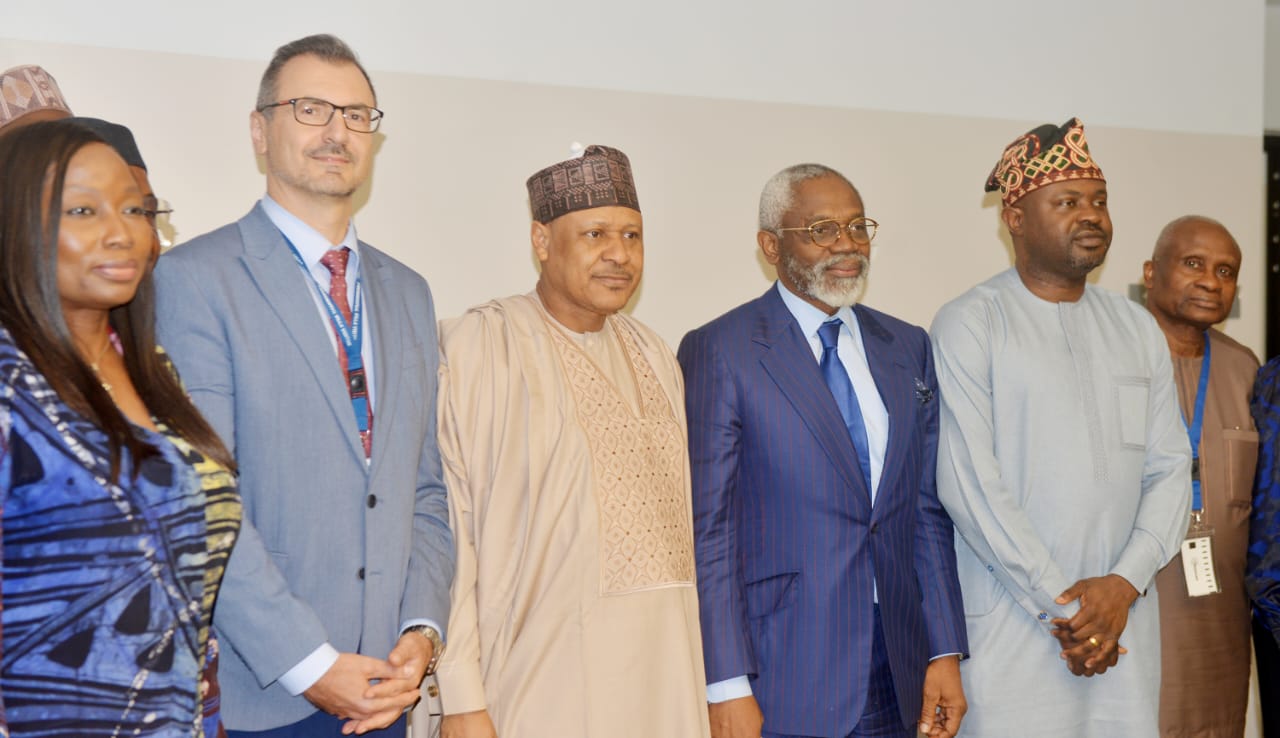
The Federal Government says Nigeria has no reported cases of Ebola Virus Disease (EVD) and is intensifying preventive measures to maintain its zero-case status while strengthening national and regional preparedness.
Speaking at the inauguration of the Presidential Task Force on Ebola Preparedness in Abuja, the Chief of Staff to the President, Femi Gbajabiamila, said the country’s strategy is centered on prevention rather than cure.
He explained that Nigeria is working to ensure that its surveillance systems, response mechanisms, and coordination structures remain strong enough to detect and contain any potential outbreak quickly.
Gbajabiamila said the government is building on lessons learned from the 2014 Ebola outbreak, which exposed gaps in early detection and response.
According to him, those experiences have informed stronger collaboration between federal and state governments, particularly in high-risk entry points such as international airports and land borders.
He noted that the new task force is part of efforts to institutionalise epidemic preparedness in Nigeria, ensuring that response systems are not only activated during emergencies but remain functional at all times. He added that sub-committees have been established to address key areas including border management, immigration control, and disease surveillance.
“We inaugurated the committee today on Nigeria’s preparedness for the Ebola Virus Disease. We have covered a lot of ground, and presently there is no reported case in the country, which is good news,” Gbajabiamila said. “That is why all hands must be on deck to ensure that preventive measures are prioritised rather than curative measures.”
He stressed that Nigeria does not want a repeat of the 2014 situation, when an imported case triggered urgent nationwide response efforts. He said the government is now focused on closing all possible gaps in preparedness and ensuring rapid response capacity is in place.
Effective Response and Preparedness
Gbajabiamila also expressed confidence in Nigeria’s ability to lead Africa’s response to Ebola and other emerging public health threats. He said there is stronger coordination between federal authorities and states with international airports, including Lagos, Rivers, and Enugu, to enhance monitoring and response capabilities.
According to him, agencies such as the Nigeria Immigration Service, border management institutions, and border communities are actively involved in strengthening surveillance at land borders, given the high volume of cross-border movement.
“We have learnt valuable lessons from the 2014 outbreak and are building on those gains by putting structures in place to eliminate any gaps in our preparedness,” he added.
He further explained that the government’s objective is to establish permanent systems that will remain effective beyond the current threat environment. This, he said, will ensure that Nigeria is never caught unprepared in the event of another outbreak.
“What we want is to maintain the zero-case status we currently enjoy. However, if we are unfortunate enough to record one or two cases, we must be able to move quickly because the necessary structures and systems are already in place,” he said.
Gbajabiamila added that the Presidential Task Force includes committees focused on surveillance, border control, and immigration, with the Nigeria Centre for Disease Control and Prevention (NCDC) providing technical leadership and coordination.
Also speaking, the Director-General of the NCDC, Dr. Jide Idris, said Nigeria currently has no recorded Ebola cases but emphasized that preparedness remains critical due to recent developments in other parts of Africa.
He said surveillance systems have been strengthened at major points of entry, especially airports, to ensure early detection of any suspected cases.
“The focus is to be prepared. We don’t have any Ebola case here now, but we need to be prepared. We need to ensure that we don’t get that Ebola virus here. However, just in case one slips in, we want to be prepared nationally to identify and deal with the case,” Idris said.
He reiterated that Nigeria’s priority is to maintain vigilance while strengthening systems that allow for rapid response in the event of any outbreak.
The inauguration was attended by key government officials, including the Minister of Information and National Orientation, Mohammed Idris; Minister of Interior, Olubunmi Tunji-Ojo; Director-General of the NCDC, Dr. Jide Idris; and representatives from the Federal Airports Authority of Nigeria (FAAN), World Health Organization (WHO), and various state health ministries.

 and is intensifying preventive measures to maintain its zero-case status while strengthening national and regional preparedness.)