
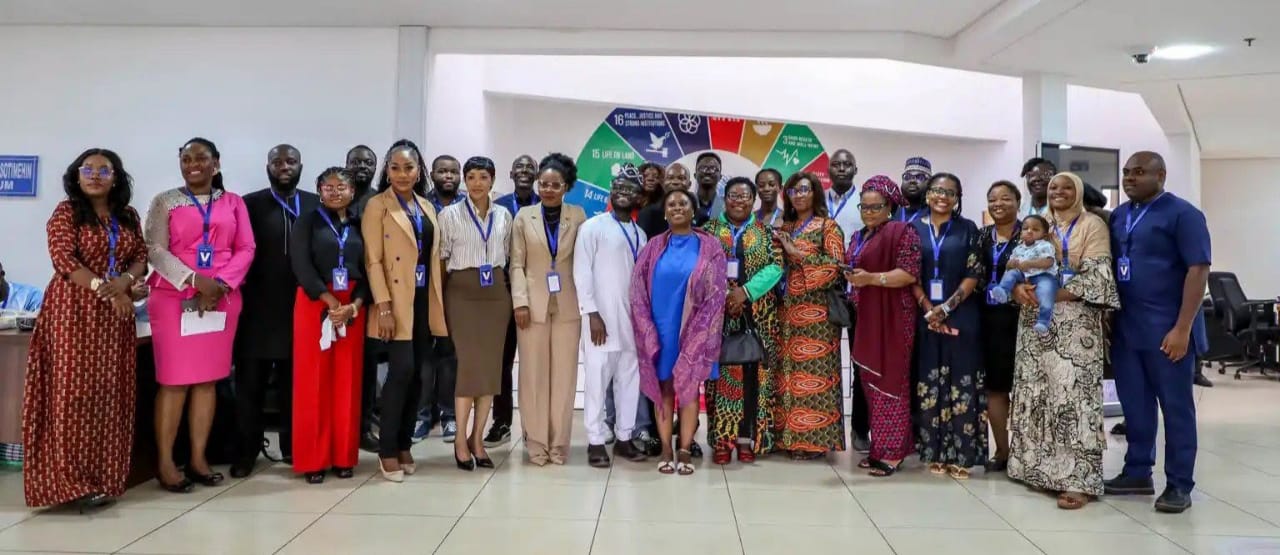
Stakeholders from media organisations, civil society groups, election observation networks and communication institutions have called for stronger collaboration, enhanced transparency and improved protection for journalists as Nigeria prepares for the 2027 general election.
The call was made during a Media-Civil Society Organisation (CSO) Roundtable Dialogue themed, “Building Stronger Media-CSO Partnerships for Credible, Peaceful and Inclusive Elections,” organised by Journalists for Human Rights (JHR) and the Office of the United Nations High Commissioner for Human Rights (OHCHR) at the United Nations House in Abuja.
Participants at the dialogue noted that the media and civil society organisations have a critical role to play in safeguarding democracy, particularly amid growing concerns on misinformation, hate speech, electoral violence and voter apathy.
READ ALSO:2027 Elections: Media Urged to Tackle Fake News, Disinformation
Speaking at the event, Senior Human Rights Advisor, Office of the United Nations High Commissioner for Human Rights (OHCHR). Ms. Adwoa Kufuor, stressed the importance of journalism in protecting democratic values and human rights during elections.
“Free, fair and credible elections depend on freedom of expression and access to accurate information. Journalists are key actors in countering misinformation, disinformation and hate speech, yet many face threats and attacks while carrying out election-related duties,” she said.
The roundtable examined challenges facing election coverage in Nigeria and explored strategies for strengthening cooperation between the media and civil society to enhance accountability, transparency and public trust in the electoral process.
In a communiqué issued at the end of the meeting, participants recommended the establishment of a verified central platform for timely electoral information accessible to journalists and civil society organisations.
They also urged the Independent National Electoral Commission (INEC) to conduct mandatory mock tests of election technologies ahead of elections and formally recognise the media as a critical stakeholder in the electoral process.
The communiqué further recommended that post-election reports should document cases of journalist harassment, denial of access to information, polling units and collation centres to improve accountability and transparency.
Mapping of Civil Society Organisations
To strengthen collaboration, participants proposed the creation of a joint media-CSO platform for sharing information, resources and verified content.
They also advocated the mapping of civil society organisations according to their areas of expertise to facilitate access to credible sources by journalists.
According to the communiqué, CSO personnel working in remote communities could also serve as correspondents in areas with limited media presence, helping to expand access to election-related information across the country.
On funding and resource mobilisation, stakeholders recommended exploring structured support mechanisms through civil society organisations and development partners to improve election coverage.
They also endorsed a proposal by the Broadcasting Organisations of Nigeria (BON) for a shared resource pool that would enable media organisations to access election-related photographs, footage and other information resources.
The safety of journalists emerged as a major concern during the discussions.
Participants called for the establishment of a Security Accord involving media organisations, civil society groups, security agencies and other stakeholders to provide a formal framework for protecting journalists during election assignments.
“Journalists must be able to carry out their constitutional responsibility without fear of intimidation, harassment or violence. Their safety is essential to credible elections and democratic governance,” participants stated in the communiqué.
The stakeholders also proposed the creation of an inter-agency consultative security committee with representation from the media and civil society sectors, alongside regular pre-election engagements involving INEC, security agencies and media stakeholders.
To improve professional standards, the communiqué underscored the need for continuous training programmes on election reporting before, during and after elections. It also recommended extending such capacity-building initiatives to journalism students, young people and digital content creators.
Participants highlighted the growing importance of artificial intelligence, fact-checking and digital verification tools in combating misinformation and disinformation during election periods.
Editorial Independence
The roundtable further stressed the importance of editorial independence and proposed independent channels through which journalists could safely share information that may not be published by their primary media organisations.
It also recommended the establishment of a dedicated digital platform for journalists and bloggers operating in underserved communities.
To strengthen information integrity, participants urged all media organisations to establish dedicated fact-checking desks and make verification a core editorial responsibility throughout the electoral cycle.
Addressing voter apathy, stakeholders called for intensified public enlightenment campaigns and stronger collaboration between the media and civil society organisations on voter education and civic engagement initiatives.
The communiqué also highlighted the need for insurance coverage for journalists, technical personnel and equipment deployed for election coverage.
Deployment arrangements
It stressed that videographers, camera operators and other technical staff should be adequately recognised and included in accreditation, security planning and deployment arrangements.
Participants further raised concerns about the psychological impact of election reporting, especially in conflict-prone areas.
They recommended the establishment of structured psychosocial support systems, including trauma counselling, therapy and mental health services for journalists exposed to violence, intimidation and traumatic events.
The stakeholders reaffirmed their commitment to promoting a free, safe, well-resourced and professionally equipped media environment, describing it as indispensable to credible elections and the sustenance of democracy in Nigeria.
They called on INEC, security agencies, media regulatory bodies, civil society organisations, media proprietors and development partners to take immediate steps toward implementing the recommendations contained in the communiqué.

