
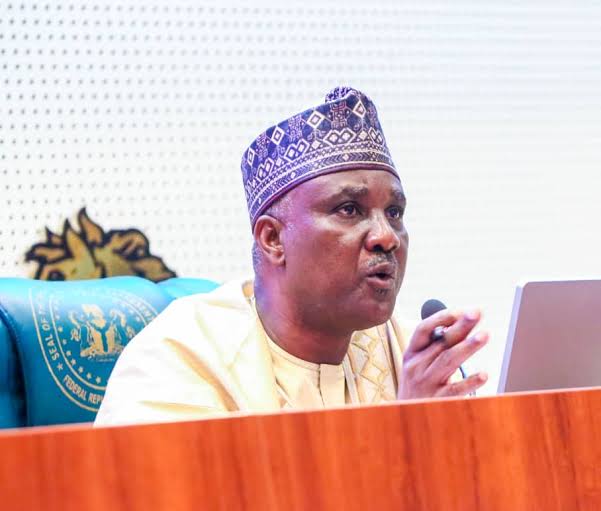
Speaker of the House of Representatives, Abbas Tajudeen, has said Nigeria can no longer afford to manage public health emergencies through reactive measures alone, stressing the need for stronger systems that anticipate and prevent disease outbreaks.
Speaking at a one-day public hearing on two health-related bills organised by the House Committee on Infectious Diseases in Abuja, Abbas emphasised that Nigeria must invest in scientific innovation, research and preparedness to safeguard the health of its citizens.
According to him, the proposed legislation under consideration represents a critical step toward strengthening the country’s capacity for disease prevention, preparedness, research and a coordinated public health response.
ALSO READ: NCDC Raises Alarm Over Multiple Disease Outbreaks In Nigeria
The Speaker highlighted House Bill 2629, which seeks to establish the National Institute for Public Health and Infectious Diseases, describing it as a strategic intervention to strengthen Nigeria’s public health architecture.
“To build a resilient nation, the Legislature must listen to the expertise of professionals, the experiences of stakeholders and the perspectives of the wider public. Your contributions today will help transform the provisions of this Bill into a robust legislative framework capable of strengthening our national preparedness and protecting the health and well-being of over 200 million Nigerians,” he said.
Abbas noted that increasing global inter-connection has accelerated the spread of infectious diseases, making proactive, science-driven responses more important than ever.
He recalled the devastating effects of outbreaks such as Ebola, Lassa fever and the COVID-19 pandemic, which exposed vulnerabilities in Nigeria’s healthcare system and underscored the need for stronger preparedness mechanisms.
“The experience of COVID-19 taught us that our preparedness mechanisms, infrastructure and response capacity must be continuously strengthened,” he said.
The Speaker also stressed the need for greater national self-reliance in health security, noting that disruptions in global supply chains during the pandemic limited access to vaccines, diagnostic tools and other essential medical supplies.
He said the proposed institute would integrate prevention, research, diagnosis, surveillance, control and management of infectious diseases within a coordinated and sustainable framework.
“The institute will empower Nigerian scientists and researchers to investigate local health challenges, develop homegrown solutions and position Nigeria as a contributor to global health security rather than merely a beneficiary of external interventions,” Abbas added.
In his welcome address, Chairman of the House Committee on Infectious Diseases, Amobi Godwin Ogah, represented by Mark Esset, said the hearing was convened to receive memoranda on two bills: the National Institute for Public Health and Infectious Diseases (Establishment) Bill and the Tuberculosis Anti-Discrimination Bill.
Ogah explained that the proposal to establish the institute was informed by findings from an oversight visit to the National Tuberculosis and Leprosy Training Centre in Saye, Zaria, in October 2025, where the committee identified significant but underutilised human and infrastructural capacity.
He disclosed that the Presidency had already approved the upgrade of the centre into a public health institute and expressed confidence that the proposed legislation would strengthen Nigeria’s capacity to prevent, diagnose, treat and manage infectious diseases.
On the Tuberculosis Anti-Discrimination Bill, Ogah said the legislation seeks to protect the rights and dignity of persons living with or affected by tuberculosis, eliminate stigma and discrimination, and encourage early testing, diagnosis and treatment.
NCDC Opposes Proposed Institute
However, the Nigeria Centre for Disease Control and Prevention (NCDC) rejected the proposed National Institute for Public Health and Infectious Diseases Bill, warning that it could create duplication of responsibilities and weaken the country’s public health emergency response system.
Presenting the agency’s memorandum, Director-General of the NCDC, Dr Jide Idris, said Nigeria already has a legally established and internationally recognised national public health institute through the NCDC, created under the NCDC Establishment Act of 2018.
He argued that the responsibilities proposed for the new institute, including disease surveillance, outbreak response, laboratory coordination, emergency preparedness, public health research and workforce development, are already assigned to the NCDC by law.
“The core responsibilities proposed for the new institute are substantially the same as those currently assigned to the NCDC,” Idris said.
He warned that creating another institution with overlapping mandates could generate uncertainty over leadership, accountability and operational command during disease outbreaks.
The NCDC also noted that the Bill seeks to designate the proposed institute as Nigeria’s National Focal Point for the International Health Regulations and empower it to coordinate national responses to infectious disease outbreaks, functions currently performed by the agency and recognised by the World Health Organisation (WHO).
According to Idris, such overlap could create confusion among state governments, development partners and international organisations that currently engage with the NCDC as Nigeria’s official public health authority.
He further raised concerns about the financial implications of establishing a new federal institution with headquarters, zonal offices, state structures and extensive staffing requirements at a time of competing national priorities.
The NCDC therefore urged the National Assembly to strengthen existing public health institutions rather than establish parallel structures.
While supporting the upgrade of the National Tuberculosis and Leprosy Training Centre in Saye, Zaria, into a tertiary institution dedicated to teaching, research and clinical services, the agency called for a review of provisions that would create what it described as a parallel public health command structure.
The public hearing also received submissions from the Federal Ministry of Health and Social Welfare, development partners, civil society organisations, professional bodies and other stakeholders as lawmakers continue consideration of the two bills.

