


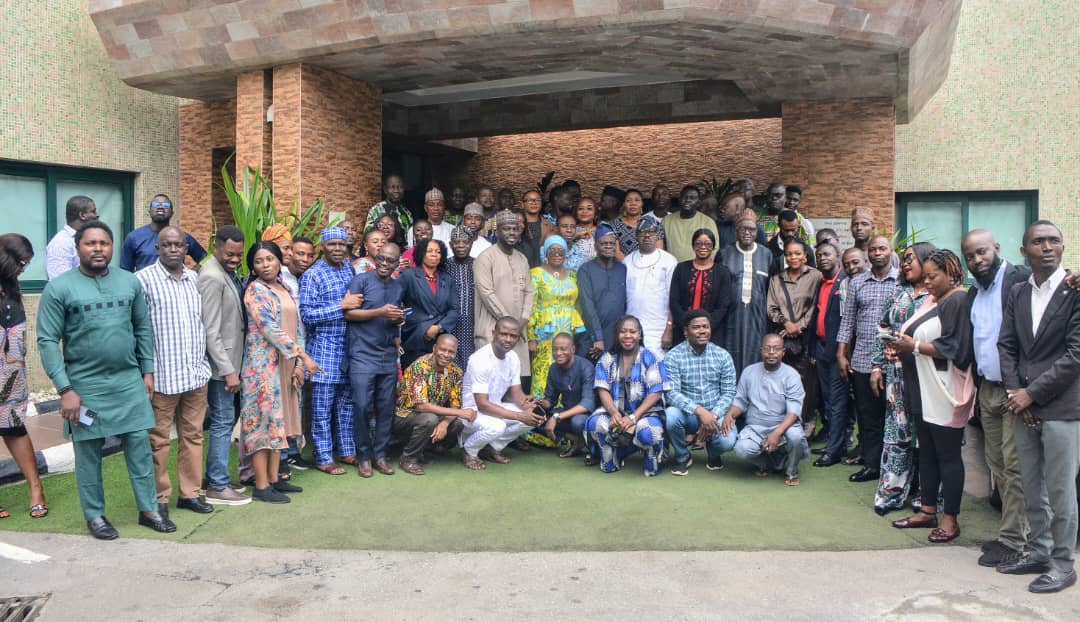
The Open Forum on Agricultural Biotechnology (OFAB) in Africa, Nigeria Chapter, an initiative of the African Agricultural Technology Foundation (AATF), under the auspices of the National Biotechnology Research and Development Agency (NBRDA) has held a One-Day Sensitisation Workshop On “Genetically Modified Organisms (GMOs) and their Products.
The Director-General/CEO, National Biotechnology Research & Development Agency (NBRDA).
Prof. Abdullahi Mustapha, says the workshop comes at a critical time when the developing and the underdeveloped countries around the world are grappling with compounded challenges such as food insecurity, climate change, biotic and abiotic stresses and the need for inclusive economic growth. Responsibly developed and effectively adopted agricultural biotechnology offers a powerful set of tools to address these interconnected problems.
” Today, biotechnology is more relevant than ever, especially as the government faces the dual threats of drought and impending famine. To counter these, it is turning to climate-smart agricultural solutions such as high-yielding, drought-tolerant maize, herbicide tolerant soybeans, bacterial blight-resistant potato, pod borer-resistant (PBR) cowpea and disease and insect-tolerant cotton — innovations that have the potential to significantly improve the livelihoods of smallholder farmers across Nigeria.
‘” Among the leading innovations in this field in Nigeria are genetically modified organisms (GMOs) and their products. Scientists in Nigeria have harnessed this technology to develop crops like Bt cotton, Bt maize and PBR cowpea, which have since been commercialised. These are not just scientific milestones, they are real-world solutions that transform lives, improve food systems and strengthen farmer resilience.
” However, we must also acknowledge the hurdles. In our increasingly connected world, information is a powerful currency. Social media and digital platforms have expanded access to knowledge and created new communities and networks. This connectivity has benefited many countries in the Global South, enabling data sharing, learning across borders and more strategic decision-making.
“But it has also come with a downside: the troubling rise of information disorders — namely, misinformation, disinformation and malinformation. These distortions of truth are dangerous because they lead people to make decisions based on inaccurate or false information. In the context of GMOs and biotechnology, this has contributed to public skepticism, regulatory uncertainty and slow adoption of technologies that could improve millions of lives“. Prof. Mustapha said.
He noted that the sensitisation is crucial because it provides a platform for evidence-based dialogue, where diverse voices can come together to ask questions, share insights and build mutual understanding around biotechnology and its place in NIgeria’s agricultural future.
“ In a time marked by an overflow of both facts and falsehoods, the role of the media as truth-bearers and defenders of democracy has never been more vital. Your work goes beyond reporting. You are charged with scrutinising, analysing and contextualising the issues, especially those as consequential as food security, technology and public health, through the lens of evidence-based reporting.
” As media practitioners, you wield tremendous power; the power to shape public opinion, influence policy and drive societal transformation. Your narratives can spark innovation, build trust in science, foster unity and empower communities. But with this power comes a deep responsibility: the duty to uphold integrity, objectivity and accuracy in everything you publish.
” This workshop seeks to build meaningful partnerships between the media and the scientific community. It urges you to engage researchers, consult credible sources and present scientific developments in ways that are both compelling and easy to understand for the public“. He said.
He pointed out that the goals of the workshop is ” to raise awareness about the dangers of misinformation in science and technology; Create safe spaces for dialogue on contentious issues such as GMOs in food, and the broader challenge of addressing hunger in Nigeria and develop effective counter-narratives that can help reduce misinformation in the Nigerian media landscape, particularly around GMOs and their products”.
Prof Mustapha urged the participants to fully embrace your role as custodians of truth, champions of objectivity and ambassadors of science. Let your reporting be guided by the pursuit of knowledge, the quest for truth and the core values of ethical journalism.
In his remarks, the Chairman of the House of Representatives Press Corps speech Mr. Gboyega Onadiran said that it was indeed a privilege for members of the House Press Corps to be gathered by OFAB, AATF and NBRDA to discuss the intricacies of GMOs.
” It’s essential to acknowledge the divergent views on this topic. On one hand, proponents of GMOs argue that these organisms can enhance crop yields, improve nutritional content, and foster sustainable agricultural practices.
” On the other hand, critics raise concerns about the potential risks associated with GMOs, including environmental degradation, health implications, and economic threats to local farmers.
” Some argue that GMOs can contaminate local genetic resources, undermine food diversity, and increase hunger.
” Today, we have the opportunity to listen to experts on this very important issue. Our goal is to make informed decisions that prioritize the well-being of Nigerians and the environment. I encourage our members to be attentive and I look forward to a thoughtful and nuanced discussion on this critical issue”. Mr. Onadiran said.
He commended the OFAB, AATF and NBRDA for organising the very important training for members of the corps.
Participants were taken through topics such as ” the Science of Agricultural Biotechnology, by Dr. Rose Gidado, Deploying Biotechnology Tools To Address The Farmers and Low Productivity Challenges, by Prof Ishiyaku Muhammed and Does Nigeria’s Regulatory Framework Guarantee the Safety Of Modern Biotechnology? By Dr. Rufus Ebegba”.
The participants at the training described the outcome as rewarding.
Oyenike Oyeniyi