


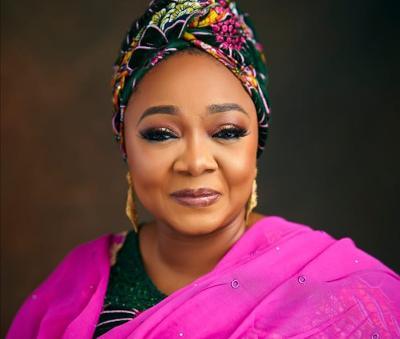
The Minister of Women Affairs and Social Development, Hajiya Iman Sulaiman-Ibrahim, has described affirmative procurement as a strategic instrument for advancing women’s economic empowerment and inclusive national development.
Speaking as Special Guest at the virtual “Gender on the Tender” engagement organised by the Inter-Bau Foundation, the Minister said public procurement remains “one of the most powerful economic tools available to governments.”
Addressing stakeholders across the construction and built environment sector, development partners, professional bodies, civil society, and private sector actors, she stated that when procurement systems are gender-blind, “they inadvertently reinforce historical inequalities,” but when they are gender-responsive, “they become instruments for transformation.”

Anchoring her remarks on Nigeria’s Women’s Economic Empowerment (WEE) Policy, she described the framework as “a deliberate shift from fragmented, welfare-oriented interventions to a coordinated, rights-based, and market-responsive framework for women’s economic inclusion.”
“At its core,”she noted, “is the recognition that women must not only be trained or supported, but must have equitable access to productive assets, finance, markets, and, critically, procurement opportunities.”
Clarifying the intent of affirmative procurement, the Minister stressed that it “is not about lowering standards or creating unfair advantage,”but rather about “correcting structural imbalances that have historically excluded women-owned and women-led enterprises from competitive markets, particularly in male-dominated sectors such as construction and the built environment.”
She added pointedly: “Equal treatment in unequal systems does not produce equal outcomes.”
The Minister said the WEE Policy encourages measures such as “targeted set-asides, preferential scoring, simplified bidding requirements, and capacity-building support that enable women-owned businesses to compete fairly and successfully.”
Underscoring the economic implications of exclusion, she described the construction and built environment sector as “a major driver of employment, infrastructure development, and national productivity,” warning that sidelining women represents “not only a social injustice, but also a significant economic loss.”
“Evidence consistently shows that when women participate meaningfully in economic activity, households are more resilient, communities are stronger, and economies grow more sustainably,” she said.

The Minister further noted that affirmative procurement aligns with national priorities, including the Renewed Hope Agenda of President Bola Ahmed Tinubu, which she said places “people-centred development and economic inclusion at the forefront of governance.”
Outlining her Ministry’s role, she explained that it serves as both “catalytic and collaborative,” providing “the policy backbone, coordinating stakeholders, and advocating for the mainstreaming of gender-responsive procurement across public and private institutions.”
She emphasised sustainability, noting that women entrepreneurs must be supported “to build capacity, meet standards, and scale sustainably so that affirmative procurement translates into long-term competitiveness, not dependency.”
Calling for collective action, she urged stakeholders to “move from conversation to action,” encouraging development partners to support “pilots, data generation, and technical assistance,” and regulatory authorities to embed gender considerations into procurement frameworks.
Concluding, she declared, “Putting gender on the tender is not a favour to women; it is a strategic investment in national development.”
She affirmed that affirmative procurement under the WEE Policy is “a pathway to building a more inclusive, resilient, and prosperous Nigeria, where women are not spectators, but full participants in shaping our physical and economic landscape,” and expressed confidence that the engagement would yield concrete outcomes.