


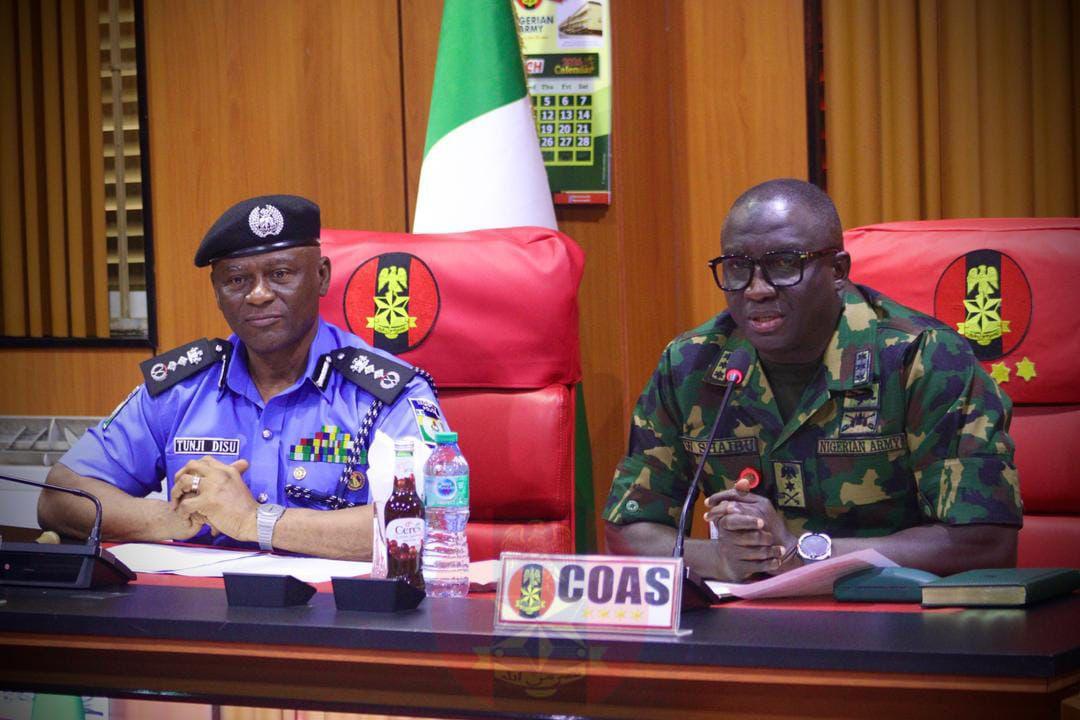
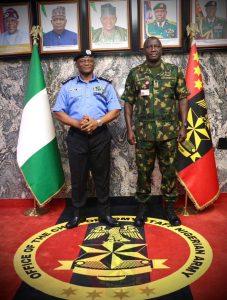
The Chief of Army Staff, Lieutenant General Waidi Shaibu, received the Inspector General of Police, Olatunji Disu, as both institutions signalled a deeper alignment on intelligence sharing, joint operations, and force integration.
The visit took place during a maiden familiarisation at Army Headquarters in Abuja, Nigeria’s capital.
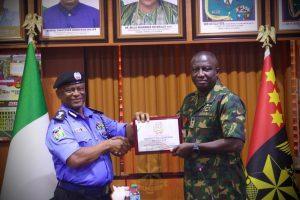
Lieutenant General Waidi Shaibu emphasised that fragmented responses to insecurity will not yield good national outcomes, as complex security environments demand integrated responses rather than isolated institutional actions.
The COAS referenced prior joint service under the United Nations Mission in Darfur as a foundation for the current alignment, underscoring the importance of trust and interoperability in high-risk operations.
He also pointed to ongoing joint operations in Kogi, Kwara, and Niger States, where combined efforts between the Army and Police have continued to pressure armed groups involved in banditry and kidnapping.
According to Lieutenant General Waidi Shaibu, these outcomes reinforce the necessity of maintaining a coordinated inter-agency framework.
The engagement reflects a recalibration of internal security management, where military and police roles increasingly intersect across banditry, insurgency, and organised crime theatres.
The Inspector General of Police, Olatunji Disu, while speaking earlier, stressed that sustained collaboration between the Nigerian Army and the Nigeria Police Force remains central to confronting Nigeria’s evolving threat landscape.

He noted that the long-standing partnership between both institutions has become a stabilising factor in national security operations, particularly where threats cut across conventional policing and military engagement thresholds.
He further acknowledged the Nigerian Army’s role in training Police Mobile Force personnel, describing it as a force multiplier that has strengthened operational readiness across multiple theatres. He assured that intelligence sharing and coordinated deployments would be intensified to sustain current operational gains.
The emphasis on jointness aligns with ongoing reforms across the Armed Forces and internal security agencies, aimed at creating a unified response structure capable of addressing hybrid threats that blur the lines between crime, insurgency, and terrorism.