

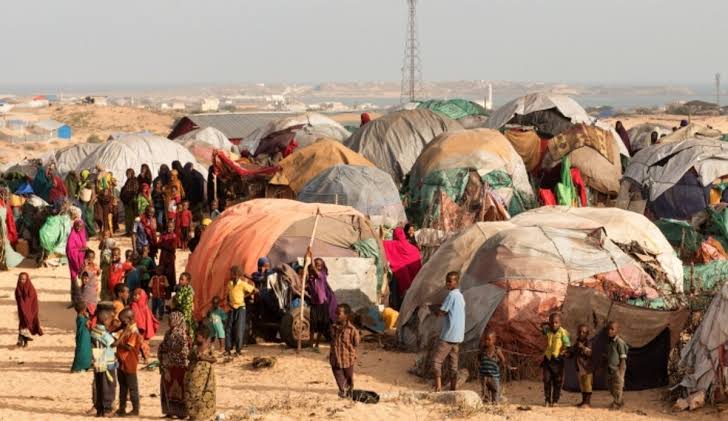
The Benue State Government in North Central Nigeria, has approved a comprehensive policy for Internally Displaced Persons (IDPs), aimed at addressing the challenges faced by displaced population in the state.
The policy, which has been tailored to reflect the unique circumstances in Benue, was validated at a meeting held Makurdi, the state capital, and attended by various stakeholders.
Acknowledging Save the Children International for their sponsorship and support, State Commissioner for Humanitarian Affairs and Disaster Management, Aondowase Kunde, highlighted the organization’s contributions in areas like Naka, where the IDPs population is significantly high.
Kunde emphasized the importance of input from all partners to ensure the effectiveness of the policy.
Once approved by the Benue State Executive Council, the policy will serve as a legal framework for managing IDPs affairs in the state.
Legal experts have meanwhile been engaged to support the adaptation of the national guidelines to suit Benue’s specific needs.
Speaking with Journalists on the sidelines to address concerns raised by the former Executive Secretary of the National Christians Pilgrims Commission, NCPC, Rev. Tor Uja about alleged fraud in IDP camps, Kunde stressed the importance of evidence and transparent reporting.
The commissioner emphasized the need for a systematic approach to camp management and closure in line with established policies.
In his remarks, a Member of the Benue State House of Assembly and Chairman of the Assembly Committee on Humanitarian Affairs and Disaster Management, Abu Umoru, assured of support from the State Assembly towards fast-tracking the implementation of the policy.
He also pledged to visit affected areas such as Naka to better understand the challenges faced by IDPs who left their homes in the wake of attacks by herdsmen.
Director General of the Sustainable Development Goals (SDGs) for Benue State, elder John Akuse, highlighted the importance of the validation process in ensuring cultural inclusion, accountability, and completeness of the policy.
He explained that the policy will guide the state in providing support not only to IDPs in camps but also to those living in host communities.
On her part, the Save the Children International’s Advocacy Campaign and Policy Manager, Murjanatu Kabir, emphasized the organization’s commitment to promoting the rights and well-being of children in vulnerable situations.
She explained that the organization aims to ensure that the IDPs policy document is fully integrated and aligned with their objectives.