Home Blog Page 135

Council Revives Literacy Commission, Approves Medical Fellowship Reform

0

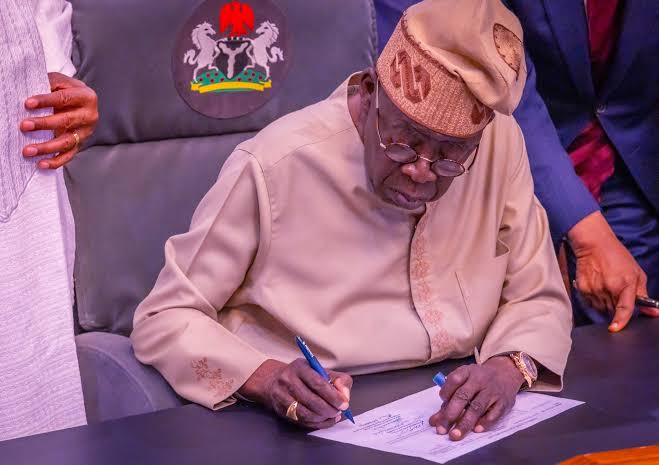
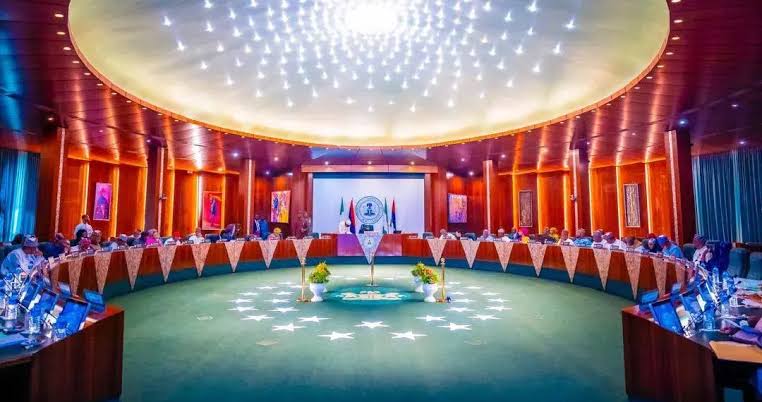
The Federal Executive Council (FEC) has approved the restoration of the National Commission for Mass Literacy, Adult and Non-Formal Education as an autonomous body.

It also approved a six-year moratorium on the establishment of new tertiary institutions and endorsed reforms recognising medical fellowships as equivalent to PhD qualifications.

Briefing State House correspondents after the Council meeting presided over by President Bola Ahmed Tinubu, the Minister of Education, Olatunji Alausa said; “the decisions were part of broader reforms in the education sector.”

He explained that the commission, which had earlier been downgraded to a department within the ministry at the start of the administration, would now regain its independent status.

Alausa said; “the upgrade was necessitated by President Tinubu’s expansive agenda to educate more than 50 million young adults over the next two to three years and equip them with digital literacy skills.”

He explained that “the Council therefore sought approval to restore the body to the status of a commission, a proposal which President Tinubu, as Chairman of the Council, approved.”

Alausa emphasised the urgency amid Nigeria’s literacy crisis, saying, “Today, we have about 56 million Nigerians that are illiterate. We can’t continue to have a high number of citizens that are illiterate.”

The commission, established in 2013, will now intensify efforts in rural areas using radio, TV, public advocacy, and community schools.

Alausa said; “The National Commission for Mass Literacy, Adult and Non-Formal Education has done a good job in educating people in the rural areas, So we’re happy today that this commission is back as a commission. Thanks to Mr. President for that.”

On medical education, Alausa announced amendments to the National Postgraduate Medical College Act, developed with the Attorney General, to eliminate barriers for super-specialised doctors.

We need to remove the dichotomy of doctors who spent almost 16 years from medical school and their residency, and then doing their fellowship, becoming super specialized.

“The kind of degree we need in Nigeria today for doctors is MBBS, Master of Medicine and Bachelor of Surgery,” he explained.

The changes address issues where medical professionals require a PhD for professorship despite equivalent expertise.

The Minister said; “This set of people in the medical sector have spent more than the year that average candidate spent getting a PhD. So we need to harmonise that… After this executive bill has been sent to the National Assembly, the National Postgraduate Medical College will now act as a PhD equivalent.”

He also announced Council’s major decision which imposes a six-year moratorium on establishing new universities, polytechnics, and colleges of education to prioritise quality and sustainability.

Today, access is not easy in the country. We have lots of tertiary institutions, both public and private. We need to help these private institutions be sustainable financially,” Alausa stated, citing last year’s JAMB over 2.3 million applicants for fewer than 228,000 university spots in public institutions.

With solutions like affordable options reducing private university enrollment, he said, “Just last year, we had 2.3 million Nigerians apply to JAMB… What will now happen is that there will be less people going to private universities. We need to make private educational institutions sustainable. As we improve quality in public and private universities.”

The Minister reaffirmed his commitment to excellence, saying, “I am going to make sure that every single child in this country, every single citizen of this country, get the highest quality of education that is comparable to anywhere in the world. When you are bringing a country as a gold standard, we’re advancing Nigeria’s education system to meet that.”

The fourth approval covers insurance for the 180 Federal Unity Schools, including engagement of underwriters for comprehensive and general coverage of critical assets.
 

President Tinubu Names Team to Attend Jesse Jackson’s Burial

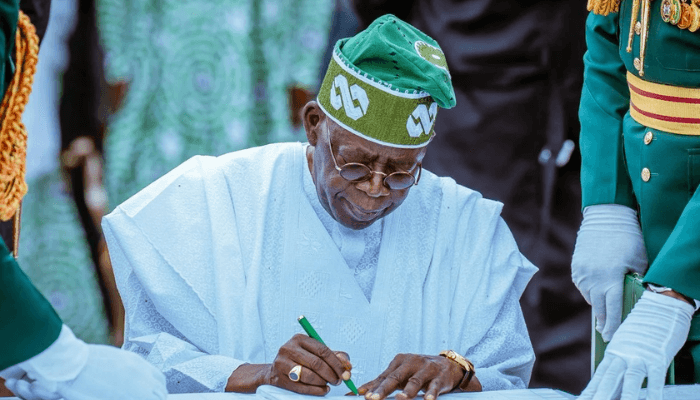
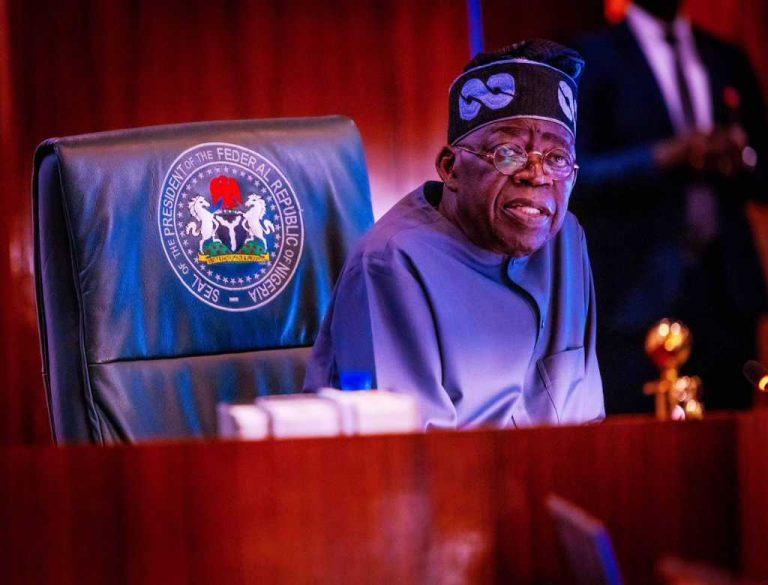
President Bola Ahmed Tinubu has constituted a five-member delegation to represent him and Nigeria at the final burial rites of the late Rev. Jesse Jackson, the American civil rights icon, activist, and former presidential candidate.

In a statement issued om Wednesday by the Presidential Spokesperson, Mr. Bayo Onanuga, the delegation is expected to convey President Tinubu’s message of condolences to the Jackson family.

The delegation is led by the Secretary to the Government of the Federation, Senator George Akume.

Other members are the Minister of State for Foreign Affairs, Bianca Odumegwu-Ojukwu; the Minister of Arts, Culture and Creative Economy, Hannatu Musawa; the Special Presidential Envoy for Global and Pan-African Affairs, Brian Browne; and the Senior Special Assistant, Foreign Affairs and International Relations, Ambassador Sola Enikanolaye.

In a tribute issued earlier, President Tinubu described Reverend Jackson as ‘a great friend of Nigeria and Africa.’

He was a moral voice and a formidable resistance to apartheid in South Africa. He played a leading role in the campaign for the release from prison of Nelson Mandela and other African National Congress leaders. He won critical support for sanctions against the then apartheid government”, President Tinubu wrote.

The burial programme for the civil rights leader began on February 26, with a lying-in-state at Rainbow PUSH Coalition in Chicago. Services in South Carolina and Washington, D.C., and a lying-in-state at the South Carolina Statehouse were scheduled for March 1-5.

On March 6, a “People’s Celebration” will take place at House of Hope in Chicago, followed by a private homegoing on March 7 at the Rainbow PUSH Coalition.

Jackson passed away at age 84 on February 17, 2026, in Chicago.

Nigerian President Set To Establish Grid Asset Management Company

President Bola Ahmed Tinubu has initiated plans to establish a Grid Asset Management Company (GAMCO), as part of efforts to strengthen the transmission segment of Nigeria’s electricity value chain.

The proposed Grid Asset Management Company is intended to manage and strengthen the national electricity grid in order to improve power delivery across the country.

The Minister of Information and National Orientation, Mohammed Idris made these known on Wednesday while briefing journalists at the State House, Abuja, after the Federal Executive Council (FEC) meeting presided over by the President.

The Minister said; “the proposal was contained in a memorandum presented to the Council by President Tinubu himself for deliberation.”

Idris explained that “the initiative would address Nigeria’s persistent electricity challenges, particularly in the transmission segment of the power sector.”

The Minister noted that the power sector was unbundled following its deregulation into three segments, generation, transmission and distribution, but the transmission arm remains the weakest link in the system.

You recall that since the deregulation of the power sector, the sector is divided into three categories: generation, transmission and distribution. The President has seen that where the problem is mainly in our quest to solve the power problem is largely in the transmission section,” he said.

To drive the initiative, the Federal Executive Council approved the establishment of an inter-ministerial committee that will work out the operational framework for the proposed company.

Members of the committee include; the Minister of Power; Minister of State for Gas; Minister of Works; Minister of Finance; Chairman of the Nigerian Revenue Service; Minister of Science and Technology; and the Attorney-General of the Federation.

The committee may also co-opt other stakeholders as necessary.

In addition, the Minister explained that “the panel will look into all regulatory, legal and investment issues associated with the establishment of the new entity, including the interests of existing investors and operators within the sector.”

All the enabling parameters will be looked at, the laws will be examined, and those who are practising in that sector and those who have invested in that sector will also have their level of investment considered,” he said.

Idris noted that the proposal is still under consideration, stressing that once the committee concludes its work, its recommendations will be forwarded to the National Assembly for the necessary legislative action where applicable.

The Minister said that the initiative is part of the administration’s wider strategy to strengthen ongoing economic reforms and fast-track Nigeria’s industrial development.

He emphasised that addressing the challenges in the power sector remained central to sustain economic growth and boost national productivity.

Idris further pointed to recent gains in Nigeria’s macroeconomic outlook, citing the growth in foreign exchange reserves and a gradual moderation in inflation, which he said have created a more stable environment for advancing reforms in the energy sector.

The President feels that for us to actually industrialise, the power sector must be fixed, and that is why he has taken this initiative of looking at how this Grid Asset Management Company will be set up to help solve the problem of power in this country,” he said.

Meanwhile, the Federal Executive Council has approved the introduction of an additional exit benefit package for retiring civil servants in treasury-funded ministries, departments, and agencies operating under the Contributory Pension Scheme.

Idris said that the initiative would enable eligible retirees to receive benefits of up to 100 per cent of their total emoluments, in accordance with Section 4(4)(a) of the Pension Reform Act.

According to the Minister, the measure is designed to improve efficiency and motivation within the civil service by strengthening the welfare framework for public servants approaching retirement.

Climate Change: 40 Teachers Train On Climate Awareness

0

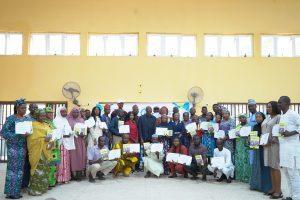
The Department of Climate Change, Federal Ministry of Environment, in collaboration with the Society for Planet and Prosperity, has launched a major climate education initiative aimed at strengthening environmental awareness across schools in Abuja.

The initiative focuses on equipping teachers with the knowledge and tools needed to educate students about climate change and environmental sustainability.

The training is also to strengthen climate literacy in the schools and contribute meaningfully to a more sustainable and resilient Nigeria.

Speaking during the kickoff workshop at the Climate Education Training for FCT Secondary school Teachers held in Abuja, the nation’s capital, President of the Society for Planet and Prosperity, Professor Chukwumerije Okereke explained that the programme will train teachers across schools in the Federal Capital Territory (FCT), including institutions in Bwari, Gwagwalada, and Abuja Municipal Area Council (AMAC).

He noted that the first phase of the training began with about 40 teachers from schools within AMAC.

According to him, the teachers are being trained using a comprehensive Climate Education Manual developed by the Society last year. The manual covers key climate change concepts and practical approaches that educators can use in classrooms and climate clubs.

The idea is to ensure that teachers fully understand the topics in the manual so they can confidently pass this knowledge on to their students,” he said.

Beyond the initial training, Professor Chukwumerije emphasised that the support will be ongoing. The team plans to visit schools regularly to provide additional tutorials, capacity-building sessions, and guidance in establishing and strengthening climate clubs.

We are not leaving them after this training,” he assured. “We will go from school to school, helping them form clubs and ensuring that climate change education becomes a living, active part of school life,” he said

Director Science, Technology and Mathematics, SEB, Mr Abdullahi Muse Zakir says the goal is to ensure that climate education becomes practical, engaging and solution-driven within the classrooms.

When students understand the science behind climate change and the role they can play in protecting the environment, we nurture responsible leaders and innovators for tomorrow.” He said

He urged the participants to share experiences and embrace new ideas throughout the workshop. Together, we can strengthen climate literacy in our schools and contribute meaningfully to a more sustainable and resilient Nigeria.

Across Nigeria and particularly here in the Federal Capital Territory, we are witnessing the realities of climate change through rising temperatures, irregular rainfall, flooding, and environmental degradation. These changes directly affect our schools, our communities, and the future of our children.

As teachers, you are not only teachers of curriculum but shapers of mindset and values. The knowledge and awareness you pass on to your students will influence how the next generation understands environmental responsibility, sustainability, and innovation. This workshop is therefore not just about training, but also empowerment.” He stated

Vice Principal Academics Government Secondary School Tudun-Wada Wuse, Mr Eba Elima Williams, explained that the programme is centred on the environment we live in and how it can be sustained for the benefit of everyone.

According to him, the programme is expected to extend to other schools across the FCT, grouped by zones, with their school being the first to host it.

He noted that the event has drawn participation from about 40 schools within the FCT, “making it a significant starting point for what is expected to become a widespread initiative. As a pilot programme, it sets the pace for subsequent editions and demonstrates the organisers’ commitment to promoting environmental awareness among students in the region.”

He highlighted their enthusiasm and active participation, noting that they are learning important lessons about the environment, defined as everything around us, including ourselves. He stressed that proper environmental management and sustainability are essential not only for students’ health but also for the nation’s overall prosperity.

Director of Operations, Ebaidebheki Initiative Ms. Faith Kaminus, urged teachers to go beyond the classroom in supporting their students.

She encouraged them to inspire learners to deepen their understanding of climate change and to actively explore innovative climate solutions.

She further emphasised the importance of guiding students on how to develop and implement climate-related ideas, noting that teachers play a critical role in shaping environmentally conscious minds.

Ms Kaminus stated that educators should recognise their value beyond traditional teaching. By committing to climate action and sustainability efforts, “stressing that teachers can also serve as sustainability consultants and role models within their communities.”

One of the participants, a teacher from Government Secondary School Idu-Karimo in FCT, Dr Isah Philp Abdulmalik, says the workshop has helped him understand that he must pay closer attention to climate-responsive architecture and environmental planning in the FCT.

As an educator and climate ambassador, I am committed to extending this knowledge to my students and community. In my new school, where there is currently no climate club, I plan to establish one to raise awareness about climate action and environmental responsibility,” he stated

The initiative is expected to deepen climate awareness among young people and empower the next generation to take informed action toward environmental sustainability.

2027: Adamawa Governor Pledges 85% Votes for APC

The Governor of Adamawa State, Ahmadu Umaru Fintiri, has reaffirmed his commitment to the victory of President Bola Tinubu and all candidates of the All Progressives Congress (APC) in the 2027 general elections, declaring that the state will deliver no less than 85 per cent of the total votes to the party.

Governor Fintiri pledged during a visit to the APC National Secretariat in Abuja, where he was received by the National Chairman of the All Progressives Congress, Professor Nentawe Yilwatda, alongside members of the National Working Committee (NWC).

Addressing party leaders, the governor described his return to the APC as a homecoming rather than a defection.

“We do not call it defection because we formed the APC together in 2014. This is a homecoming,” he said.

Governor Fintiri assured the leadership that political structures across Adamawa State have fully aligned with the APC and are already mobilising in preparation for the 2027 polls.

“We are working towards delivering 85 per cent of the votes in Adamawa, and we will ensure that no other candidate secures up to 25 per cent in the state. We are fully integrated, fully on ground, and working tirelessly to achieve this goal,” he stated.

He disclosed that the party had already convened its first stakeholders’ meeting in the state, describing it as one of the largest political gatherings held in recent times.

“We are used to winning elections, and we have brought that winning culture back to the party. Everyone is on board, and we will ensure that no one is left behind,” the governor added.

Describing himself as a grassroots mobiliser, Fintiri pledged to lead a strategic mobilisation drive aimed at consolidating the party’s dominance in the state.

“Our commitment is clear: to ensure a massive victory for President Bola Ahmed Tinubu and all APC candidates in 2027. We are here, and we are here fully,” he affirmed.

In his response, APC National Chairman, Professor Nentawe Yilwatda, welcomed the governor back to the party, describing his return as a reunion with the political family he helped build.

“I welcome you back home. Your place remains here. You are returning to the house you built and the castle you helped to establish,” Yilwatda said.

He reiterated that the APC remains the only political party with a truly national outlook and broad acceptance across the country, assuring Fintiri of full integration within the party structure.

The chairman further disclosed that the party’s membership register is updated and ready for submission to INEC when required, underscoring its preparedness for future electoral processes.

Professor Yilwatda also noted that arrangements would be finalised to formally receive the Adamawa governor into the party ahead of its forthcoming national convention.

AMAC Chairman- elect Vows 80% Focus on Rural development

The Chairman- elect of the Abuja Municipal Area Council (AMAC), in the Nigerian Federal Capital Territory (FCT), Christopher Maikalangu, has pledged to devote 80 per cent of his administration’s attention to rural communities.

Speaking to journalists shortly after receiving his Certificate of Return from the Independent National Electoral Commission (INEC) in Abuja, Nigeria’s Capital, Maikalangu described the moment as the “final bus stop” of the electoral process and expressed gratitude to residents for renewing his mandate.

“I feel better, I feel good. Just the way everyone sitting here is happy. Today is the final day. We have gotten our Certificate of Return, and we give God the glory because this is the last bus stop,” he said.

“We went out, we campaigned, we solicited votes from the people, and they gave us their mandate. Here we are today with our Certificate of Return, so we give God the glory.”

On his priorities for the new term, the AMAC chairman said grassroots development would remain central to his administration.

“Anytime you talk about local government, you are talking about local people. I am going to give the rural areas 80 per cent because most of my activities dwell in the rural areas,” he stated.

He promised to expand infrastructure, education and other social amenities across communities, noting that development would be spread across wards based on their peculiar needs.

“Some areas need more infrastructure. If you talk about Kabusa Ward, for example, it is one of the largest wards with many rural communities that need government attention. You have to spread resources to schools here, infrastructure there, so that everybody feels the impact,” he explained.

Maikalangu also extended a hand of fellowship to his political opponents, urging them to join hands with him to move the council forward.

“In any contest, only one person will emerge. I have performed, and the people have given me a second chance. I need them. Whatever ideas they have, let us bring them together and move AMAC forward,” he said.“We were never enemies. You will never see me insulting my opponents. We are all political friends. Everybody is my friend.”

Also speaking, Vice Chairman-elect Yusuf Nadabo, described the day as joyous and assured residents of continuity in governance.

According to him, the administration would focus on people-oriented projects tailored to the specific needs of each ward.

“In some wards, it is water; in others, it is education or infrastructure. Because it is local, it will be people-oriented. We will operate an open-door policy so citizens can see what we are doing and what resources are available,” Nadabo added.

In his remarks, the FCT INEC Commissioner, Aminu Idris, congratulated the chairman and other elected officials, describing the Area Council elections of 21st March, 2026, as peaceful and successful.

He urged the newly elected council leadership to justify the confidence reposed in them by the electorate by delivering inclusive and transparent governance at the grassroots.

Idris reaffirmed INEC’s commitment to credible elections in the Federal Capital Territory, stressing that the commission would continue to strengthen democratic processes at the area council level.

Oyo APC Elects New State Executives

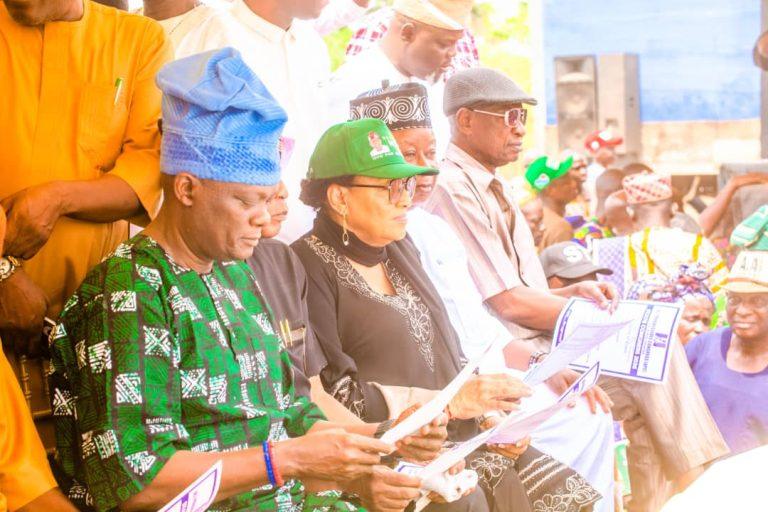
The All Progressives Congress (APC), has elected new executives in Oyo State, in accordance with an earlier agreement by party stakeholders on a zoning arrangement.

The party made the announcement during its state congress held at Liberty Stadium Ibadan,  the Oyo staye capital, after officially disclosing a former deputy governor of Oyo State, Chief Moses Alake Adeyemo, as the new State Chairman.

Afeez Bolaji Repete, a former APC National Youth Leader and Secretary of the party’s Adhoc Zoning Committee made the announcement under the supervision of the Congress Committee set up by the national leadership of the party in Abuja.

A statement made available to journalists by the party’s Publicity Secretary, Olawale Sadare, revealed that the decision followed consultations among key leaders of the party across the 33 Local Government Areas of the state.

He disclosed that an Ad hoc Zoning Committee was constituted to allocate positions in the State Executive Committee among the local government chapters.

The committee is chaired by Fatai Ibikunle, with Mr. Afeez Bolaji Repete serving as Secretary, while other members are Idris Adeoye, Adesoji Adedeji, Ajiboye Sangogade and Akeem Olatunji.

Adeyemo, who hails from Igboho in the Oorelope Local Government Area of the state, served as deputy governor under the late former governor of Oyo State, Abiola Ajimobi, from 2011 to 2019.

His emergence as State Chairman of the APC is seen by party faithful as a strategic move ahead of future political engagements in the state.

Below is the full list of the newly elected executives:

1. H.E Moses Alake – Chairman

2. Dr. Taofeek Lamidi – Deputy Chairman

3. Barr. Fatai Adesina – Secretary

4. Hon. Lukman Owonikoko – Assistant Secretary

5. Dr. Joshua Oyebamiji – Oyo Central Senatorial Chairman

6. Hon. Mojeed Delesolu Oyo South Senatorial Chairman

7. Hon. Tunde Oloyede – Oyo North Senatorial Chairman

8. Barr. Aborisade Sunday – Legal Adviser

9. Hon. Saheed Adeagbo – Assistant Legal Adviser

10. Hon. Lateef Ajiboye – Treasurer

11. Hon. Saliu Dauda Adisa – Assistant Treasurer

12. Hon. Akanbi Tunde – Financial Secretary

13. Hon. Wale Adebayo – Assistant Financial Secretary

14. Hon. Remi Adepoju – Organising Secretary

15. Chief Jide Leke – Assistant Organising Secretary

16. Hon. Olawale Sadare – Publicity Secretary

17. Fafunmi Mathew – Assistant Publicity Secretary

18. Kamaldeen Nageri – Assistant Welfare

19. Mrs. Tinuade Adigun – Auditor

20. Hon. Christopher Idowu – Assistant Auditor

21. Mrs Felicia Opatunde – Women Leader

22. Hon. Fatima Hassan – Dep. Women Leader

23. Hon. Glory Olalekan – Youth Leader

24. Hon. Sayo Fatoki – Assistant Youth Leader

25. Jimoh Osundare – Physically Challenged

26. Olalekan Olowe – Oyo South Senatorial Youth Leader

27. Imran Ayinde Olona – Oyo North Senatorial Youth Leader

28. Mrs Oyebode Yetunde – Oyo North Senatorial Women Leader

29. Mrs. Adefunke Adeoye – Oyo Central Senatorial Women Leader

30. Mrs. Mojibade Adetona – Oyo South Senatorial Women Leader

31. Oloja Olanrewaju – Oyo Central Senatorial Youth Leader

32. Akanmu Adebowale – Ex- Officio

33. Ejalonibu Fatai Aremu – Ex- Officio

34. Asimiyu Kolawole – Ex- Officio

35. Odeyemi Simon Oladoyinbo – Ex officio

ECOWAS Boosts Regional Statistical Capacity in Abidjan

0

Côte d’Ivoire is hosting a key regional consultation of the Economic Community of West African States (ECOWAS), providing a platform for strategic discussions on the organisation’s future.

Scheduled from 2 to 6 March 2026, the consultation will contribute to the upcoming Special Summit of Heads of State and Government, which will define ECOWAS’ long-term direction.

Alongside this event, the ECOWAS Commission’s Research and Statistics Directorate is conducting five technical workshops in Abidjan from 2 to 13 March 2026.

These workshops are part of ECOWAS Vision 2050 and the World Bank-funded Harmonisation and Improvement of Statistics in West and Central Africa Project (PHASAOC). They aim to modernise national statistical systems, harmonise methodologies, and improve data quality across Member States.

The launch on 2 March 2026 set the stage for two weeks of expert-led sessions focused on innovation, cooperation, and statistical excellence. The ceremony was presided over by H.E. Adama Dosso, Deputy Minister in charge of African Integration and Ivorians Abroad. Also present were Dr Kalilou Sylla, ECOWAS Commissioner for Economic Affairs and Agriculture; Prof. KOUAKOU Kouadio Clément, representing Côte d’Ivoire’s Minister of Planning and Development; H.E. Fathmah Diarre-Diop, ECOWAS Resident Representative in Côte d’Ivoire; Prof. Félix N’Zué, ECOWAS Director of Research and Statistics; and other experts from the region.

Minister Dosso highlighted the value of accurate, harmonised statistics in guiding effective national planning and policy-making. He stressed that high-quality data is essential for Africa’s economic transformation and the achievement of sustainable development goals.

Commissioner Sylla reaffirmed ECOWAS’ dedication to modernising statistical systems, promoting regional methodological alignment, leveraging innovative data sources, and strengthening cooperation among Member States to build a resilient, integrated statistical network.


AP

President Tinubu Suspends Cashless Payment System At Airports

President Bola Ahmed Tinubu has directed the suspension of the current cashless payment system at Nigerian airports to ease congestion while authorities work to develop a more efficient electronic payment mechanism.

The Minister of Aviation and Aerospace Development, Festus Keyamo, disclosed this while briefing State House correspondents after the Federal Executive Council (FEC) meeting presided over by President Bola Ahmed Tinubu at the State House, Abuja, on Wednesday.

He said the suspension followed concerns that the policy’s implementation had resulted in traffic gridlock and caused hardship for travellers.

Keyamo further explained that although the cashless payment system was introduced to curb corruption and enhance transparency in revenue collection at airports, its implementation resulted in congestion and operational delays for passengers.

The idea of introducing a cashless system was to eliminate corruption at the airports,” the minister said. “However, with the introduction of the system, it created a lot of gridlock and Nigerians have been suffering because of the delays.”

He said the President directed that the country should temporarily revert to the previous payment arrangement pending the development of a more effective system.

Mr. President directed that we should suspend the present system because it creates a lot of gridlock. We should go back to the status quo and then perfect the system properly,” Keyamo added.

The minister noted that the President emphasised that the review and enhancement of the payment platform should be carried out expeditiously.

Keyamo further disclosed that the Federal Government would engage the private sector in developing a more efficient electronic system for the collection of airport-related charges.

The President said we should engage the private sector and develop an electronic system that will collect the money seamlessly without causing delays,” he said.

He stressed that the primary reason behind the President’s directive was to immediately eliminate the congestion currently being experienced at airports and improve passenger experience.

The Minister said he would hold further consultations with the Federal Airports Authority of Nigeria (FAAN) before providing additional details on the next steps for implementing the improved system.

Burkina Faso Adopts New Urban Planning, Construction Code

0

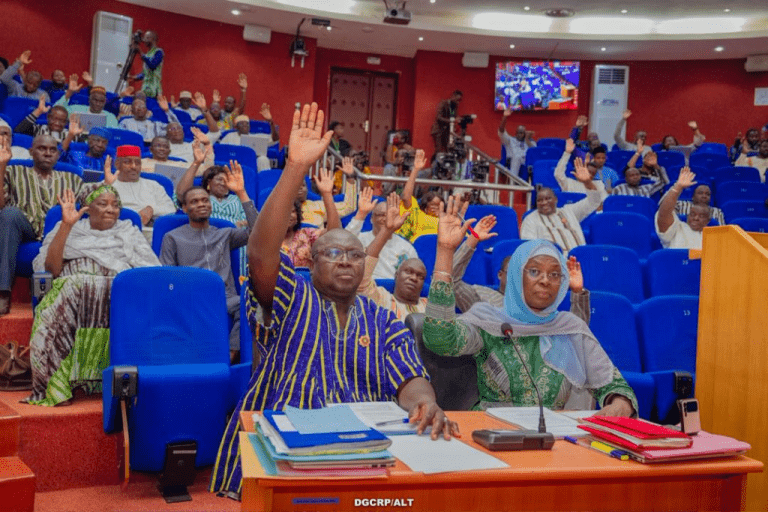
Burkina Faso’s Transitional Legislative Assembly (ALT) has adopted the draft law on the Urban Planning and Construction Code on Tuesday, March 3, 2026.

Comprising 257 articles, this new text aims to modernise and strengthen urban governance in Burkina Faso.

Chaired by the Speaker of the Assembly, Dr. Ousmane Bougouma, the plenary session resulted in the unanimous adoption of the 71 voting members.

Before its final adoption, the draft law underwent a thorough review by parliamentarians, who introduced no fewer than 631 amendments, both substantive and procedural, demonstrating the extensive legislative work undertaken.

The previous Code, in force since May 2006, no longer fully addressed the economic, social, and technological developments observed over the past 20 years.

Launched in May 2024, the revision of the text was carried out through a participatory and inclusive process, involving the country’s main institutional, technical, and territorial stakeholders.

Structured into seven books and 257 articles, the new Code aims to simplify administrative procedures, clarify the responsibilities of the various stakeholders, and offer a more accessible, efficient, and action-oriented legal framework.

The government was represented during the debates by the Minister of National Construction, Mikailou Sidibe, who addressed the concerns raised by the members of parliament.

The Sustainable Development Commission (CDD) believes that “this reform will allow for better planning and control of urbanization, contribute to the sustainable improvement of living conditions for the population, combat informal housing, and strengthen building safety.”

She also recommended that the government ensures strict compliance with the transitional deadlines provided for by law and ensure an adequate transfer of resources to local authorities, which are called upon to play a central role in the implementation of urban planning and construction policies.


AP