Home Blog Page 190

ECOWAS Court Moves to Strengthen Enforcement of Judgments

0

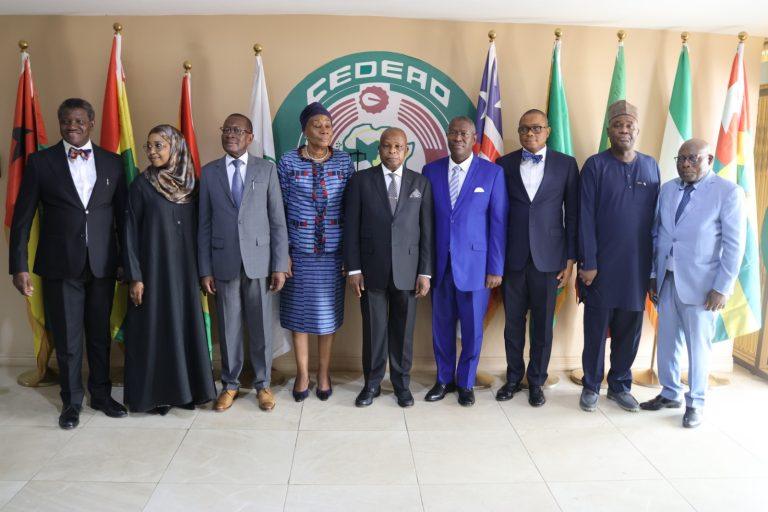
The Economic Community of West African States, ECOWAS Court of Justice has held a bilateral meeting on the status of enforcement of the Judgments of the community Court.

The Bilateral meeting is aimed at establishing a framework for collaboration, sharing best practices, and addressing challenges in enforcing the Court’s judgments.

The ECOWAS Court given the current enforcement rate of approximately 20%, the bilateral meeting will provide a vital platform to explore innovative approaches that will enhance compliance and uniformity in enforcement procedures.

Speaking at the bilateral meeting, the President of the ECOWAS Court of Justice, Ricardo Monteiro Goncalves, said that “the Revised ECOWAS Treaty (1993), the Protocol relating to the Community Court of Justice as amended by the Supplementary Protocol, the Supplementary Act on sanctions against Member States that fail to fulfil their obligations to ECOWAS, and the Supplementary Act relating to the Community Court of Justice, leave no doubt that the Court’s judgments are binding on Member States, Community institutions, as well as natural and legal persons.’

He said that the decisions of the Court are final and have immediate enforceable effect, and that Member States are required to designate a competent national authority responsible for their enforcement.

Justice Goncalves believed that without enforcement, the decisions of the ECOWAS Court become merely declaratory. ‘Declaratory justice without practical effect does not fulfill its transformative function.”

He said that Nigeria is not merely a Member State, it is one of the founding members of ECOWAS, an economic engine of the region, a political and diplomatic leader, and a pillar of regional stability.

Since the establishment of the Court, 128 cases have been instituted against the Federal Republic of Nigeria; 66 cases have been closed; 10 cases have been executed and 52 cases remain pending execution.

Nigeria possesses sufficient institutional capacity, democratic maturity and regional influence to assume an exemplary role in the enforcement of the Court’s decisions,” he added.

Justice Goncalves said that Nigeria leads by example, as it strengthens.the authority of the Court; Send a clear message of commitment to the regional rule of law, encourage other States to follow the same path and Consolidate its position as a normative reference in West Africa.

He said that enforcement of its decisions is not a favour to the Court; it is a commitment to the citizens of the region and to the Community project itself.

I am fully confident that, through the frank and constructive dialogue we begin today, we can transform this challenge into a historic opportunity for institutional strengthening,” he said.

The Nigerian Attorney General and Minister of Justice, Lateef Fagbemi, said the ECOWAS Court of Justice has delivered commendable decisions, and criticisms persist.

He said; “Observers point to weak enforcement mechanisms, and a disconnect between supranational judgments and national legal systems. In addition, certain judgments have been described as perverse stretching jurisdiction beyond the Court’s mandate, intruding into sensitive domestic constitutional matters, or imposing unenforceable obligations.

“Whether justified or not, these criticisms highlight the urgent need for clarity in the Court’s role, stronger institutional support, and reforms that balance judicial boldness with respect for sovereignty and enforceability.”

Mr. Fagbemi noted that “the absence of an appellate process in the ECOWAS Court of Justice has a significant impact on how its judgments are perceived and accepted by member states and other stakeholders.

“Because ECOWAS Court judgments are final with no second-tier review, they are susceptible to being viewed as too rigid, especially when they are considered flawed or excessive, or where rulings touch on sensitive political or constitutional issues, or where huge or “excessive” costs are awarded”.

According to him, in litigation or ADR processes, an aggrieved party often prefers systems where judgments or awards can be subject to some form of review.

He said; “The absence of appeal mechanisms can erode trust, as states feel trapped by decisions they cannot contest. By contrast, the European Court of Human Rights has a supervisory mechanism through the Committee of Ministers, the Court of Justice of the European Union has structured appeal and review processes, the Inter-American Court of Human Rights has Follow-up procedures, periodic reporting, and compliance hearing, etc.

“ECOWAS Court’s lack of appellate review and follow-up mechanisms stand out as a weakness, making its judgments less acceptable compared to courts with layered supervisory oversight”.

The Minister of Justice said it is clear that the Court of Justice has laid a strong foundation.

He said; “To ensure its judgments carry real weight, we must embrace reforms inspired by successful models elsewhere which include: establishment of regional supervisory oversight to monitor compliance and apply political pressure, introduction of appellate process, introducing compliance hearings and follow-up reporting obligations, adopting more effective enforcement protocols, consideration of cooperation agreements as obtainable with the International Criminal Court.”

Under the ECOWAS Revised Treaty, the 1991 Protocol on the Court, and the Supplementary Protocol of 2005, the judgments of the Community Court of Justice, ECOWAS, are binding on Member States, the ECOWAS institutions, individuals, and corporate bodies.

The effective execution of these judgments is a cornerstone in upholding the rule of law, promoting justice, and safeguarding human rights across the region
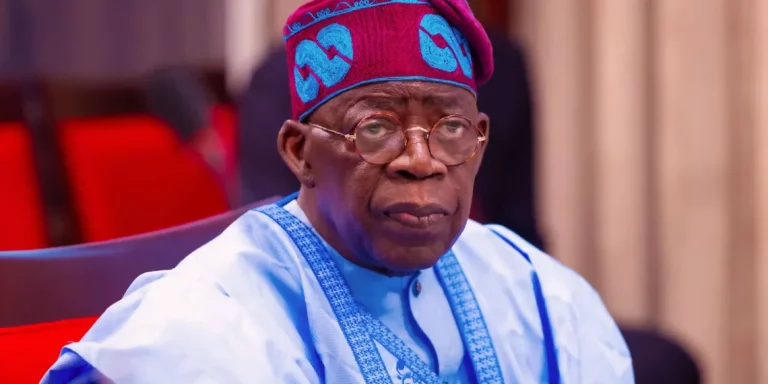
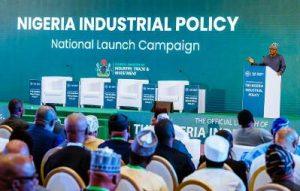
President Tinubu Unveils Nigeria’s 2025 Industrial Policy Roadmap

President Bola Tinubu has unveiled Nigeria’s 2025 Industrial Policy Roadmap, charging relevant ministries, departments, and agencies (MDAs) to ensure its swift implementation.

He described the policy as a roadmap for re-engineering Nigeria’s industrial base, unlocking value across sectors, and placing production, competitiveness, and job creation at the centre of the nation’s economic strategy.

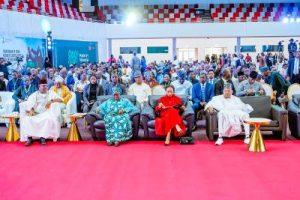
Speaking at the official launch at the Bola Tinubu International Conference Centre, Abuja, the president, who was represented by Vice President Kashim Shettima, acknowledged that for too long Nigeria has grappled “with fragmented value chains, high production costs, infrastructure gaps, policy inconsistency, and insufficient coordination between government and industry.”

He declared emphatically, however, that “this stops now”, noting that the Nigeria Industrial Policy 2025 recognises and addresses these shortcomings.

“We have realised that industrialisation is not a wish you think about; it is an action you perform. More than that, we must remind ourselves that this task demands coherence across energy, trade, infrastructure, finance, skills, and innovation. It requires partnership between the government and the private sector,” he stated.

President Tinubu stressed the urgency of implementation, recalling that when his administration assumed office in 2023, it did so with a promise to redefine Nigeria’s industrial ambition.

He said, “The defining strength of this policy is its insistence on implementation. This administration will not measure success by the number of documents we produce.

“We will measure success by the number of factories that open their gates at dawn, by the jobs created for our young men and women, by the exports that leave our ports bearing the mark of Nigerian excellence, and by the value retained within our own economy.”

Key Aspects

Outlining the core components of the policy, the President explained that it prioritises strategic sector focus anchored on the nation’s comparative and competitive advantages.

He continued: “It advances value chain development so that Nigeria moves steadily from exporting raw materials to producing finished goods. It integrates our micro, small, and medium enterprises into the heart of industrial growth, because prosperity must not be exclusive.

“It aligns infrastructure and energy with industrial ambition, for factories cannot run on policy alone. It strengthens skills, technology, and innovation to prepare our people for the industries of today and tomorrow.”

Calling for greater private sector participation, President Tinubu urged the sector “to invest with confidence and responsibility, to deepen local value chains, to create jobs and transfer skills, and to partner with government in building a productive economy.”

He commended the Minister of State for Industry, John Enoh, for his disciplined leadership and clarity of purpose in driving the process, stating that the Minister “has demonstrated that policy leadership is not about noise, but about substance, coordination, and follow-through.”

The President also applauded the ministry’s technical teams, industry stakeholders, manufacturers, investors and practitioners for shaping the “policy into a document grounded in reality and informed by experience.”

Also Read: Nigeria to Launch Industrial Manpower Development Policy

Earlier, the Minister of State for Industry, Chief John Enoh, said the initiative marks a turning point in building an industrial Nigeria that produces, competes and prospers.

Nigeria’s business mogul, Alhaji Aliko Dangote, thanked the Federal Government for introducing what he described as a progressive industrial policy. He observed that Nigeria is the only country in Africa where the private sector is larger than the government.

Dangote said domestic manufacturers are pleased with the policy introduced by the Tinubu administration and expressed confidence that “the naira, this year, will be at ₦1,000 to $100.”

Announcing that many investors are willing to invest in Nigeria owing to foreign exchange stability and other reforms, Dangote added that the remaining priority is the protection of indigenous industries, saying, “If there is no protection, there is no way any industry will thrive here.”

Confidence in Policy

The United Nations Resident and Humanitarian Coordinator in Nigeria, Mr Mohamed Malick Fall, expressed confidence that with the official launch of the policy, Nigeria has taken a decisive step into a future where hope is translated into action, leading to inclusive economic growth.

He explained that the policy is the product of sustained collaboration between the United Nations Industrial Development Organisation (UNIDO) and Nigeria, aimed at transforming the country into a beacon of prosperity and a key player in regional and global value chains.

President of the Manufacturers Association of Nigeria (MAN), Francis Meshioye, also commended the president on the launch, noting that manufacturers are committed to ensuring effective implementation.

He endorsed the promotion of indigenous entrepreneurship embedded in the policy and assured that MAN would offer its full support to guarantee its successful execution.

Nigeria Welcomes Arraignment of Three Men on SA Murder

0

Three additional suspects have been arraigned in court in connection with the killing of a 22-year-old Nigerian e-hailing driver, Isaac Satlet, in Pretoria, South Africa.

The development follows widespread outrage over the incident and renewed calls for justice from Nigerian authorities and citizens.

The suspects—Dikeledi Mphela (female), Gotseone Machidi, and McClaren Mushwana—appeared on Monday before the Pretoria Central Magistrate’s Court.

A fourth suspect has also reportedly turned himself in voluntarily, bringing the total number of suspects linked to the case to four.

Nigerians and South Africans gathered in large numbers outside the court in a show of solidarity, welcoming the arrests and arraignments.

The atmosphere reflected shared condemnation of the crime and a collective demand for accountability, as demonstrators expressed hope that justice would be served.

Chairman/CEO of the Nigerians in Diaspora Commission, Abike Dabiri-Erewa, had earlier demanded the arrest and prosecution of all those involved in the killing.

She has repeatedly expressed concern over the rising cases of criminality and the killings of Nigerians in South Africa.

Isaac Satlet, who was also a student set to graduate next month, was remembered by friends and community members as hard-working and ambitious.

He reportedly had plans to further his studies in Canada, dreams that were tragically cut short by his untimely death.

The Nigerian community continues to call for sustained cooperation between Nigerian and South African authorities to ensure justice for the victim and to enhance the safety of Nigerians living abroad.

Reps Demand Financial Reports from Top Government Officials

0

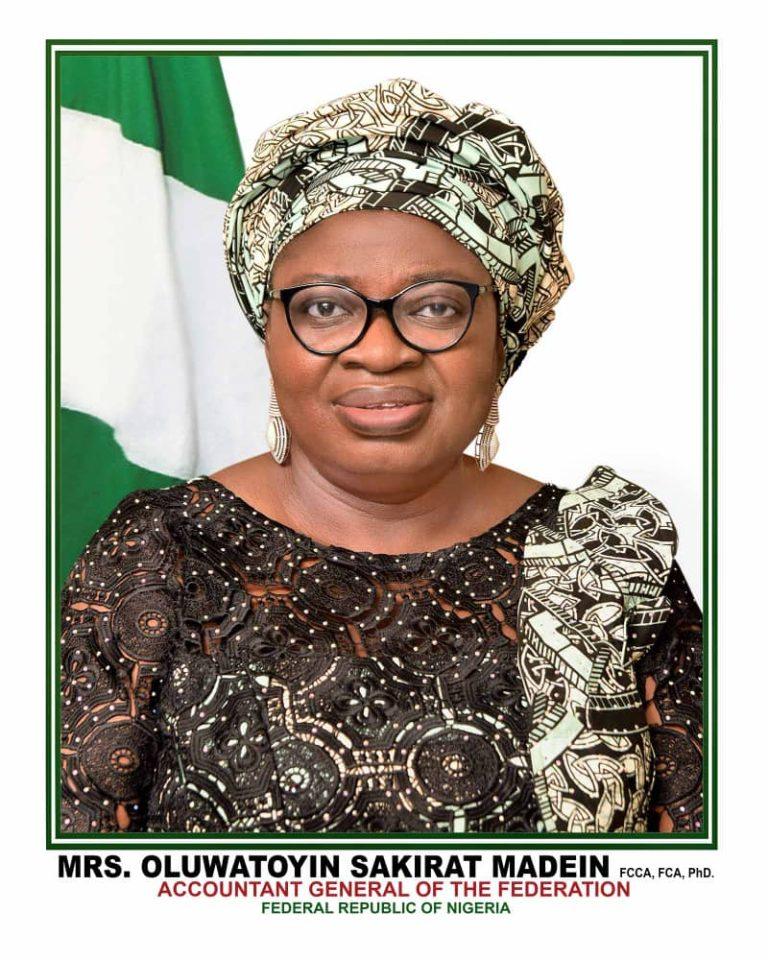
The Public Accounts Committee of the House of Representatives has directed the Office of the Accountant-General and the Auditor-General of the Federation to prepare and submit the consolidated financial statements and audited accounts of the Federal Government for the years 2023, 2024, and 2025 before October 2026.

The resolution followed an investigative hearing involving the Accountant-General of the Federation and the Auditor-General for the Federation, during which lawmakers examined delays in financial reporting and concerns over public financial management systems.

The Committee also queried the payment of N9.8 billion to vendors of the Government Integrated Financial Management Information System (GIFMIS) in 2024, noting that the platform has yet to deliver its core mandate of facilitating accurate and timely reconciliation of government accounts.

Chairman of the Committee, Mr Bamidele Salam, expressed strong dissatisfaction with the failure of the Accountant-General to comply with statutory financial reporting obligations.

Not Later Than 6 Months

He noted that the Fiscal Responsibility Act mandates the federal government to publish audited, consolidated financial statements not later than 6 months after the end of each financial year.

He described the persistent delay in publishing audited financial statements as unacceptable, warning that such lapses undermine fiscal discipline, weaken institutional credibility, and negatively impact investor confidence.

Mr Sallam further noted that Nigeria, despite being Africa’s largest economy, continues to lag in public financial reporting standards, thereby limiting its ability to attract foreign investment and secure support from international development partners who rely on current and credible financial information.

In his submission, the Accountant-General of the Federation, represented by Mr Shaibu Sikiru, Acting Director of Consolidated Accounts, attributed the delay to several operational challenges, including the failure of the Central Bank of Nigeria (CBN) to provide complete bank statements of Ministries, Departments, and Agencies (MDAs), as well as technical and operational limitations associated with the GIFMIS platform.

Financial Consolidation

He said that the last comprehensive reconciliation of government accounts was conducted in 2022, despite the renewal of contracts with GIFMIS service providers to enhance system efficiency and enable accurate financial consolidation.

Committee members, however, questioned the justification for the payment of ₦9.8 billion to GIFMIS in 2024, expressing concern that the platform has not significantly improved financial reporting, reconciliation processes or transparency in government accounts.

Responding to questions on the Treasury Single Account (TSA), the Accountant-General’s representative stated that the engagement of Remita as a payment gateway was implemented without adequate coordination with the Office of the Accountant-General, resulting in operational complications and fragmented financial data management across MDAs.

In his presentation, the Auditor-General for the Federation, Mr Shaakaa Chira, explained that the non-specification of a timeline for the Accountant-General to submit the financial statement as provided under the 1999 constitution (as amended) has hindered the timely auditing of the Federation’s accounts.

He said that audit reports covering internal weaknesses and compliance issues for the recent years 2022-2025 are currently being finalised for submission to the National Assembly as required by the law.

He noted that constitutional and administrative gaps in the financial reporting framework have contributed to the delays but assured lawmakers that efforts are ongoing to clear the backlog and restore compliance with statutory requirements.

Legislative Sanctions

Ruling after the hearing, the committee directed both the Accountant-General and Auditor-General to ensure full submission of all outstanding financial statements and audit reports before October 2026, warning that failure to comply would attract legislative sanctions.

PAC emphasised that the Committee remains committed to enforcing transparency, accountability and prudent management of public funds in line with its constitutional oversight responsibilities.

Section 85(6) of the 1999 Constitution mandates the Auditor-General to submit annual audit reports on the accounts of the Federation to the National Assembly for legislative scrutiny through its Public Accounts Committee.

Kenya’s Air Strike Leaves Passengers Stranded at Main Airport

0

Passengers at Jomo Kenyatta International Airport, Kenya’s main international gateway, were left stranded on Tuesday as a strike by air traffic controllers entered its second day, causing widespread disruption across the airport.

The labour action has led to long delays and uncertainty, with travellers unsure whether their flights would take off.

Kenya Airways, the country’s national carrier, reported departure delays of up to four hours. Uganda Airlines confirmed the cancellation of two flights, while Jambojet advised passengers to postpone travelling to the airport until further notice.

“We were told to wait until further notice. My family came to see me off and they are still here waiting with me,” Kenyan passenger Jazzy Mwango said.

Another Kenyan traveller, Betty Wambui, said she was meant to travel to Egypt via Qatar but was now totally confused on whether to travel or not.

The Kenya Aviation Workers Union launched the strike on Monday, despite a court order saying “it should not go ahead.”

The union’s grievances against the Kenya Civil Aviation Authority include its failure to conclude a collective bargaining agreement and the placement of employees on temporary terms for roles it says are permanent.

The Aviation Authority has said it wants to resolve the dispute amicably.

The Transport Minister, Davis Chirchir, summoned the Union and the Aviation Authority to a meeting on Tuesday in an effort to break the deadlock.


Reuters/Hauwa M.

US, Iran To Hold Second Round Of Nuclear Talks

0

The U.S. and Iran are expected to hold their second round of talks about Iran’s nuclear programme on Tuesday in Geneva as the United States ramps up its military presence in the Middle East, and Iran holds large-scale maritime exercises.

U.S. President Donald Trump has repeatedly threatened to use force to compel Iran to agree to constrain its nuclear programme. Iran has said it would respond with an attack of its own. Trump has also threatened Iran over its deadly crackdown on recent nationwide protests.

The first round of talks on Feb. 6 was held in Oman, a sultanate on the eastern edge of the Arabian Peninsula, and was indirect, with SUVs flying the American flag entering the palace venue only after it appeared the Iranian officials had left. The arrangements for Tuesday’s round of negotiations were not clear.

Trump’s envoys Steve Witkoff and Jared Kushner were travelling for the new round of talks. U.S. Secretary of State Marco Rubio, visiting Budapest, Hungary, said Monday that the U.S. hopes to achieve a deal with Iran, despite the difficulties. “I’m not going to prejudge these talks,” Rubio said. “The president always prefers peaceful outcomes and negotiated outcomes to things.”

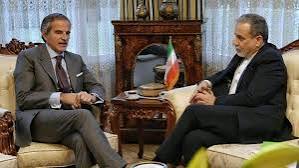
Iranian Foreign Minister Abbas Araghchi, who is leading the talks for Iran, met with the head of the U.N. nuclear agency on Monday in Geneva.

“I am in Geneva with real ideas to achieve a fair and equitable deal,” Araghchi wrote on X. “What is not on the table: submission before threats.

Talking to reporters Monday night aboard Air Force One on his way to Washington, U.S. President Donald Trump said of the U.S.-Iran talks, “I’ll be involved in those talks—indirectly—and they’ll be very important, and we’ll see what can happen.” he said.


AP


Kenya, Egypt Hold Talks to Deepen Trade, Investment

0

Kenya’s Prime Cabinet Secretary, Musalia Mudavadi has hosted the Egyptian Foreign Affairs Minister Badr Abdelatty in Nairobi, as both countries explore ways to deepen bilateral relations, trade, and investment opportunities.

Speaking on water scarcity, Mudavadi emphasized Kenya’s commitment to supporting Africa-led, dialogue-based approaches under the Nile Basin Initiative framework, highlighting the importance of cooperative solutions for sustainable water management in the region

Abdelatty said; “it was important to “promote solutions based on win-win situations” when it comes to issues related to water cooperation.”

The Nile Basin Initiative is an intergovernmental partnership grouping together 10 countries, including Kenya and Egypt.

It aims to achieve sustainable development through the equitable use of their common Nile Basin water resources.

They also stressed the importance of encouraging private-sector partnerships and diversifying trade products, as well as fast-tracking the establishment of a Joint Business Council to realise shared prosperity.


Africanews/Hauwa M

NYSC Boss Tasks Ventures Managers on Global Best Practices

0

The management of the National Youth Service Corps (NYSC), has called on managers of the Scheme’s ventures to be receptive to new ideas that will make their operations conform to global best practices.

The Director-General of NYSC, Brigadier General Olakunle Nafiu made the call while declaring open the 2026 Farm/Ventures Managers’ Workshop, themed “Promoting Viable Partnerships For Profitable NYSC Ventures,” in Abuja, Nigeria’s capital.

Nafiu, who was represented by the Director, Corps Mobilisation, Mrs. Rachel Idaewor, said that the NYSC ventures were products of initiatives designed to empower Corps Members, Staff and host communities, and enjoined the managers to chart new paths to make them more profitable and sustainable.

The NYSC is building businesses that will drive economic growth and empowerment of our Corps Members.

“Therefore, the importance of commitment by all members of staff in charge of the Scheme’s ventures cannot be over-emphasised,” he said.

The Director General of the scheme further stressed the need for them to continue to shun acts of sabotage and mismanagement, stating that “the workshop aimed at enhancing their capacity as well as promoting viable partnerships that would boost the profit margin of the ventures.”

He commended the farm/ventures managers who performed creditably, and encouraged them to sustain their efforts towards achieving greater success.

In his welcome address, the Acting Director, Ventures Management Department, Mr. Abe Dankaro, said the Department had achieved significant milestones through increased productivity, expanded market reach and impactful partnerships.

Solar Borehole

He listed some of the achievements to include installation of solar borehole, establishment of modern fish farm at the NYSC Farm, Kwali, FCT, and commencement of beef fattening in the premises of the NYSC Nasarawa State Orientation Camp in Keffi.

He stated that the Management of Ventures Department was in partnership with reputable organisations to enhance Corps Members’ training and boost both farm and factory operations.

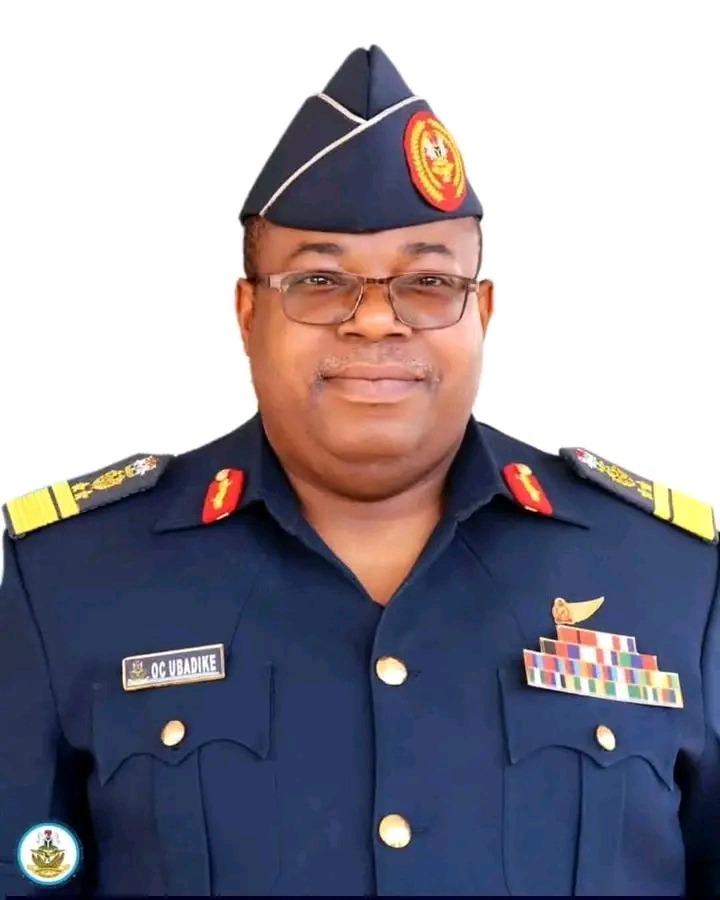
Air Vice Marshal Ubadike Becomes First NAF Professor

0

Air Vice Marshal Osichinaka Chiedu Ubadike has made history as the first serving officer of the Nigerian Air Force, NAF, to be appointed Professor.

He was conferred the title of Professor of Aerospace Engineering by the Governing Council of the Air Force Institute of Technology (AFIT).

The landmark appointment represents a major milestone in the history of the Nigerian Air Force and the nation’s military-academic landscape, highlighting the growing integration of advanced research and operational expertise within the armed forces.

Air Vice Marshal Ubadike, who hails from Umuazu Village, Umuoji in Idemili North Local Government Area of Anambra State, is widely regarded as a rare blend of operational military leadership and scholarly excellence.

Earning Recognition

Over the years, he has distinguished himself both in active service and in academia, earning recognition in professional and research circles.

He holds a Doctor of Philosophy degree and a Master’s degree from Cranfield University, one of the world’s leading institutions for Aerospace and Defence studies.

He also obtained three additional Master’s degrees from Ahmadu Bello University and the Nigerian Defence Academy.

Outstanding Career

Earlier in his academic journey, he graduated with a First-Class degree in Electrical and Electronics Engineering from the Nigerian Defence Academy, setting the tone for what has become an outstanding career defined by intellectual depth and professional discipline.

Beyond the classroom, Air Vice Marshal Ubadike has played a pivotal role in advancing research and technological innovation within the Nigerian Air Force.

Strengthen Local Capacity

He notably contributed to the development of the indigenous Nigerian Air Force Unmanned Aerial Vehicle programme, an initiative designed to strengthen local capacity in defence technology and reduce reliance on foreign platforms.

His elevation to the rank of Professor is being celebrated as a landmark achievement not only for the Air Force but also for the broader Nigerian military establishment.

For the Umuoji community in Idemili North and Anambra State, Southeast Nigeria at large, the milestone carries deep symbolic value, underscoring the global academic competitiveness and professional accomplishments of sons and daughters of the state across strategic national institutions.

Niger, Algeria Renew Ties with Major Trans-Saharan Gas Deal

0

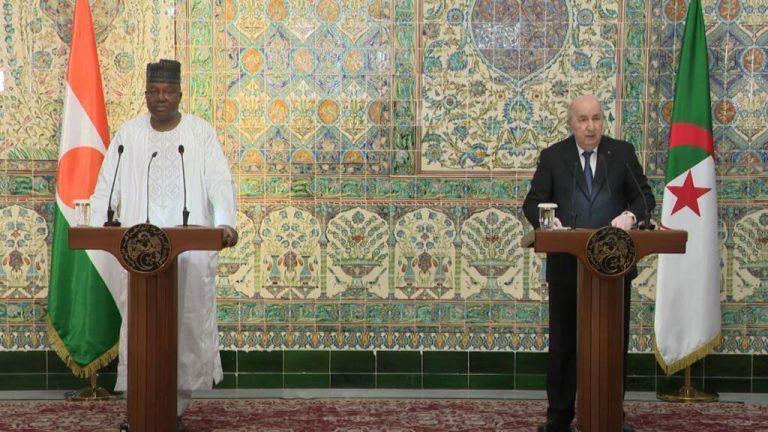
The head of Niger’s military junta, Abdourahamane Tiani, has announced the beginning of what he described as a “new phase” in relations with Algeria.

General Tiani met with Algerian President Abdelmadjid Tebboune in Algiers on Monday, where both leaders confirmed plans to proceed with the construction of a major gas pipeline project.

President Tebboune stated that the visit signalled the close of what he termed “an abnormal period of cool relations” between the two countries.

Tensions had escalated in April when Algeria shot down a Malian drone. Mali is a member of the Alliance of Sahel States, alongside Niger and Burkina Faso. In response to the incident, the three countries recalled their ambassadors from Algiers, with Algeria taking similar diplomatic measures.

The proposed pipeline, linking Algeria and Nigeria, will pass through Nigerien territory. Preliminary works are expected to commence after Ramadan.

The 4,000-kilometre Trans-Saharan Gas Pipeline is designed to transport natural gas from Nigeria to Algeria. Although first proposed more than 15 years ago, momentum behind the project increased in early 2025 before relations between Algeria and the Sahel states deteriorated.

Following Monday’s discussions, President Tebboune pledged Algeria’s support to Niger as it grapples with significant economic challenges, outlining prospective cooperation in the health and education sectors.

Algeria recently dispatched a delegation to Burkina Faso to explore collaboration in mining and hydrocarbons. However, relations with Mali remain strained, with Bamako accusing Algeria of maintaining links with armed groups operating along their shared border.