Home Blog Page 492

UK Councillor Acquitted Over Cut Throats Speech

0

A British councillor was on Friday acquitted of encouraging violent disorder for saying far-right activists should have their throats cut amid riots last year, drawing claims from right-wing politicians of a hypocritical “two-tier” justice system.

Ricky Jones made the comments at a counter-protest in London after three girls were murdered in the north English town of Southport and was suspended by the ruling Labour party.

Misinformation on social media said the teenager who committed the murders at a Taylor Swift-themed dance event was an Islamist migrant, fuelling days of violent riots including attacks on mosques and hotels housing asylum seekers.

Jones, 58, was cleared by a jury following a trial at Snaresbrook Crown Court. He had made the remarks to a crowd gathered near an immigration advice centre in London after reports that far-right supporters were planning a protest.

“They are disgusting Nazi fascists … We need to cut all their throats and get rid of them all,” he said, running a finger across his throat.

Jones gave evidence that he did not intend his words to be taken literally and said his comments referred to far-right stickers with hidden razor blades found on a train.

Right-wing politicians and activists said his case was an example of how Britain had an unfair police and justice system, with those who voice concerns about immigration treated differently to those who support liberal or left-wing causes.

They contrasted Jones’ treatment with that of Lucy Connolly, the wife of a Conservative councillor who was jailed for 31 months for inciting racial hatred for a post urging mass deportation of migrants and the burning of their hotels.
Unlike Jones, she had pleaded guilty to the offence.

Chris Philp, the opposition Conservative Party’s home affairs spokesperson, said on X: “The development of two-tier justice is becoming increasingly alarming.”

Zia Yusuf, from the populist right-wing Reform UK party which is leading in opinion polls, also compared Jones’ acquittal to Connolly’s sentence.

Prime Minister Keir Starmer was labelled “two-tier Keir” by some opponents last summer after claims some ethnic groups were policed more leniently than others, a suggestion that has been rejected by senior ministers, police chiefs and prosecutors.


Source:Reuters/Ejiofor Ezeifeoma

Group Distributes 900 Tree Seedlings to Anambra community

0

The Unubi Youth Association in Nnewi South Local Government Area of Anambra has distributed a variety of over 900 seedlings of economic trees to farmers in the community.

The programme, being organised under the “Operation Farm to Feed Campaign”, was launched by the State Government to eradicate hunger.

The Commissioner for Agriculture, Dr Forster Ihejiofor, who performed the symbolic distribution, on Friday, in Unubi commended the initiative.

READ ALSO:Jigawa Youth Group Plants 1,750 Trees 

Ihejiofor, represented by the Permanent Secretary of the ministry, Mrs Ifeyinwa Uzoka, said that the programme aimed at boosting productivity and improving livelihoods in the community.

He listed the distributed seedlings to the farmers to include bitter kola, guava, soursop, cocoa, breadfruit and orange.

He said that government was committed to expanding the campaign to ensure greater food security and economic sustainability of farmers.

According to him, economic trees hold immense potential to drive economic growth, enhance food security, secure future generations and promote sustainability.

Earlier, the Youth Leader of Unubi Community, Mr Aguiyi Ezeani, described the initiative as grassroots outreach effort aimed at encouraging mass participation in agriculture.

Ezeani described Unubi land as fertile and blessed with every space serving as a garden.

He urged residents to own a garden and join the campaign to beat hunger and food crisis being experienced in the country.

He said that the exercise aligned with the State Government’s agenda to strengthen agriculture.

He also said that the programme was conceived to provide at least three seedlings per household in the community.

Speaking on behalf of the beneficiaries, Chinonso Udemba, thanked the organisers for extending the seedlings to them, saying that they would be nurtured in order to reap the benefits.

Udemba expressed optimism that the gesture would have greater impact on farmers in the next five years.

AEPB, UNIDO Set Up Project Center on Waste Recycling

0

The Abuja Environmental Protection Board (AEPB) and the United Nations Industrial Development Organization (UNIDO) have established a pilot waste recycling project in the Jabi area of the Federal Capital Territory, Abuja, in line with the United Nations Sustainable Development Goals (SDGs).

The mini pilot project, which focuses on plastic waste recycling, was officially handed over to Chanja Datti, a waste management company, to manage and operate the facility once construction is completed following an agreement with both AEPB and UNIDO.

Speaking at the handover ceremony, Chief Financial Officer of Chanja Datti, Mr. Kehinde Olusola, explained that the company was selected by AEPB and UNIDO to fund, manage, and operate the facility.

“We are here today to formally hand over the site for the recycling project, which we will be managing on behalf of AEPB. The civil works have now been handed over to the contractor, FEM-FASH Global Resources Ltd. We aim to complete construction within the next 30 days so that we can begin recycling operations,” he said.

READ ALSO:Nigeria, UNEP Partner on Sound Chemicals, Waste Management 

He noted that the event aligns with Chanja Datti’s 10th anniversary and its commitment to environmental sustainability in Nigeria.

“Chanja Datti has been a key player in the recycling business. As we approach our 10th anniversary next month, we remain passionate and invested in promoting environmental sustainability. This project is a testament to our ongoing efforts and the trust AEPB and UNIDO have placed in us,” he added.

Mr. Olusola also highlighted that although Chanja Datti is undertaking the construction, the company expects to recoup its investment.

Also speaking at the event, Mr. Charles Uzoma, UNIDO Project Field Coordinator, explained that once the civil works are completed, UNIDO will provide the necessary equipment for plastic waste collection in the district.

“We are piloting plastic recycling in the Jabi district in collaboration with the AEPB and Chanja Datti Company Ltd. Once civil works are done, UNIDO will supply equipment to aid in the collection and preliminary processing of plastics—either baled or crushed—before they are transported to processing centers,” he said.

According to him, the initiative is the first of its kind in Abuja and represents a significant collaboration between the public and private sectors.

“This project is funded by the Government of Japan and is being implemented in both Lagos and Abuja. While the Abuja pilot is based in Jabi, the Lagos component is currently ongoing in Lekki and Yaba,” he added.

Mr. Uzoma reaffirmed UNIDO’s commitment to working with key stakeholders to support environmental sustainability.

Representing the Director of AEPB, Engr. Braimah Osilama, the Director of Solid Waste Management, Mr. Benjamin Enwerem, commended UNIDO for initiating the project.

He described the commencement of the civil works as a major milestone in the journey of the project.

“We’ve come a long way, almost three years since we initiated this project. Today marks a landmark achievement with the start of civil construction, a critical phase. Without civil works, we can’t install equipment or provide a working space for the operators,” he explained.

Mr. Enwerem emphasized that the project would help reduce plastic pollution, which adversely affects public health and contributes to flooding and other urban challenges.

“Although this is a pilot project, we want it to serve as a model for similar facilities, including those initiated by the private sector. We urge the contractors to construct a center that sets a standard others can emulate,” he said.

He also stated that the AEPB plans to establish more recycling centers across the metropolis to curb plastic waste and promote sustainable urban living.

ICPC, COREN Join Forces to End Building Collapse

0

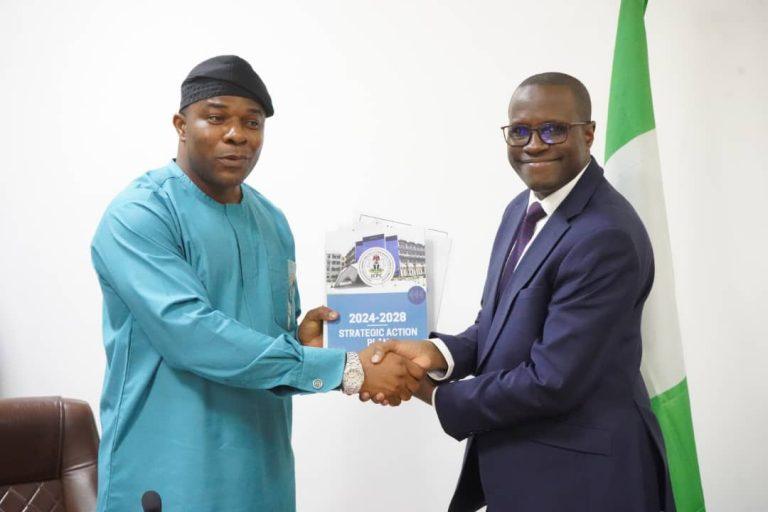
The Independent Corrupt Practices and Other Related Offences Commission (ICPC) has formed a strategic alliance with the Council for the Regulation of Engineering in Nigeria (COREN) to combat corruption, substandard projects, and building collapses nationwide.


The Memorandum of Understanding (MoU), signed at ICPC headquarters in Abuja by the Chairman, Dr. Musa Adamu Aliyu, and COREN President, Prof. Sadiq Zubair Abubakar, according to the Chairman, signals a united front to enforce strict professional standards and hold violators accountable.

“The ICPC and COREN are critical in Nigeria. COREN is critical to our survival. The engineers help us to have this place we are using for this meeting. And our job as ICPC is to ensure that we have a good quality job in that area (engineering). We (ICPC) have a responsibility to ensure accountability and transparency in the public’s interest.”

“No more certificates for ghost projects or shoddy work; Where engineers compromise standards, we will refer them to COREN for sanctions and prosecute them in court. Nigerians deserve quality infrastructure and full value for public funds,” Dr Aliyu declared.

He noted that COREN’s technical expertise will strengthen ICPC’s Constituency and Executive Projects Tracking Initiative (CEPTI), ensuring government-funded projects meet approved designs and safety standards.

The ICPC boss condemned the recurring tragedy of building collapses, calling for urgent preventive measures:

According to him, “we must stop this cycle before more lives are lost. Together, we will investigate root causes, block loopholes, and ensure only qualified professionals handle public projects. COREN must alert us to any red flags in the field.”

Dr. Aliyu stressed that ICPC cannot be everywhere at once and urged COREN to be its “eyes on the ground” to protect the engineering profession’s integrity and public trust.

Prof. Abubakar reaffirmed COREN’s readiness to work hand-in-hand with ICPC to enforce compliance, sanction erring practitioners, and restore confidence in Nigeria’s engineering sector.

“This MoU is not just a document it is a renewed commitment to uphold professional excellence, public safety, and national development,” he said.

With this partnership, both agencies are sending a clear message: the era of cutting corners in Nigeria’s engineering projects is over.


Australia to Restrict Screening System for Childcare Workers

0

Australian state will be prevented from “gaming the system” by moving to another jurisdiction, under proposed new laws.

The “banned in one, banned in all” legislation means states and territories will now share information if a person’s application to work with children has been rejected due to criminal history or workplace misconduct.

Attorney-General Michelle Rowland said the reform was needed as the current system has “loopholes” that can be exploited.

The new laws – hoped to start at the end of the year – are part of wider safety reforms in the childcare sector after a spate of sexual and physical abuse cases have shocked the country .

The proposed changes to Australia’s working with children checks come almost a decade after a landmark royal commission into child sex abuse recommended the system be nationalised.

Currently, each state and territory completes what is essentially a criminal history check required for those who work alongside children, but don’t share the information with each other. Some jurisdictions also consider allegations of workplace misconduct.

Rowland said there are no plans to nationalise the checks as states and territories will continue to manage their own systems, but that there will be more information sharing under a national “checking capability”.

“If you’re banned from a working with children check in one state and territory, it means that you can’t then go and apply for one somewhere else in Australia,” she said.

Rowland chaired a meeting of attorneys-general from across the country on Friday, and said representatives from all states and territories had committed to “pull out all stops” to enable stronger, “near real time” information sharing.

Rowland blamed complex IT systems in different jurisdictions – as well as failings by successive governments – on the years-long delay for such a move.

Childcare costs are notoriously high in Australia, with OECD data for 2020 and 2021 showing that those with two children under the age of three in full-time day care spent about 67% of their average gross income on it.

Federal and state governments have poured millions of dollars into the sector in recent years, including funding to guarantee three days of childcare for low and middle-income families.

The federal government also announced on Friday that 30 childcare centres have been told they must lift their standards or risk losing their government funding, under new laws introduced last month.


Source:BBC/Ejiofor Ezeifeoma

Nigeria’s CPI Rises to 125.9 in July

Shiktra Shalangwa

The National Bureau of Statistics, NBS, says that the Consumer Price Index, CPI, which measures inflation, rose to 125.9 in July 2025. 

This reflects a 2.5-point increase from the 123.4 recorded in June 2025.

Despite the increase in the CPI, the year-on-year headline inflation rate eased to 21.88% in July 2025, compared to 22.22% recorded in June 2025.

The headline inflation rate in July 2025, on a month-on-month basis, was 1.99%, which is 0.31% higher than the rate recorded in June 2025 (1.68%).

This stipulates a moderate rise in the average price level between June and July 2025.

Urban and Rural Inflation
Urban inflation, on a year-on-year basis,  stood at 22.01% in July 2025, down from 35.77% in July 2024.

Rural inflation stood at 21.08%, still lower than the 31.26% recorded in July 2024.

On a month-on-month basis, urban inflation was 1.86% (down from 2.11% in June), while rural inflation rose to 2.30% from 0.63% in the previous month.

The twelve-month average inflation rate for urban areas was 27.04%, while for rural areas, it was 23.84% in July 2025.

Food Inflation
Food inflation, a critical component of the overall CPI, slowed significantly in July 2025: Year-on-year food inflation was 22.74%, a drop of 16.79 percentage points from 39.53% in July 2024.

Month-on-month food inflation also declined slightly to 3.12%, compared to 3.25% in June 2025.

The average annual food inflation for the twelve months ending July 2025 was 26.97%, lower than the 36.36% recorded in the previous twelve months.

The slowdown in food inflation was largely driven by a decrease in the prices of key food items such as vegetable oil, beans (white), local rice, maize, flour, sorghum, wheat flour, and millet.

Core Inflation
The core inflation rate, which excludes volatile agricultural produce and energy, stood at 21.33% year-on-year in July 2025, down from 27.47% in July 2024.

On a month-on-month basis, the core inflation rate declined to 0.97%, compared to 2.46% recorded in June 2025.

State-by-State Analysis
Borno State recorded the highest year-on-year food inflation at 55.56%, followed by Osun (29.10%) and Ebonyi (29.06%).

States with the lowest food inflation were Katsina (6.61%), Adamawa (9.90%), and Zamfara (14.72%).

On a month-on-month basis, food inflation was highest in Borno (10.89%), Kano (10.86%), and Sokoto (7.43%), while the lowest rates were recorded in Bauchi (0.26%), Katsina (0.30%), and Anambra (0.37%).

In terms of all-items inflation, Borno (34.52%), Niger (27.18%), and Benue (25.73%) recorded the highest year-on-year rates, while Yobe (11.43%), Zamfara (12.75%), and Katsina (15.64%) recorded the slowest rises.

The NBS restated that inflation statistics are derived from detailed data collection and analysis across all 36 states and the FCT. It also said the figures reflect Nigeria’s continued efforts to stabilize the economy amid evolving global and local dynamics.


Bauchi Assembly Seeks Stronger Immunisation Services Statewide

0

The Bauchi State House of Assembly has called for intensified efforts to strengthen immunisation services and reduce zero-dose areas across the state.

Chairman of the House Committee on Health, Mr Lawal Dauda, made the appeal on Friday during a joint Community of Practice (CoP)–legislative oversight visit to selected health facilities in Ganjuwa Local Government Area.

The exercise was supported by the African Health Budget Network (AHBN).

Dauda underscored the importance of aligning immunisation planning with neighbouring Jigawa and Gombe states.

He further urged stakeholders to provide motorcycles and other logistics for local immunisation supervisors, support community resource groups, and integrate trained volunteers who have been assisting in service delivery across the state.

The lawmakers pledged to engage relevant authorities to resolve the identified challenges.

CoP Co-Chairman, Mr Jinjiri Garba, commended facility managers for their progress but emphasised the need to bridge existing service gaps.

Read Also: Kano, NGO Collaborate to Eliminate Neglected Tropical Diseases

The oversight team observed notable improvements in infrastructure and equipment, including an additional cold chain facility acquired partly through CoP advocacy.

They also reported enhanced service delivery across all primary healthcare components, despite ongoing renovations at the Kafin Liman facility.

AHBN’s Bauchi State Focal Person, Dr Hassan Musa, said the visit aimed to ensure accountability in immunisation financing.

He acknowledged the Assembly’s role in approving and facilitating the release of ₦872 million for the state’s 2025 immunisation programme, relaying appreciation from AHBN National Coordinator, Dr Aminu Magashi Garba.

Earlier, Ganjuwa LGA Primary Health Care Director, Malam Ibrahim Adamu, led the team to inspect solar-powered cold chain equipment and routine immunisation record harmonisation.

The team also reviewed financial management under the Basic Health Care Provision Fund, sanitation measures, and the facility’s 2025 work plan.

The oversight delegation included House Committee Chairmen Mohammed Wanzam (Appropriation), Ahmed Maikudi (Food Security and Nutrition), and Garba Adamu (Ganjuwa West).


ICPC, CRFFN Partner to Curb Corruption in Logistics Industry

Charles Ogba

The Independent Corrupt Practices and Other Related Offences Commission, ICPC, has announced a strategic partnership with the Council for the Regulation of Freight Forwarding in Nigeria (CRFFN) to curb corruption and unethical practices within the nation’s freight logistics industry.

The alliance was sealed during a courtesy visit by the CRFFN leadership to the ICPC headquarters where both parties pledged to promote transparency, accountability, and operational efficiency across ports, airports, and land border cargo clearance processes.

Speaking during the meeting, ICPC Chairman, Dr. Musa Adamu Aliyu, SAN, described the freight forwarding sector as “a vital artery of Nigeria’s economy” and stressed that cleaning it up will protect compliant operators, restore public trust, and enhance Nigeria’s standing in global trade.

When we rid this sector of corruption, we not only save businesses from undue costs and delays but also strengthen Nigeria’s reputation as a reliable trading partner,” Dr. Aliyu said.

Under the new collaboration, ICPC will support CRFFN through targeted anti-corruption training for freight forwarders, joint nationwide public awareness campaigns, policy advisory on integrity frameworks, and coordinated response to whistleblower reports involving industry malpractices.

Earlier, CRFFN Registrar, Dr. Igwe Kingsley highlighted some of the integrity challenges plaguing the industry, including bribery in cargo clearance, falsification of shipping documents, irregular licensing compliance, and collusion with corrupt officials. He expressed optimism that ICPC’s intervention will “significantly change the culture of the industry for the better.”

Both institutions reaffirmed their commitment to sustained engagement, stakeholder sensitization, and the enforcement of ethical standards to ensure the freight forwarding sector contributes optimally to Nigeria’s economic growth.


.

NDDC Pledges Support for Universities

0

Niger Delta Development Commission NDDC, in Nigeria, has reaffirmed the Commission’s commitment to the advancement of education in the Niger Delta region.

The Managing Director of the Niger Delta Development Commission, NDDC, Dr. Samuel Ogbuku, made this known while receiving the Vice Chancellor of Wigwe University, Professor Marwan Al-Akaidi, and his team during a courtesy visit to the NDDC headquarters in Port Harcourt the State capital.

Dr Ogbuku, while welcoming the delegation, emphasised that NDDC has a long-standing tradition of supporting educational institutions across the region through infrastructure development and scholarship programmes.

It is not new for NDDC to support universities; it is something we have been doing consistently. We have built hostels, classrooms, provided furniture, computers, and more, we believe in supporting the best within the region,” he stated.

Significant addition

He acknowledged the establishment of Wigwe University as a significant addition to the region’s educational landscape, describing it as a top-tier institution with world-class facilities.

According to him, this aligns with NDDC’s mission to uplift the Niger Delta through strategic educational investments.

For us in NDDC, partnering with Wigwe University is something we can do with joy because the people who will benefit from the university are largely from the region. We welcome you and thank you for trusting us,” Dr Ogbuku said.

He further said that NDDC was set to launch a local postgraduate scholarship scheme and assured that Wigwe University will be considered as one of the beneficiary institutions.

We believe that if our students cannot go abroad, at the very least, they should receive the best education within Nigeria, and Wigwe University stands out in that regard,” he stated.

Earlier, the Vice Chancellor of Wigwe University, Professor Marwan Al-Akaidi, expressed appreciation to the Commission for its continuous support to education.

Mutual growth

He stated that the visit was aimed at initiating a long-term partnership with the NDDC built on mutual growth and regional development.

Our vision is to build an institution that is not only the best in Nigeria but also competitive across Africa and globally. To do this, we are seeking support in key infrastructure areas such as solar street lighting and water supply, and we hope Wigwe University can also be a destination for students under your scholarship scheme, ” he said.

Professor Al-Akaidi underscored the importance of the University’s location in the Niger Delta, and how NDDC’s intervention would not only enhance learning but also improve the quality of life in the host community.

He added that they were confident that the NDDC, as a champion of educational advancement, would support in manpower development and infrastructure that enables world-class learning.

Lateefah Ibrahim

PDP Endorses Reserved Seats Bill for Women

0

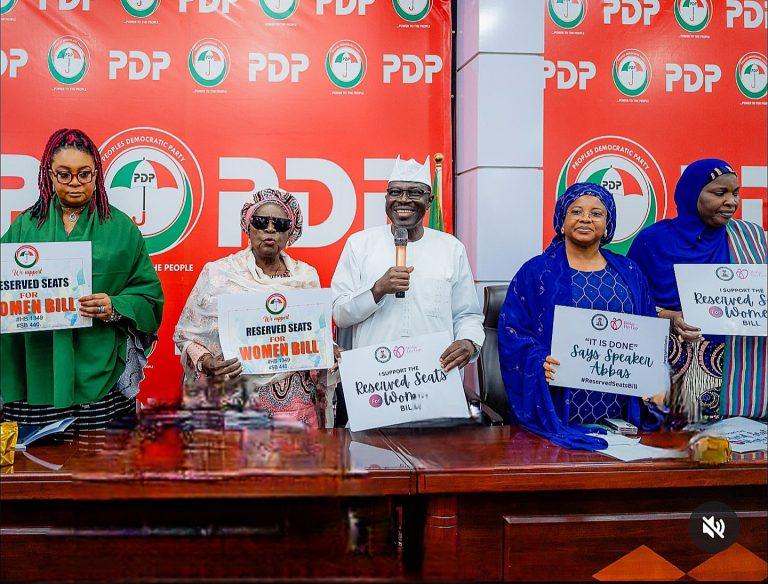
The Peoples Democratic Party (PDP) has formally endorsed the “Reserved Seats for Women Bill”, pledging full support to ensure its passage for greater female representation in governance when the National Assembly reconvenes.

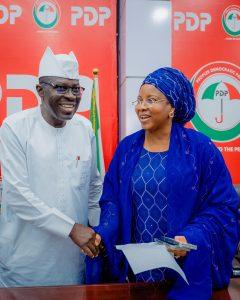
Speaking during an advocacy visit to the PDP National Secretariat, the party’s Acting National Chairman, Umar Damagum, declared unequivocal support and a firm commitment to ensuring the bill’s passage.

 “We are endorsing that bill. On behalf of our chairman, Ambassador Iliya Umar Damagun, and the National Working Committee of our great party, we in the PDP are in support of this bill, and we hereby endorse it.”

Represented by Deputy National Chairman (South), Taofeek Arapaja, he further pledged to rally PDP legislators to vote in favour of the bill;

“When our members resume from recess, we will speak to them, we will engage them, and we will ensure they vote in support of this bill. This is a cause our party fully stands behind.”

The bill, co-sponsored by Hon. Kafilat Ogbara, Chair of the House Committee on Women Affairs and Social Development, proposes additional legislative seats exclusively for women, one per state in the Senate and House of Representatives and three per state in the State Houses of Assembly.

It aims to boost women’s participation in governance without displacing existing male legislators, introducing an Independent National Electoral Commission (INEC)-led framework for implementation.

Leading the advocacy visit to the PDP National Working Committee (NWC), Ogbara said, “It’s just common sense; empower the women and the nation is empowered. Simple! So, what we are asking for basically, this bill seeks that we should have an extra seat in the Senate in every state.

“We are taking this campaign across all political parties because gender equity is not a party issue; it is a national imperative. This bill does not take anything away from men; it creates new opportunities for inclusive governance.”

Also speaking, former First Lady of Benue State and current Member of the House of Representatives (Gboko/Tarka), Hon. Regina Akume, emphasised the value and capacity women bring to governance, highlighting her legislative track record:

A lot of work I did. They said she deserved it. Today, nobody who has ever been to the National Assembly has worked on what I have done in two years.

“Women don’t just stand out; we stand tall. When women are given leadership positions, we deliver with excellence, commitment, and integrity. This bill is a chance to let more women prove that in service to our nation.”

The PDP’s endorsement follows similar commitments from other parties, signalling growing momentum for the bill’s passage.

Supporters of the bill say it represents a historic step toward constitutional gender equity in Nigeria’s governance, ending decades of political exclusion and helping protect women from bullying, harassment, and violence in politics.

If enacted, the “Reserved Seats for Women Bill” would guarantee increased female representation in Nigeria’s legislative houses for the first time in the nation’s history.

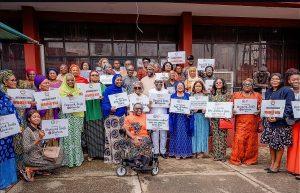
Leading the advocacy visit to the PDP National Working Committee (NWC) was Hon. Ogbara, alongside Hon. Regina Akume, former First Lady of Benue State and current Member of the House of Representatives; National Women Leaders from political parties; civil society organisations; and NGOs.

The advocacy campaign, supported by the Office of the Speaker of the House of Representatives, Tajudeen Abbas, is being taken across all political parties to secure broad-based backing for the bill.