Home Blog Page 491

Managing Nigeria’s Population Requires Resources – NPC Chairman

0

The Chairman of the National Population Commission in Nigeria, Mr Aminu Yusuf, says managing Nigeria’s population requires resources, political will and national ownership.

He made the statement during the 13th Annual Population Lecture Series in Abuja, Nigeria’s capital.

Mr Yusuf called on “Policymakers, private sector leaders, and civil society to listen, to engage, and to commit to the recommendations that will emerge from this hall.”

The NPC Chairman also urged stakeholders to “Work together to build a funding framework that is resilient, homegrown, and sustainable.”

He said the series marked a significant milestone in the Commission’s “journey to place population management at the very heart of Nigeria’s development agenda.”

The NPC Chairman reiterated that “Since its inception in 2012, the APLS has served as a premier policy dialogue forum, bringing together the finest minds to interrogate Nigeria’s demographic dynamics.”

He added that the stakeholders were gathered not “just to observe tradition, but to confront one of the most pressing challenges of our time—the sustainability of our population and development agenda.”

Mr Yusuf said the Commission had chosen for this year’s lecture the theme: “Emerging global funding realities: Impact on population activities and need for innovative domestic resource mobilisation.”

He further stated that “The context and the Theme” were apt, as “Nigeria’s rapid population growth places immense pressure on our economy, infrastructure, and our collective progress toward the Sustainable Development Goals (SDGs).”

For decades, the National Population Commission, working with the Federal Government, had strived to manage these dynamics, focusing on fertility management, maternal health, child survival, and the pursuit of a demographic dividend.

Police Redeployment Order Non-Negotiable – President Tinubu

0

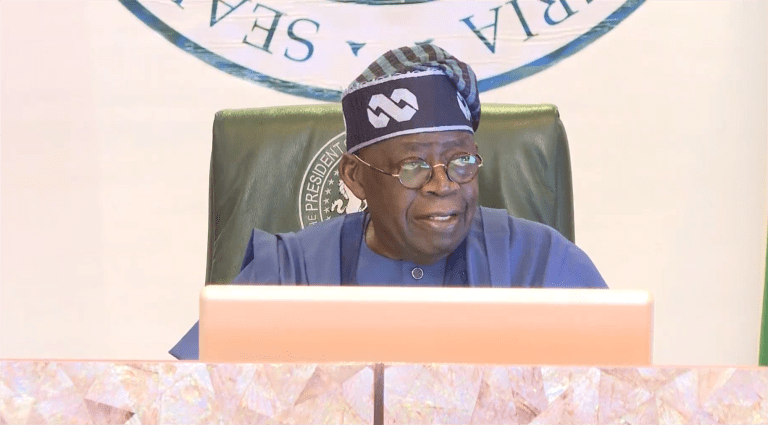
President Bola Ahmed Tinubu has stated that his directive ordering the redeployment of police officers assigned to VIPs, VVIPs and ministers is non-negotiable, directing all ministers to ensure full and immediate compliance.

The President reaffirmed his directive on Wednesday during the Federal Executive Council meeting held at the Council Chambers of the State House, Abuja.

President Tinubu further instructed the National Security Adviser and the Directorate of State Services to constitute a committee to review the existing security structure in line with his order.

“I honestly believe in what I said and I call on the IGP, and I hope the minister of police affairs is here. If you have any problem of security because of the nature of the assignment, please contact the IGP and get my clearance.

“The minister of interior should liaise IGP and the Civil Defence structure to replace those police officers who are on special security duties. So that you don’t leave people exposed.

“NSA and DSS to provide further information and form themselves into the committee and review the structure.” The President added.

Acknowledging that public office holders may be exposed and may require exceptional protective measures, President Tinubu added that the Nigeria Security and Civil Defence Corps is adequately equipped to assume such responsibilities.

He further directed the National Security Adviser to prioritise the arming and effective deployment of forest guards, emphasising that the matter should be treated with utmost seriousness.

President Tinubu emphasised that the directive must be fully implemented, citing the country’s ongoing battles against kidnapping and terrorism.

He noted that Nigeria requires the optimal deployment of all available security personnel to confront these threats.

It should be effective. We face challenges of Kidnapping and terrorism, we need all the forces that we can utilise.

I know some of our people are exposed and I understand that we have to make exceptional provision for them, and civil defence are equally armed, and I want to know that from NSA to arm our forest guards too; take it very seriously.”

The Nigerian leader further called on state governors to rehabilitate existing ranches or designate specific communities for livestock resettlement.

The President added that Nigeria must eliminate the potential for conflict and transform livestock reform into a viable economic enterprise, stressing that the opportunities are clear and should be fully harnessed.

He noted that the framework already exists within the National Economic Council and that the Constitution vests land in the states.

“Especially livestock reform, I think the Vice President should get the NEC first of all to see which village or grazing reserves can be salvaged or rehabilitated into ranches or livestock settlements.

We must eliminate the possibility of conflicts and turn the livestock reform into economically viable development. The opportunity is there; let’s utilise it.

And it is in NEC; if we exercise the constitutional requirement which states that the land belong to the states, whichever one they can salvage, convert it to a livestock village. Let us stop this conflict area and turn it to economic opportunities and prosperity.” The President added.

The Federal Executive Council meeting currently chaired by the President started at 01:50pm with Vice President Kashim Shettima, National Security Adviser Mallam Nuhu Ribadu, Chief of Staff to the President Femi Gbajabiamila, the Representative of the Secretary to the Government of the Federation, and the Representative of the Head of the Civil Service of the Federation.

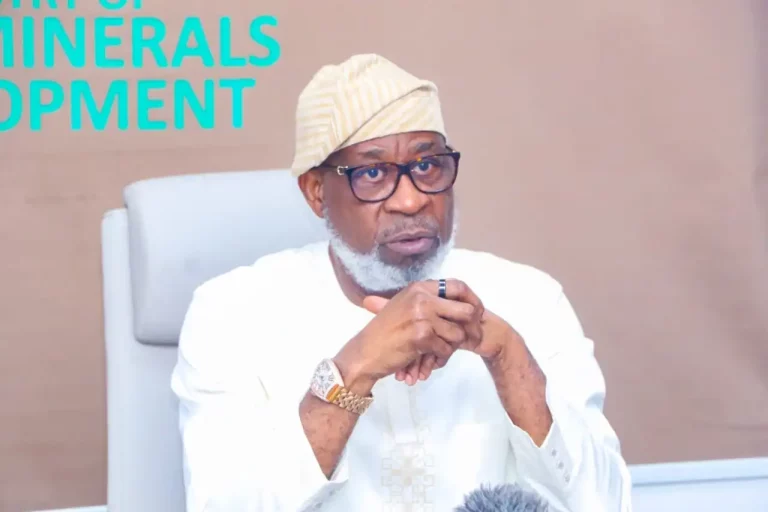
Also present were the newly sworn-in Minister of Defence, General Christopher Gwabin Musa, Minister of Solid Minerals Development, Mr Dele Alake, and other Special Advisers to the President.

President Bola Ahmed Tinubu’s latest directive on the withdrawal of police officers from VIP protection comes as part of a broader national push to strengthen frontline security operations and redeploy law-enforcement personnel to areas of more public need.


Portugal Unveils Credit Line For Mozambique Investment

0

Portugal has announced a €500 million credit line to support Portuguese companies investing in Mozambique in what officials described as a major show of confidence in the southern African nation’s political stability and economic potential.

The pledge was unveiled by Prime Minister Luís Montenegro at the conclusion of the sixth Portugal–Mozambique Bilateral Summit in Porto on Tuesday, where he was joined by Mozambican President Daniel Chapo.

The summit also produced 22 cooperation agreements focused on trade, development and economic diversification.

Montenegro said the financing facility is designed to encourage Portuguese firms to expand into Mozambique, highlighting the country’s stabilisation process and economic ambition.

We want to show our confidence in Mozambique’s economy and tell Portuguese companies that we are supporting them in the process of internationalisation,” he noted.

The new credit line is expected to provide Portuguese companies with greater confidence to enter or expand operations in sectors such as energy, construction and agribusiness.

Officials from both sides said technical teams will now work on implementing the financing facility to ensure that investment projects contribute to job creation, sustainable growth and stronger bilateral economic relations.

The final declaration of the summit placed economic and sustainable development at the top of the bilateral agenda.

Both governments are committed to strengthening coordination mechanisms to maximise financing instruments and promote business partnerships that can drive growth and diversification in Mozambique.

The announcement underscores the depth of ties between Portugal and its former colony, which have evolved from historical links into a modern partnership centred on investment, trade and development cooperation.

Portugal has long been one of Mozambique’s key European partners, supporting infrastructure projects, education and governance reforms while encouraging private sector engagement.

Mozambique, rich in natural resources including coal and natural gas, has sought to attract foreign investment to rebuild its economy after years of conflict and instability.


Nigeria Unveils Incentives To Attract Global Mining Investors

Nigeria has unveiled incentives, including seamless transfer of profits and duty waivers on imported mining machinery, to attract global investors.

The incentives were announced by the Minister of Solid Minerals Development, Dr Dele Alake, who led the Nigerian delegation to the Resourcing Tomorrow annual exhibition and conference recently held in
London.

According to a statement by his Special Adviser, Mr Kehinde Bamigbetan, the Minister used the platform to assure international mining companies that Nigeria is open and ready for investment.

At the opening ceremony, Alake highlighted Nigeria’s recent investment breakthroughs in mineral processing, disclosing that the country has attracted over $2 billion in investments into lithium and rare earth projects in the past two years.

He explained that these inflows are the direct result of the Tinubu administration’s policy on value addition, aimed at ending “pit-to-port” exports and promoting local beneficiation.

He noted that since last year, companies including Canmax Technologies, Jiuling Lithium, Avatar New Energy Nigeria Limited, and the ASBA Group have collectively invested more than $1.3 billion in lithium processing projects across Nigeria, stressing that the investments are tangible and ongoing.

Alake further revealed that construction has commenced on a $50 million lithium processing plant near Abuja, which will serve as the first in a chain of industrial clusters planned across Nasarawa, Kogi, Kwara, and Ebonyi states.

In addition, Nigeria recently broke ground on a $400 million rare earth processing plant by the Hasetins Group, expected to be completed within 15 months, while a multi-billion-dollar iron ore-to-steel project is also in the pipeline.

To improve security and regulatory compliance, the Minister said the federal government has established mining marshals to enforce mining laws and protect operators, while deploying satellite technology to monitor mining activities nationwide.

He also presented the Nigeria Solid Minerals Company (NSMC) as the government’s preferred joint venture partner, leveraging mineral assets inherited from the former Nigerian Mining Corporation to meet investor needs.

According to him, the NSMC represents a model of shared prosperity through shared investment, co-investing in high-value projects, reducing exploration risks, and promoting downstream processing.

Assuring over 1,000 conference participants of Nigeria’s preparedness
For investment, Alake disclosed that more than 80 per cent of the country has been covered by geological mapping through the Nigerian Geological Survey Agency and private exploration investors. He added that the government has finalised Solid Minerals Export Guidelines to align exports with global traceability, environmental, and governance standards.

Addressing global supply chain concerns, the Minister advocated local value addition in mineral-producing countries as a sustainable solution, noting that the Africa Minerals Support Group—formed by African mining ministers—is already shaping beneficiation policies across the continent.

He also cited Nigeria’s domestic integration efforts, including state-owned mining companies and the signing of 427 Community Development Agreements between host communities and mining firms, as measures to ensure that economic, social, and governance principles are upheld in the sector.


Amazon, Microsoft Pledge Mega AI Investments in India

0

Tech giants Amazon and Microsoft have announced a combined $52.5bn (£39.4bn) investment plan for India over the coming years.

Amazon disclosed on Wednesday that it was pumping in $35bn into India by 2030 to advance AI-driven digitisation, export growth and job creation, a day after Microsoft committed $17.5bn to strengthen the country’s AI ecosystem.

India, which is an emerging AI and cloud infrastructure hub, has witnessed a surge of global tech investments recently.

In October, Google disclosed a $15bn investment to build an AI data hub, and earlier this week, Intel announced a collaboration with Mumbai-based Tata Electronics as its first major customer in the latter’s $14bn semiconductor manufacturing plans.

When it comes to AI, the world is optimistic about India,” Indian Prime Minister Narendra Modi said in a post on X after meeting Microsoft CEO Satya Nadella on Tuesday.

Amazon’s $35bn investment will build on the $40bn already invested in India – establishing the company as “the largest foreign investor” in India, the company said in a statement.

A key component of it will go into the local cloud and AI infrastructure.

Microsoft’s fresh commitment follows a $3bn investment announced by the company earlier this year.

It includes a new “hyperscale cloud region“—a cluster of data centres—in the southern Indian city of Hyderabad, set to go live in mid-2026, the company said in a statement.

Data centres have centralised physical facilities that host computer servers, IT infrastructure and network equipment and are a key component of the AI value chain that India is focusing on despite concerns around water shortages.

India will also be given access to Microsoft’s “sovereign public cloud“, which offers tools to help organisations run their data and applications while keeping sensitive information within the country.

The India investment is part of Microsoft’s $23bn AI expansion across countries, including Canada, Portugal and the UAE, as the company vies with rivals such as Amazon and Google.

In a statement by Microsoft, it aims to integrate AI into Indian government platforms, supporting around 310 million informal workers.

The announcements came as India steps up activity in semiconductor manufacturing, with several state-backed and private projects aiming to build a domestic chip-making industry.

While India is a big market for AI – with a billion internet users and a big tech talent pool – it still lags behind global leaders like China and the US.

However, the country has been drawing billions in investments in key computing technologies such as chips, with the government’s semiconductor mission offering generous subsidies to firms setting up chip-making facilities.

India’s sovereign AI model is also expected to be unveiled in February next year.


Group Empowers Deaf Women on Digital Safety

0

Women with hearing impairments in Nigeria have been urged to take practical steps to protect themselves amid rising cases of online abuse and image-based violence.

This call was made in Abuja during an event marking the global 16 Days of Activism Against Gender-Based Violence.

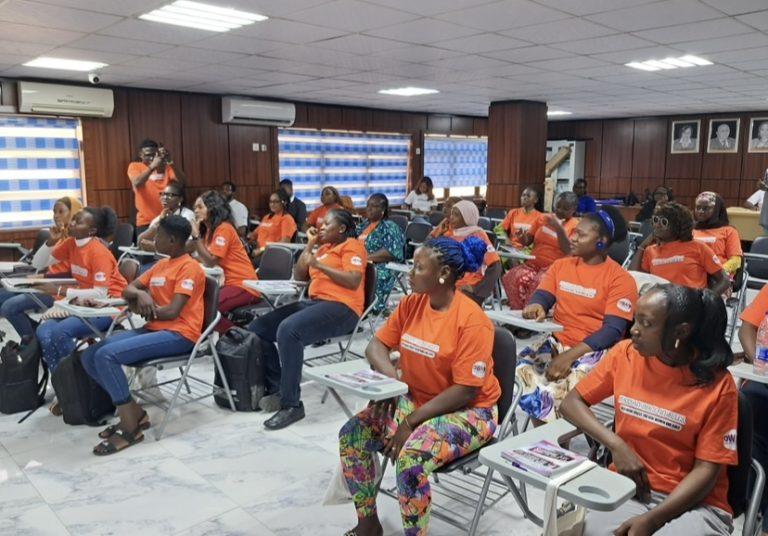
Organised by the Lex Initiative for Rights, Advocacy and Development (LIRAD) in partnership with the Deaf Women Aloud Initiative (DWAI), the forum held under the theme “My Body, My Image, My Right,”brought together advocates, lawyers, partners and beneficiaries to address the urgent need for protection, awareness and accessible justice for Deaf women facing discrimination and digital harm.

Founder and Executive Director of LIRAD, Augusta Shahin, noted that many Deaf women remain vulnerable due to limited access to legal information.

She highlighted the rise in cases involving the non-consensual sharing of intimate images, particularly within the Deaf community.

“Over time, we have received several complaints around people sharing images of women from Deaf community. And because they do not have adequate information about the law or what their digital rights are, it’s often very difficult for them, so we put this together to educate them about their digital rights, to tell them about the amended cybercrimes act for them to know the position of the law as it comes to their digital right and also about digital violence,” Shahin said.

She said that “the amended Cybercrimes Act now explicitly criminalizes non-consensual image sharing, a major step forward, though gaps still remain.”

Shahin also noted that to bridge the accessibility divide, LIRAD has developed sign-language videos explaining digital rights, cybercrime offenses, and reporting procedures, ensuring Deaf women can finally access information that protects them.

In an address, Barrister Green Oge-Ali spoke on the deep psychological wounds caused by online harassment, shaming, and threats, especially against women.

Oge-Ali recounted examples of manipulated images, cyberbullying, sexual harassment, and the viral circulation of private videos, noting that many victims fall into depression, fear, or even self-harm.

“Digital violence is not just online drama.. What happens on the internet affects real lives. Many women are followed, threatened, or physically attacked because of something posted online. Some are shamed into silence. We must recognise this as violence,”She said.

Oge-Ali called on participants to refrain from sharing harmful content, including leaked videos, reminding them that even spectators become contributors to digital abuse.

Similarly, representing the Adeniyi Oyebade Foundation (AOF), Damian Ayowa reaffirmed the organisation’s dedication to inclusion and women’s empowerment.
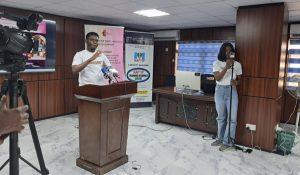
“This is more than a slogan. It is a declaration of autonomy, dignity and empowerment for every woman and girl, especially those within the Deaf community who continue to show resilience in the face of unique challenges,” Ayowa said.

He commended both DWAI and LIRAD for their leadership in ensuring Deaf women are not excluded from conversations on safety, digital rights, and justice.

He said; “We believe true progress comes when no one is left behind. This celebration is a reminder to you all that accessibility, protection, and empowerment for deaf women are not optional, they are essential.”

Also, the Executive Director of Deaf Women Aloud Initiative (DWAI), Hellen Beiyoku-Alase expressed pride in hosting the first cohort of 30 Deaf women trained on digital safety and regulation.

“This training is important because Deaf women can also be victims of gender-based violence. We want to make it accessible for deaf women to understand how they can get justice, report cases, and support others,” Beiyoku-Alase said.

She thanked partners, supporters, and the media for amplifying the voices of Deaf women and ensuring their stories lead to meaningful change.

Facilitators and participants shared real-life examples of digital violence within the Deaf community, from partners threatening to post nude images, to the stigma faced by women whose private photos were leaked, to cases where Deaf women were evicted or abused without any knowledge of where to seek help.

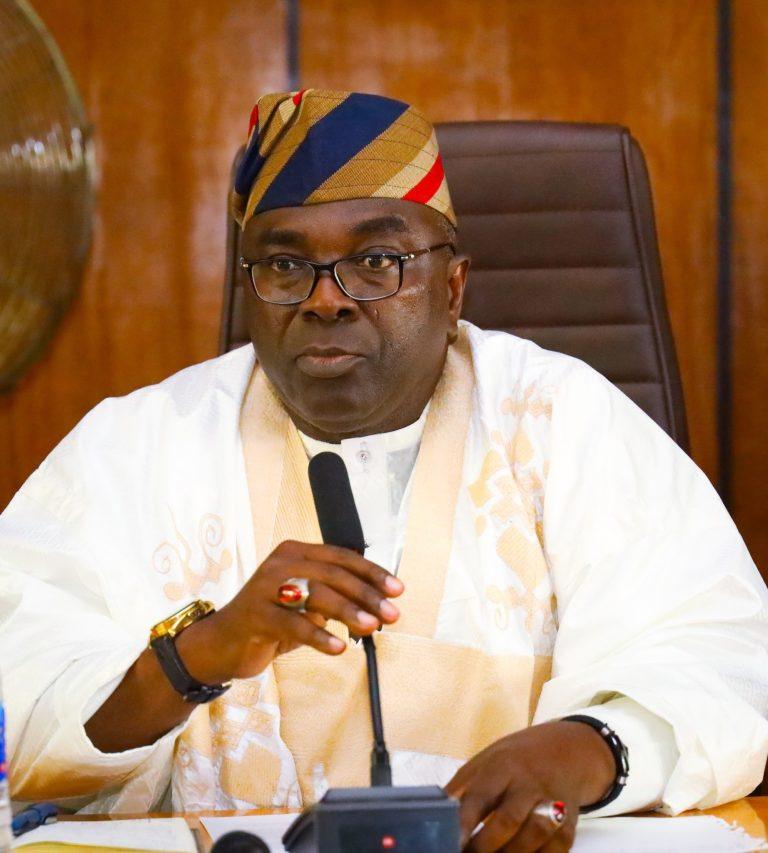
ECOWAS Court Reaffirms Commitment To Protect Human Rights

0

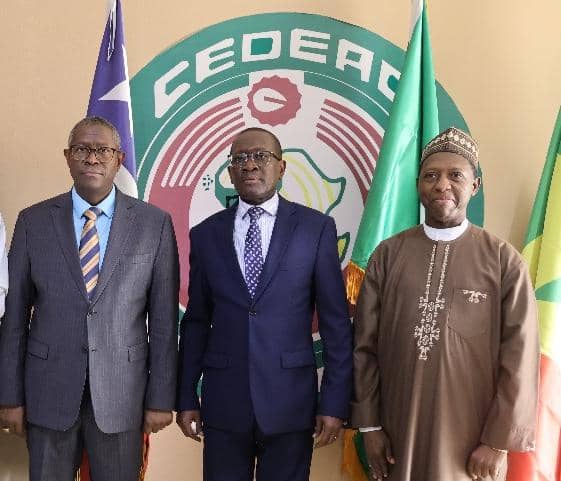
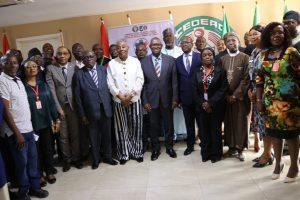
The ECOWAS Community Court of Justice has joined the global community in observing International Human Rights Day 2025, reaffirming its commitment to protecting the rights of all individuals across the region.

Speaking at the event under the theme ‘Human Rights, Everyday Essentials, the ECOWAS Court of Justice President, Justice Ricardo Goncalves, reminds the community countries that human rights are not abstract ideals but are necessities for all individuals to live a
dignified existence.

Justice Goncalves said, “Across our community, many of our people still struggle to have the necessities of life such as adequate food and clean water, security, healthcare and education, a healthy environment, housing, access to justice and other fundamental freedoms.

“It was for the purpose of protecting individual enjoyment of these
necessities that the ECOWAS Authority of Heads of State and Government decided to adopt the 2005 Supplementary Protocol, which expanded the jurisdiction of the Community Court of Justice to accommodate cases concerning the violation of human rights in the territory of Member States,” he added.

According to him, the Court is concerned that ECOWAS Member States have yet to implement most of its judgements. Without effective and total implementation of the Court’s judgments, the promise of human rights protection offered by the 2005 Supplementary Protocol becomes a mirage.

The President of the ECOWAS Court of Justice said the Court is also concerned about certain instances of retrogression in the enjoyment of human rights within the Community. ‘Across the community, we see military takeover or attempted takeover of governance, the narrowing or closing of civic spaces, terrorist insurgency, under-resourced justice systems and the effects of climate change, among other challenges.’

Justice Goncalves believed that the ECOWAS Member States have a duty to respond to these challenges and work with other stakeholders in the region to ensure that everyone in the Community can enjoy their human rights freely and without any discrimination.

He re-emphasised that the Court highlights that rights must be real and effective, not just ideas on paper, adding that victims should have genuine access to justice, without obstacles like cost, distance, language barriers, or complex procedures.

He called on Member States to fully and sincerely implement the Court’s judgments, ensuring that the remedies bring meaningful improvements to people’s lives. National bodies such as courts, human rights commissions, and ombudsmen should collaborate with the Court, building a unified protection system.

“Civil society, the media, and human rights defenders must be respected and safeguarded, as they play a vital role in exposing abuses, supporting victims, and bringing cases to the Court.” He added.

The Court recognises that its credibility rests on independence, impartiality, and strict adherence to the law.

He therefore called on all Member States to renew their dedication to the ECOWAS legal framework, the African Charter on Human and Peoples’ Rights, and all the international human rights agreements they have ratified.

He urged full cooperation with the Court and the effective enforcement of its decisions, showing respect for the rule of law and the people’s rights across West Africa and encouraging more investment in legal and human rights education, especially for young people, to empower them to understand and defend their rights and those of others.

The Court reaffirms its firm commitment to protect human rights, uphold justice, and strengthen the rule of law across our Community.

The ECOWAS Court of Justice remains committed to interpreting, applying and enforcing these rights, guided by the international human rights instruments, their jurisprudence and the values shared across our Member States.

Nigerian Air Force Publishes BMTC 46/2025 Candidates

0

The Nigerian Air Force (NAF) has announced the publication of the list of eligible candidates for the Basic Military Training Course (BMTC) 46/2025 Aptitude Test.

In a statement, the Director of Public Relations and Information, Air Force, Air Commodore Ehimen Ejodame, disclosed that the Aptitude Test is scheduled for 13 December 2025 at 15 designated centres nationwide.

According to him, all shortlisted applicants are advised to arrive early and must come with their acknowledgement slips and required writing materials, as these are compulsory for participation.

READ ALSO: NAF Alerts Public About Fake Recruitment Advertisements

The NAF remains committed to a transparent, credible, and merit-based recruitment process aimed at selecting the most qualified young Nigerians to serve with honour and professionalism.

The list can be accessed via www.nafrecruitment.airforce.mil.ng.

Nigeria Reaffirms Commitment To Youth Empowerment

0

Nigeria’s President, Bola Ahmed Tinubu, has reaffirmed his administration’s unwavering commitment to placing young Nigerians at the centre of national development, declaring that the youth “will not be sidelined in Nigeria’s progress.”

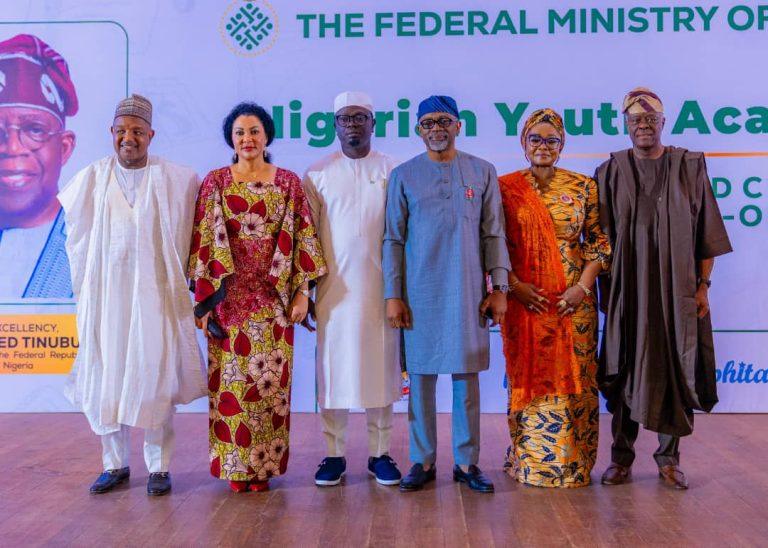
Represented by his Chief of Staff, Rt. Hon. Olufemi Gbajabiamila, the President, made this statement at the Nigeria Youth Academy (NIYA) Startup Grant Award Ceremony and the official launch of NIYA Gigs, held today at the State House Conference Hall, Abuja, Nigeria’s capital.

President Tinubu noted that his dedication to youth empowerment is deeply personal, acknowledging the significant and historic role young Nigerians continue to play in driving innovation, civic engagement, and cultural influence across the world.

He highlighted the administration’s broad economic reform agenda aimed at unlocking the full potential of young people. According to him, all youth-focused interventions are guided by a long-term vision to eliminate bureaucratic, financial, and structural barriers that stand in the way of youth ambition.

The President announced strengthened government support across key sectors such as technology, agriculture, manufacturing, the creative economy, and green energy. He described these investments as part of a deliberately designed empowerment ecosystem that provides multiple pathways for young innovators to thrive.

In his remarks, the Minister of Youth Development, Comrade Ayodele Olawande, emphasised that Nigeria’s demographic reality, with over 65% of its population under 30 and a median age of just above 18, presents an unparalleled opportunity to secure long-term national prosperity.

READ ALSO: Nigeria ranks 161st on the 2020 Global Youth Development Index

According to the Minister, the NIYA Startup Programme and NIYA Gigs are practical, hands-on initiatives aimed at preparing young Nigerians for the modern economy. Through structured training, mentorship, digital skills development, and entrepreneurship support, these programmes are designed to unlock the creativity, resilience, and global competitiveness of Nigeria’s youth.

These programmes are not abstract concepts,” he said. “They are real, immediate pathways for young Nigerians to earn, innovate, and contribute meaningfully to national development.”

Olawande reiterated the administration’s goal of democratising opportunity, adding that recent economic reforms have dismantled historical barriers that previously limited youth access to markets, foreign exchange, and business opportunities.

You no longer need long connections or privileged access to succeed in Nigeria,” he declared. “What you need now is talent, discipline, creativity, and courage. This government is ensuring that every young Nigerian, regardless of background, has a fair chance to prosper.”

In a goodwill message, the Minister of Finance, Wale Edun, reaffirmed that the Tinubu administration’s economic reforms are already “democratising opportunities” for young people. Unlike in the past, when access to business opportunities and foreign exchange depended heavily on personal connections, today’s economic environment rewards talent, competence, and determination.

He stressed that barriers that once stifled youth entrepreneurship have been removed, paving the way for a new generation of innovators across various sectors.


House Committee Probes Bank Fees, Imposes Four-Day Deadline

The House of Representatives’ Ad-hoc Committee investigating tax deductions, sundry charges, and multiple bank fees has given Nigerian commercial banks four days to submit all requested documents.

The committee also insisted on the appearances of the Chief Executive Officers CEOs of these financial institutions at the investigative hearing and rejected representatives of any bank CEO without an authorisation letter to the panel.

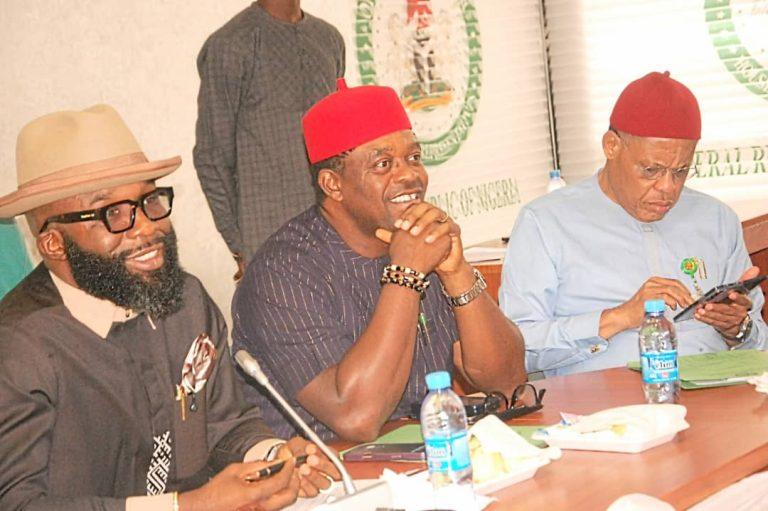
Chairman of the House Committee, Mr Kelechi Nwogu, in a remark at the commencement of the House panel session in Abuja, said that the House probe panel is mandated to ensure that all deductions of charges by banks on customers’ accounts are fair and used rightly.

He stated that the Committee had extended an invitation to the Ministry of Finance, the Office of the Accountant-General of the Federation (OAGF), the Economic and Financial Crimes Commission EFCC and commercial banks operating in Nigeria for the investigation.

The House Committee Chairman and some members who rejected representation of the CEOs of GT Bank, Zenith Bank, Access Bank and other commercial banks cannot hold water as they insisted that they must appear before the panel unfailingly.

“You cannot appear here without an identity. We are not here on our own. We are here on the mandate of the people who elected us into parliament.

“We have resolved to meet next week on Wednesday. You must submit all requested documents on or before Monday.

“We will go through all the documents, and we will put you on oath.

“It will not be well if we invite you here again and you tell us the same story. We have given a deadline that any bank that fails to submit the requested documents on Monday must be sanctioned,” Mr Nworgu said.

The House Committee Chairman said that the House panel is not leaving any stone unturned to unravel why the commercial banks engage in spurious deductions of charges on their customers’ accounts.

The committee members during the investigation said that the commercial banks are perpetrating illegality by deducting inexplicable charges from civil servants’, public servants’ and other customers’ bank accounts without remittances.

Other members of the panel, notably Mr Chidi Mark Obeta, Mr Dominic Okafor, and other members, while speaking in support of the committee decision, demanded that the bank chief executive officers must appear before the panel unfailingly.