Home Blog Page 497

Lawmaker Endorses President Tinubu for 2027 Re-election

0

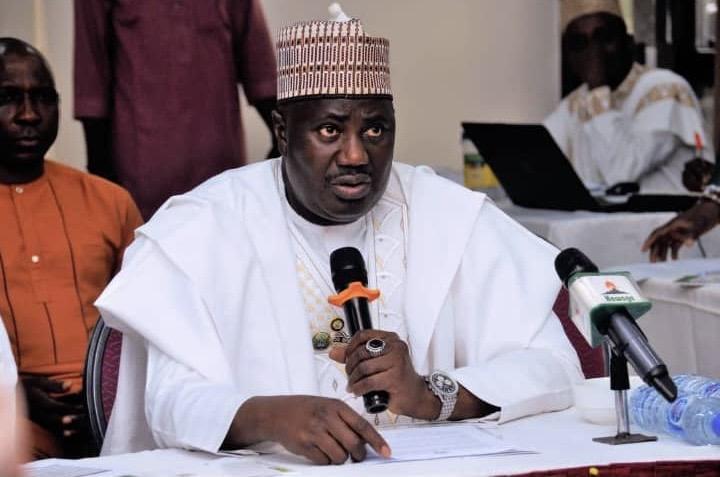
Senator Aliyu Wadada, representing Nasarawa West Senatorial District under the Social Democratic Party (SDP), has declared that the 2027 presidential race is “already taken” by President Bola Ahmed Tinubu.

Wadada made the statement on Tuesday after meeting with the President at the Presidential Villa, Abuja, where he went to pay his “usual respect” and express gratitude for the public felicitation following his turbaning as Maga Jindengi of Lafia on August 2, 2025.

Addressing questions about his frequent visits to the Villa despite being an SDP member, Wadada said the Presidency is “the home of Nigerians,” recalling his political journey through various parties.

“My departure from APC to SDP wasn’t because APC had done anything wrong to me. It was just circumstantial, and I wouldn’t want to bore anybody with the circumstances. I went out there, saw, and did it. Today I am in the Senate on the SDP platform,” he said.

He hinted at a possible return to the All Progressives Congress (APC), adding: “SDP as a political party hasn’t offended me. I am still proud of SDP, but the happenings now may not warrant my continuous stay. I could even say that I am APC, though I have not officially moved.”

Wadada challenged opposition aspirants to present tangible plans rather than “baseless criticisms,” urging them to clarify their positions on subsidy removal, foreign exchange reforms, infrastructure, and economic development.

“We’re talking Nigeria, not sectional politics. President Tinubu is the President of Nigeria, not Lagos or the Southwest,” he added.

Citing the recently passed Tax Reform Bill, Wadada highlighted its impact, noting that it exempts anyone earning less than ₦800,000 annually from personal income tax and ensures that “no state in Nigeria today takes less than three times what it used to take” following subsidy removal.

He urged the public to hold state governments accountable for increased revenues.

Wadada also praised President Tinubu’s infrastructural projects, including the Sokoto–Badagry road, the Abuja–Kano highway, and ongoing transformation in the Federal Capital Territory led by Minister Nyesom Wike, attributing these developments to the President’s leadership.

When asked if his remarks amounted to an endorsement of Tinubu for 2027, Wadada said: “If you are fit to be endorsed, bring yourself to the front. Whoever truly cares for Nigeria knows that people resist change, but Asiwaju has come with unprecedented changes.”

He concluded emphatically, “The 2027 space is already taken, occupied by President Bola Ahmed Tinubu.”

PIAK
President Tinubu Appoints Board Members For NCC, USPF

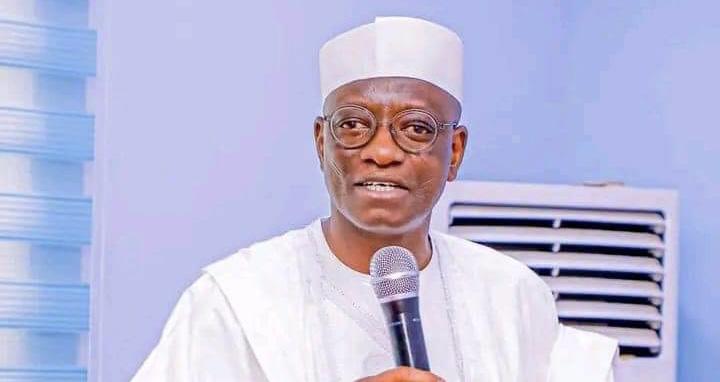
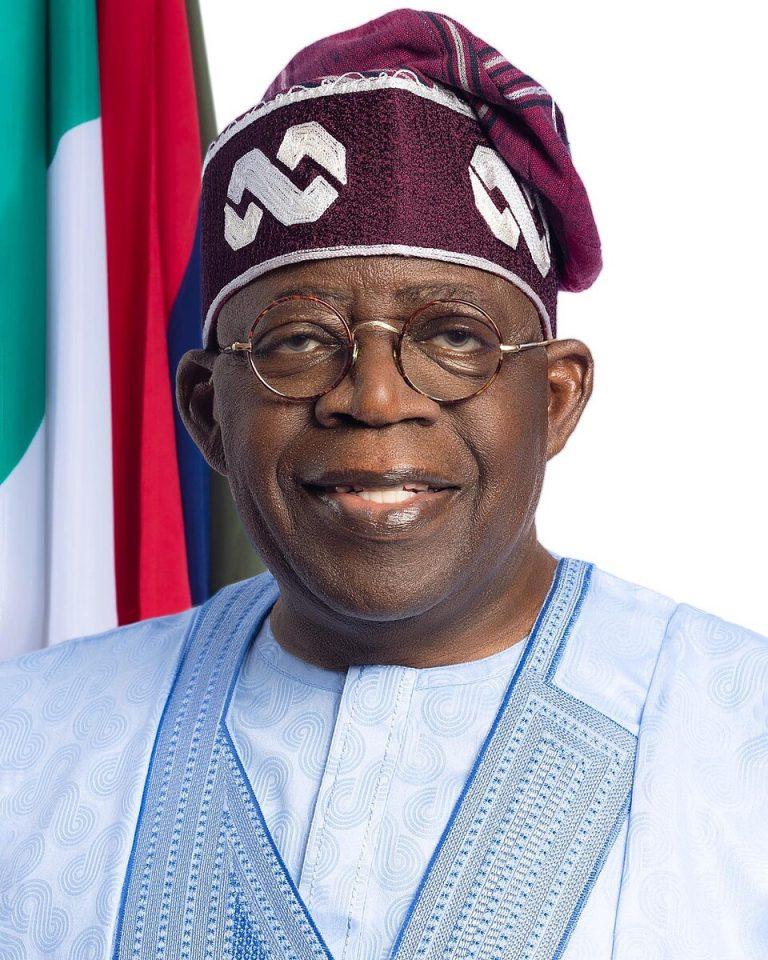
President Bola Ahmed Tinubu has constituted the boards of the Nigerian Communications Commission (NCC) and the Universal Service Provision Fund (USPF), key agencies under the Ministry of Communications, Innovation, and Digital Economy.

A statement by the Presidential Spokesperson, Mr. Bayo Onanuga, revealed that Idris Olorunnimbe was appointed Chairman of the NCC, while Aminu Waida remains the Executive Vice Chairman and Chief Executive Officer of the commission.

Waida was appointed Executive Vice Chairman/CEO of the NCC in October 2023, with the Senate confirming the appointment in November 2023.

Mr. Olorunnimbe previously served on the Lagos State Employment Trust Fund (LSETF) Board, where he chaired the Stakeholder and Governance Committee, leading impactful youth employment and entrepreneurship programmes.

Other members of the NCC board include Abraham Oshidami (Executive Commissioner, Technical Services), Rimini Makama (Executive Commissioner, Stakeholder Management), Hajia Maryam Bayi (Former Director, Human Capital & Administration), Col. Abdulwahab Lawal (Rtd), and Senator Lekan Mustafa.

The President also appointed Chris Okorie as a board member, with Princess Oforitsenere Emiko serving as the Secretary of the Board.

Regarding the Universal Service Provision Fund, President Tinubu approved the board with Bosun Tijani, Minister of Communications, Innovation, and Digital Economy, as Chairman.

Other board members include Idris Olorunnimbe as Vice Chairman, Abraham Oshidami, Rimini Makama, Aliyu Edogi Aliyu (representing FMCIDE), Joseph Faluyi (representing the Federal Ministry of Finance), and Auwal Mohammed (representing FMBNP).

Uzoma Dozie, Peter Bankole, Abayomi Anthony Okanlawon, and Gafar Oluwasegun Quadri were appointed as the USPF Secretaries.

The Federal Government established the USPF to support the achievement of national policy goals for universal access and service to information and communication technologies (ICTs) in rural, unserved, and underserved areas across Nigeria.

PIAK

Youths Call for More Efforts to Achieve SDGs

0

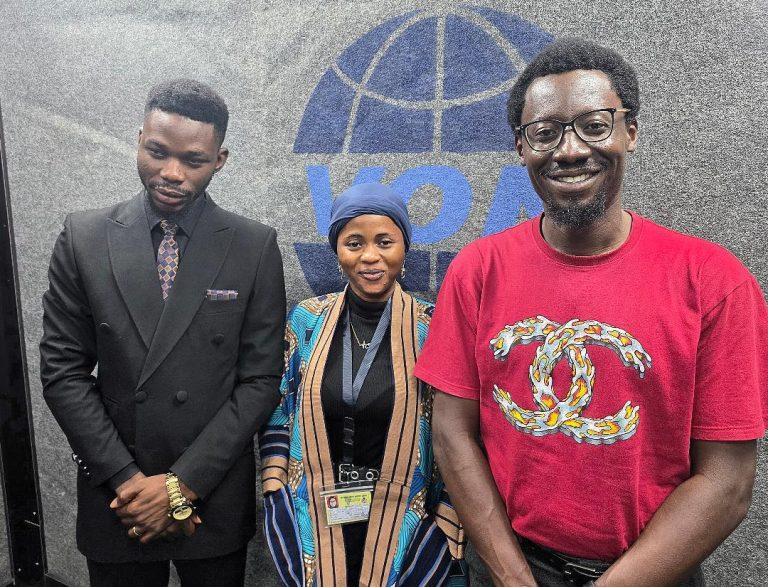
Young Nigerian advocates have called for actions, accountable leadership, and youth-driven investment in agriculture as essential pathways to achieving the Sustainable Development Goals (SDGs).

Speaking to Voice of Nigeria during the 2025 International Youth Day commemoration programme, Youth Forum themed “Attaining Local Youth Actions for SDGs and Beyond,” they stressed the need for partnerships to meet the 2030 SDG deadline.

Rahama Ibrahim, a strategic communication practitioner, emphasised that achieving the SDGs begins with individual commitments.

“We are doing it through every one of us, me and you, taking actions in achieving the goal, partnering to achieve the goal,” she said.

Ibrahim highlighted the crucial role of Nigerian youth, particularly young women, in embedding the SDGs into daily life.

“In attaining these goals, I will still focus on actions. Nigerian youths need to get into actions, putting all of these goals into their daily lives, what they do and everything about them,” she added.

On leadership, technology, and accountability, advocate Fred Ogbole described leadership as “the fulcrum at which every individual life exists,” emphasising that leadership starts at the family level with positive ripple effects on society.

“At the lowest level of leadership is the family, whereby leadership are provided. If leadership are not provided in family, you see how children go astray. We don’t have people who hold them accountable when they misbehave,” he noted.

Ogbole warned against a culture of selective accountability.

“If we adopt the formula of accountability across all phases of life; in business, in empowerment, in community, in government—we will achieve whatever we want,” he said.

He cited examples of Singapore and China’s intentional leadership as drivers of national transformation, contrasting with Nigeria’s ongoing politicisation of governance.

“Countries like Singapore achieved transformation because of intentional leadership. Lee Kuan Yew was called a dictator, some even said a soft dictator, but he lived that legacy of not controlling, but mitigating risk in terms of abusing leadership. China did that too—closed their borders for 10 years and figured their country out. Our country has not been figured out since independence because we keep politicising everything.”

Ogbole urged Nigerians to separate politics from governance.

“Politics comes before you enter into office. Governance comes when you enter into office. For us, politics continues when you enter into office, and we can never get it right when we continue politics while in governance,” he said.

He further stressed the need for governance focused on improving livelihoods rather than superficial empowerment programs.

“If livelihoods are improved, we don’t need to send empowerment out, we don’t need to send palliative, we don’t need to do any charade to make people feel that we are doing our work. We just need good electricity, good power supply, good systems that empower people. Through that, we can do anything that we want to achieve as a nation.”

Agribusiness advocate, Echefu Chidozie, urged Nigerian youth to embrace agriculture across its value chain beyond farming.

“As young youths, we must start practising agriculture, no matter how little. Agriculture cuts across various value chains and commodities. There’s the service-providing chain, where you come to teach, sell, or do your marketing; the production chain, where you do the actual farming, growing of plants, or rearing of birds or animals; and the processing chain.”

He spotlighted food processing as an overlooked but profitable area for youth investment.

“I’m advocating for youths to look at the area of food processing because we still consume a lot of things that come from different countries. It will wow you that we buy palm oil from the Indonesians and the Malaysians even though we claim that we produce a lot of oil. We don’t have enough oil. Why?” he queried.

Chidozie explained the broad uses of palm oil beyond cooking.

“So many Nigerian youths do not know that palm oil is needed for soap production, for production of cream, cosmetics, so many things—not just cooking your egusi soup or whatever,” he said.

He linked fighting hunger with boosting youth capacity and productivity.

“When you eat proper, you think proper. If you don’t eat proper, you won’t think proper. So please, young people, come into agriculture. Let’s do agribusiness,” he urged.

Together, the advocates underscored that youth-led action, transparent leadership, and strategic economic engagement—especially in leadership, technology, education, and agriculture—are critical for Nigeria to meet its SDG targets and sustain progress beyond 2030.

PIAK

Apple, Google App Stores Ruled Uncompetitive in Australia

An Australian court found the smartphone app stores of Apple and Google-owned Android were uncompetitive, local media reported, in a partial victory for Fortnite game developer Epic Games against the tech giants.

Amid a years-long legal dispute brought by Epic against the dominant smartphone makers in several jurisdictions around the world, Australia’s federal court found the phone makers’ app stores had no protections against anti-competitive behaviour, the reports said.

Epic Games had claimed Apple and Google’s fees for downloads of its games were too high, and that the phone makers made it impossible for users to download its alternative app store.

The Australian judgment, which ran to 2,000 pages, was not released by the court, but the media said a judge’s summary included the finding that the smartphone companies had not intentionally breached the law.

In a post on X, Epic said the Australian court “just found that Apple and Google abuse their control over app distribution and in-app payments to limit competition”.

Epic is a US-based games studio with backing from China’s Tencent

“The Epic Games Store and Fortnite will come to iOS in Australia!” the Epic post said. “This is a WIN for developers and consumers in Australia!”

Apple said in a statement it welcomed the court’s rejection of some of Epic’s claims, but strongly disagreed with its ruling on others.

“Apple faces fierce competition in every market where we operate,” the California-based tech giant said.

A Google statement said the company welcomed the court’s rejection of some Epic Games claims, but “we disagree with the court’s characterisation of our billing policies and practices, as well as its findings regarding some of our historical partnerships, which were all shaped in a fiercely competitive mobile landscape”.

“We will review the full decision when we receive it and assess our next steps.”


REUTERS/Christopher Ojilere

Anambra Governor Seeks More Collaboration Among Political Parties

0

The Anambra State Governor, Charles Soludo, has called for strong collaboration among all political parties that identify as progressive to drive Nigeria’s development forward.

Speaking to State House Correspondents after meeting President Bola Ahmed Tinubu in Abuja, Soludo stressed that parties must set aside differences and unite in the national interest.

“Well, you know, these caps were produced even from the time the President visited Anambra State and you saw all the billboards and all the stuff proclaiming that progressives are working together. Subsequently, it’s a fundamental idea that I believe very strongly, that all the political parties who profess progressivism should actually come out together in a massive coalition to deepen the process, not only of our democracy, but also of economic and social development of our country,” the Governor said.

He further explained his public endorsement of President Tinubu despite political differences: “So for me, when I say progressives working together, it’s a call for all those who support and talk about President Bola Ahmed Tinubu. I mean, I don’t have any apologies about it. President Tinubu is my friend. He has been my friend for 22 years now and counting, so you don’t deny your friend. I began to be quivering about who he is. He is my friend. I support him, and I’m impressed by the bold steps he has taken, particularly in the areas of the economy, the structural reforms, and I have said so severally, we’re taking the right steps and we need to stay the course.”

On the President’s condition, Soludo said: “The President is in such high spirit, hale and hearty and it was such a pleasure to meet with him. It was quite a pleasant meeting.”

Tackling Insecurity

Governor Soludo also gave insight into the multi-faceted approach his administration is employing to address insecurity in Anambra State.

“If I have to tell you all the details about what we have done, it involves a holistic approach to the issue of security. If you realise, in January this year, we passed our Homeland Security Law, which is trying to deal with insecurity from the foundations. All the deadly native doctors are on the run from the state, because these are the guys giving false hope and so on and deceiving our young ones and luring them into criminality and all of that,” he said.

The Governor revealed that youth engagement has been key to preventing exploitation by criminal elements.

“But very fundamentally, we’re approaching it very comprehensively, what they call the kinetic and non-kinetic approaches. The kinetic is gone and the usual, but the non-kinetic, especially with what we are dealing with, the youths, the empowerment, the job creation, we have a unique programme one year through skills that is like no other, where we trained and empowered about 5,000 of them, and another 8,700 will be receiving some billions this month or next month, and we’re creating several thousands of youth millionaires right away within the first three years.

“This is cascading all over the state. The youths are very much involved, and we’re also dealing with the issue of hardship, beyond the massive infrastructural transformation, beyond fixing our schools, fixing our health and so on and so forth, we’re also very intentional about economic and social empowerment of the youth. So we’re doing quite a whole lot, the kinetic intelligence gathering and those who run afoul of the law definitely, will be decisively dealt with,” Soludo concluded.

PIAK

VP Shettima Launches ICT Hub in Cross River State

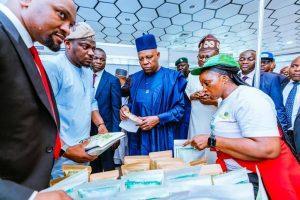
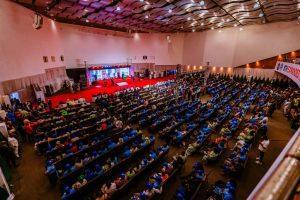
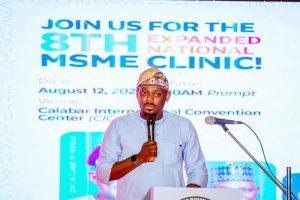
Vice President Kashim Shettima has inaugurated a state-of-the-art Information, Communication and Technology (ICT) Hub for Micro, Small and Medium Enterprises (MSMEs) in Calabar, the Cross River State capital, alongside the newly refurbished State Library Complex housing the hub.

He also commissioned two newly acquired Bombardier CRJ1000 regional jets, each with a 100-seat capacity, for Cross River State-owned airline Cally Air.

The Vice President said the ICT hub aligns with President Bola Ahmed Tinubu’s pledge to support ventures that redefine the future of work, skills, and industries in Nigeria.

VP Shettima also launched the 8th Expanded National MSME Clinics in Cross River, describing it as part of the Federal Government’s commitment to bringing support directly to businesses nationwide.

“The MSME Clinics, such as the one we launch today, are designed to bring the Federal Government’s support directly to your doorstep. Here, entrepreneurs can interact with the Corporate Affairs Commission, NAFDAC, the Bank of Industry, SMEDAN, and other critical agencies. Here, challenges are met with solutions, not promises deferred,” the Vice President explained.

He further announced the disbursement of ₦250,000 unconditional grants to outstanding business owners in Cross River State as part of ongoing MSME support.

“And because excellence must be rewarded, I am pleased to announce, on the directive of His Excellency, President Bola Ahmed Tinubu, that each outstanding MSME exhibiting here today will receive an unconditional grant of ₦250,000. This is not a loan. It is a gift to accelerate your journey,” VP Shettima added.

He highlighted other interventions by the Tinubu administration, including a ₦75 billion MSME Intervention Fund administered by the Bank of Industry, a ₦50 billion Presidential Conditional Grant Scheme targeting one million nano businesses nationwide with grants of ₦50,000 each, and a ₦75 billion Manufacturers Fund offering up to ₦1 billion loans at 9 percent interest for manufacturers.

VP Shettima noted that at least one manufacturer in Cross River State had already benefited from the Manufacturers Fund.

He emphasised that these commitments go beyond loans and grants, reflecting the government’s determination to create an environment where MSMEs thrive.

“We are here in pursuit of our promise to build an ecosystem that eases the struggles of our entrepreneurs, provides the infrastructure that fuels creativity, and unleashes the innovative spirit of our people,” he said.

Reflecting on the importance of small businesses, the Vice President said no nation can prosper beyond what its SMEs deliver.

“When His Excellency, President Bola Ahmed Tinubu, took charge, he did not only guarantee access to capital. He pledged to support every venture that dares to redefine the future of work, skills, and industries

“The world today is shaped by the wave of digital technology, and so the commissioning of a state-of-the-art Information, Communication and Technology Hub for MSMEs in this beautiful state could not have come at a better time

“This is our eighth stop, our 8th Expanded National MSME Clinics, and like those before it, the hub we commission today is our investment in tomorrow. We are living in a digital century where technology is no longer a luxury but a lifeline,” VP Shettima stressed.

The Vice President commended Cross River State Governor Bassey Otu for his leadership in promoting infrastructure, particularly the commissioning of the two Bombardier CRJ1000 aircrafts to boost air travel.

“This not only invites the world to the People’s Paradise but also makes it a safe destination for investments,” he said.

Governor Bassey Otu expressed confidence in the Tinubu administration’s reforms, pledging his government’s full support.

“We are keying into every facet of the administration’s efforts to build a formidable economy that will sustain and stand the test of time,” he said.

The Minister of Information, Mohammed Idris, praised President Tinubu’s unwavering support for small businesses through policy reforms and infrastructure provision.

He also lauded Vice President Shettima’s dedication to the MSME sector, highlighting his encouragement through clinics and related initiatives.

The Special Adviser to the President on Job Creation and MSMEs, Mr Temitola Adekunle-Johnson, described the MSME Clinics as a unique Federal Government initiative transforming entrepreneurial ideas nationwide.

“The vision of establishing shared facilities for MSMEs across the country was prompted by the desire of the Federal Government to intentionally address key challenges confronting small businesses,” he added.

PIAK

Expert Urges MSMEs to Leverage AI for Profitability

0

A Senior Agribusiness and Policy Adviser, Dr Fakunle Aremu, has urged micro, small and medium-sized enterprises (MSMEs) to profitably adopt Artificial Intelligence (AI) to remain competitive and relevant in the current business landscape.

Aremu, who specialises in agricultural value chain development and food systems, made this known on Tuesday in Abuja, Federal Capital Territory, Nigeria.

He noted that AI is no longer the preserve of large corporations and can be integrated into small businesses in simple, practical ways.

He stated that a major challenge for MSMEs was the perception that they lacked the technical expertise or budget for AI.

“MSMEs do not need to be tech wizards or have a Silicon Valley-sized budget to start using AI,” he said.

According to him, small businesses can avoid hiring expensive data scientists by using affordable off-the-shelf tools such as Google Cloud, Microsoft Power BI, or engaging freelance experts.

Aremu said the high cost of custom AI could be reduced by starting small with cloud-based tools that offer pay-as-you-go or monthly plans, with a focus on clear return on investment.

He advised businesses to first prioritise organising and digitising their data, noting that clean and structured information was crucial for accurate AI results.

“AI runs on data, and for many MSMEs, this data can be a mess if not properly handled,” he said.

The expert also addressed the challenge of employee resistance to change, urging business owners to communicate early and often about AI’s role as a tool to enhance work, not replace jobs.

“Showcasing AI as a tool that reduces work burdens and makes jobs easier and more efficient can help ease concerns.

“For example, a retail company can experience a 15 per cent increase in orders by piloting a simple AI solution for personalised product offers,” he said.

Aremu recommended piloting AI with a focused use case and setting clear, measurable goals, allowing MSMEs to “start where they are, use what they have, and just get started” without trying to be perfect.

“I recommend a start-small, think-big approach. This reduces risk, builds internal confidence and allows the team to learn how AI can be integrated into their operations,” he said.

IYD: Nigerian Youths, Heartbeat of Nation – Deputy Speaker

0

The Deputy Speaker of the House of Representatives, Mr Benjamin Okezie Kalu, has described Nigerian youths as the heartbeat of the nation.

In a statement marking the 2025 International Youth Day, Mr Kalu highlighted the critical role young people play in driving progress within communities and accelerating national growth and development.

He emphasised his office’s collaboration with youth-led organisations to implement empowerment programmes and initiatives. He praised Nigerian youths for their hard work, resilience, creativity, patriotism, and passion for greatness, stating that “these qualities will illuminate their path toward a brighter and more inclusive future.”

The Deputy Speaker recognised youths as “the country’s innovators, change-makers, and leaders of today and tomorrow,” acknowledging their vital contributions to society.

Mr Kalu also noted that the administration of President Bola Ahmed Tinubu, GCFR, has been youth-friendly and is working assiduously to empower them further.

He called on youths to continue supporting the Renewed Hope Agenda, urging them to remain law-abiding and assuring that “their future is brighter under President Tinubu’s leadership.”

PIAK

Ebonyi Governor Distributes Relief Materials to Flood-Affected Families

0

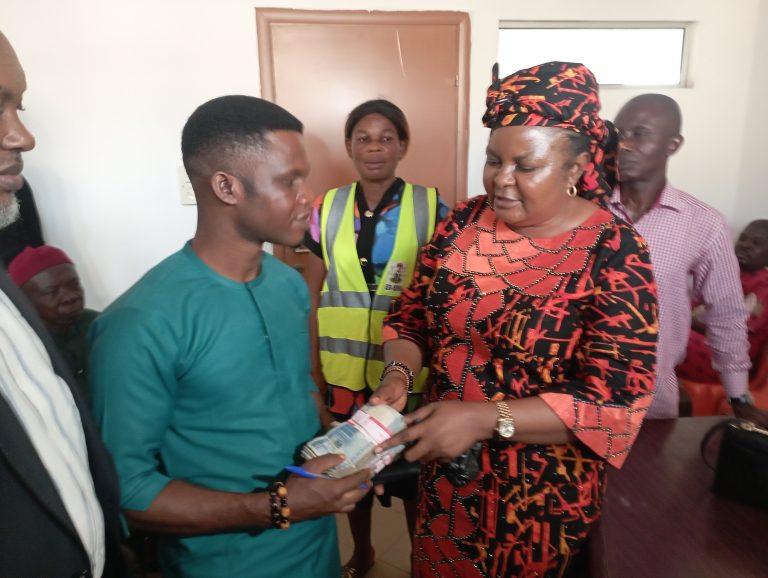
The Governor of Ebonyi State, Southeast Nigeria, Mr Francis Nwifuru, has disbursed ₦500,000 and bags of rice each to 98 families affected by flood and windstorm.

Joy heralded the Ebonyi State Ministry of Human Capital Development when the State Commissioner, Mrs Ann Aligwe, performed the disbursement and distribution on behalf of the Governor.

Mrs Aligwe said it would help to cushion the adverse effects of the windstorm and the flood.

“Five hundred thousand naira (₦500,000) and bags of rice each are being received by 98 families of Ndieze Inyimegu and Amegu communities affected by windstorm and flood on 26 and 27 May, 2025,” Aligwe added.

One of the beneficiaries, speaking on behalf of others, Mr Nwulegu Ikechukwu, thanked the Governor and said the People’s Charter of Needs is actually at work in Ebonyi State.

The disbursement and distribution were done in collaboration with the Ebonyi State Emergency Management Agency.

Nigeria Targets One-Million Jobs Through Soybean Expansion Policy

0

The Nigerian government has officially launched the National Soybean Production and Expansion Policy and Strategy, aiming to unlock an estimated ₦3.9 trillion in annual industry revenue and create one million jobs across 22 states and the Federal Capital Territory (FCT).

The initiative was unveiled in Abuja by the Minister of Agriculture and Food Security, Senator Abubakar Kyari, CON, in collaboration with the Executive Governor of Benue State, Rev. Fr. Hyacinth Alia, during the launch event for the Nigerian Soybean Partnership.

Read also: Nigerian Government Unveils Policy To Boost Soybean Production

Senator Kyari emphasised that the soybean strategy is a pivotal element of the Renewed Hope Agenda, positioning agriculture at the heart of Nigeria’s economic diversification and food sovereignty goals.

“This policy provides a blueprint to boost production, add value, and expand both domestic and export markets,” the Minister said. “With a cultivation target of one million hectares and 460,000 metric tonnes of soybean grains within two years, we’re taking bold steps to close Nigeria’s demand gap and strengthen our agri-industrial base.”

Currently, Nigeria produces around 1.35 million metric tonnes of soybeans annually, while demand exceeds 2.7 million metric tonnes, driven by the food, feed, and industrial sectors.

Governor Alia, speaking at the event, reaffirmed Benue State’s commitment to the national drive, describing the soybean strategy as a transformative opportunity for farmers, agribusinesses, and rural communities.

“Benue will double its soybean output from 202,000 metric tonnes to at least 400,000 metric tonnes within three years,” Alia announced. “We’re proud to contribute significantly to the national production goals and support Nigeria’s ambition to build a ₦3.9 trillion soybean industry.”

The Governor highlighted Benue’s leadership in soybean cultivation, dating back to the 1930s, noting that the state’s fertile land and farming tradition have positioned it as Nigeria’s and Sub-Saharan Africa’s top soybean producer.