Home Blog Page 59

President Tinubu Urges Forest Security Service to Intensify Operations

0

Nigeria’s President, Bola Tinubu has charged the Forest Security Service, FSS in collaboration with other security agencies to cumb all forest  and flush out bandits and other criminal elements in the country,s forests.

The President’s call came when it was discovered that the criminals usually use the  forests as their hide out and route of escape when they kidnap people or abduct school children.

The  Commandant General of the Forest Security Service FSS, Joshua Wole stated this during an interview with Voice of Nigeria in Abuja.

Wole noted that the Forest Security Service  has already mapped out security strategic action plans that would enable them leave up to their expectations by ensuring that the country’s vast forest are free from any criminal hide out.

“We have come on board to take up the responsibilities following the trust bestowed on us by the President and Nigerians, we are trained to work in the forest, the forest know us and we know the forest, if we get our demands from the government, give us three months,  there will be no more issues of forest problems in the country,” he said.

The Commandant General noted that he had commenced the deployment of his  trained personnel to various locations in the forests where the criminals are hidden, emphasising that Nigerians should have confidence in them  as they  have prepared to flush them out.

“This is Christmas period that people are supposed to feel free to travel,  even ordinary period that are not festive period,  we have put measures in place to ensure that there will be no problems of criminal disturbing. W,e are community based security outfit and we know all the forest  corridors.

“We thank the National Assembly for passing our bill into law which is now  before the President for his assent and we have the believe that he will graciously assent to the bill so that we can fully take off on our responsibilities,”  the Commandant said.

Wole remarked that in different occasions for many years now,  his personnel have been engaged with other security agencies to carry out successfully operations.

He stated that they have the challenges of not having full Federal government backing which he said would be an added boost to them.

He appealed to the public to always provide  to them the needed information, adding that collaboration with other security agencies remains key in the fight against criminal in any society.


Confidence Okwuchi

Water Resources Ministry Unveils Nationwide Achievements in Key Projects

0

The Ministry of Water Resources and Sanitation has highlighted major national achievements in dams, hydropower, irrigation, water supply, and sanitation, in line with President Bola Ahmed Tinubu’s Renewed Hope Agenda.

Speaking at the Ministry’s Citizens and Stakeholders’ Engagement in Abuja, the Minister of Water Resources and Sanitation, Professor Joseph Terlumun Utsev, announced that the 40-megawatt Kashimbilla Hydropower Plant is now feeding electricity into the national grid, with substantial progress recorded on the associated water-supply infrastructure.

Professor Utsev further disclosed that “with additional contributions from the Gurara and Dadin Kowa dams, Nigeria is now generating 110 megawatts of clean hydropower.”

He highlighted major progress on ongoing dam projects, noting that Mangu Dam is 90% completed, Adada Dam 78%, and Ogbesse Dam 65%. He said that work is also advancing on Farin Ruwa and Alau dams, as well as on the rehabilitation of the Tiga, Challawa Gorge, and Ruwan Kanya reservoirs.

The Minister further explained that “through Public–Private Partnerships (PPP), the Ministry successfully concessioned the Kashimbilla Hydropower Plant and the Kashimbilla Integrated Agro-Allied Airport, generating over N7 billion in revenue.

Professor Utsev said that “preparations are underway to concession additional facilities, including Farin Ruwa, Katsina-Ala, Dasin Hausa, Manya, Bawaku, and the Azare–Jere Irrigation Scheme.’

On irrigation, the Ministry delivered 2000  hectares to farmers at the Dadin Kowa Irrigation Scheme, progressed works at Middle Rima (Sokoto) and Middle Ogun, and expanded micro-irrigation projects in Gari in Jigawa State, Ipapo in Oyo State, Duku-Lade in Kwara State, Yauri, Shaga, and Ngaski in Kebbi State respectively.

He highlighted that in water supply and sanitation, over 6,700 water schemes have provided safe water to Nigerians, alongside 500 new rural water projects, stressing that the Clean Nigeria Campaign has achieved 162 Open Defeaction Free Local government area’s while the Ministry has also constructed 5,238 sanitation facilities, with new water-quality laboratories completed in Asaba, Delta State and Umuahia, Abia State.

Speaking on Flood management initiatives by the Ministry, Professor Utsev explained that several efforts were made to guide and informed Nigerians on what to do during the peak of rainy season. Such efforts includes; the 2024–2025 Flood Outlooks, which led to the creation of innovative flood management initiatives including the National Flood Insurance Programme, the Niger Flood Project, and the Integrated Climate Resilience Innovation Project.

The Minister clarified that no release has occurred from the Lagdo Dam.

Professor Utsev further revealed that the Sustainable Rural Water Supply Sanitation and Hygien SURWASH and Partnership for Expanded Water Supply PEWASH Programmes are delivering Water Sanitation and Hygiene WASH services across Nigeria.

He said that “the National Water Resources Institute has trained over 1,500 youths, while the Nigeria Integrated Water Resources Management Commission NIWRMC has issued 24 water-use licences.”

Professor Utsev also noted that the River Basin Development Authorities have expanded 154,000 hectares of irrigable land, supporting more than 1.6 million farmers across Nigeria.

Looking ahead, the Minister stated that by 2026 the Ministry will prioritise the completion and commissioning of the Adada, Mangu, and Ogbesse Dams; full operationalisation of the Kashimbilla water-supply network; expansion of micro-irrigation schemes; and the strengthening of citizen feedback and engagement mechanisms.

Professor Utsev reaffirmed the Ministry’s vision to make water a driver of national prosperity through inclusive growth, clean energy, climate resilience, food security, and sustainable development.

In her welcome address, the Permanent Secretary, Dr. Emanso Okop Umobong, emphasized that the engagement is in line with the Nigerian Government’s directive to deepen transparency, accountability, and stakeholder inclusion.

Dr Umobong assured participants that their contributions would be incorporated into ongoing reforms, reinforcing the Ministry’s commitment to evidence-based planning and efficient service delivery.

The event ended with an in-depth interactive session, during which participants offered recommendations that will guide ongoing sector reforms.

The forum brought together major actors across the water and sanitation sector, reinforcing collaboration and strengthening policy implementation nationwide.


PR/TERVER

No Part of Nigeria Lacks Resources- President Tinubu

0

By Timothy Choji, Owerri

President Bola Tinubu says no part of Nigeria is left without resources or natural endowments.

He adds that all parts of the country must partner with one another, for the collective progress of the nation.

The Nigerian leader made the declaration on Thursday, at the Imo State Economic Summit 2025 in Owerri, the State Capital..

He identifies Imo State As Growth Frontier In Nigeria’s Economic Diversification Drive.

Represented by Vice President Kashim Shettima, the Nigerian Leader said national prosperity could only be sustained when every state takes ownership of its development and deliberately harnesses its comparative advantages.
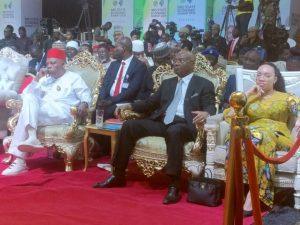
“Nations do not rise because one corner of the map ascends while others remain dormant. Nations rise when every part discovers its promise and takes responsibility for its own economic direction,” he said.

Major Pillar

President Tinubu identified Imo State as a major pillar in Nigeria’s economic diversification agenda primed for rapid growth in technology, gas utilisation, agro-industrial processing and small and medium-scale enterprises (SMEs).

He said the Nigerian government was committed to providing access to financing through the Bank of Industry and the Development Bank of Nigeria, alongside structured Public-Private Partnerships in housing, transport, and renewable energy sectors for the state.

The President described Imo’s economic prospects as unmistakable, stressing that the state occupies a strategic position in President Bola Tinubu’s reforms aimed at stabilising the business environment and unlocking long-term growth.
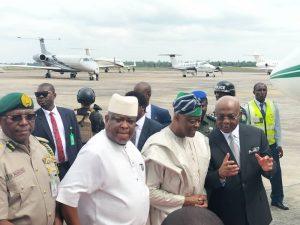
He said the summit’s theme, ‘Unlocking Imo’s Economic Potential: Partnership, Investment, and Innovation’, aligns with the Federal Government’s reform agenda to build a resilient, competitive and inclusive economy.

“All these possibilities converge to remind us that Imo is not just ready for investment. Imo is primed for transformation,” he said.

The Nigerian leader highlighted high-growth sectors capable of driving Imo’s economic resurgence, including the deployment of Free Trade Zones and Special Agro-Industrial Processing Zones, expanded gas utilisation for households and industry, and the development of robust digital infrastructure to attract ICT firms and fuel a modern, information-driven economy.

Investors’ Protection

Reaffirming the Federal Government’s commitment to investor protection and confidence-building, VP Shettima assured that the Tinubu administration would continue to de-risk private investments and provide consistent policy direction.

“The Federal Government stands ready to walk with Imo State to unlock opportunities, de-risk promising ventures and ensure that the benefits of development are felt across communities. To investors here today, the message is unmistakable: Imo is open for business. Nigeria is open for business,” he said.

He said global competitiveness today is shaped by innovation, talent and technology rather than the exploitation of natural resources alone, urging Imo to position innovation at the core of its growth strategy.

Laudable Programmes

President Tinubu disclosed that the Federal Government was already implementing programmes to empower young innovators, expand digital skills training, strengthen tech clusters, promote STEM education and deepen research partnerships with universities.

“The young people of Imo are creative, ambitious and connected to the global knowledge economy. Our duty is to give them the tools, the platforms and the confidence to build the future that awaits them,”  he stated.

He challenged stakeholders to shift from dialogue to execution.

Let this Summit not end with good ideas alone. Let it lead to signed partnerships, funded projects and measurable outcomes that uplift lives and create jobs,” he urged.

In his welcome address, Imo State Governor, Hope Uzodinma commended President Tinubu’s intentional reform policies, which he said have reset Nigeria’s investment space.
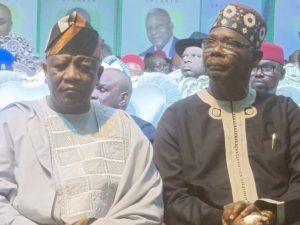
He noted that Imo State had since keyed into the reforms of the President, with the aim of taking the lead in regional development.

Governor Uzodinma said the state, under his leadership, had since utilized its unique landmass and abundant natural resources in providing the ideal environment for investors and businesses to thrive.

“We are blessed with the largest game reserve estimated at 200 trillion cubic feet. So, for those looking for business in gas exploration and utilization, Imo State is the destination.

“We also have other resources like lead, zinc, crude oil, cotton, etc. The incentives are ready and agriculture is our mainstay as the heartland of Eastern Nigeria. We also boast of the 3rd highest human capital development index in the country,” the Governor stated.

He also coined a meaning for the name of the state, describing it as a place where Investment Meets Opportunities (IMO) and business follows.

At the event, the first female elected President of Mauritius, Ameenah Gurib-Fakim, urged Africa to take its place in the global market, pointing out that Nigeria is a power house that should lead the way in that regard.

The former President said there is hope for Africa because Nigeria is rising and giving opportunities to the youth, even as she pledged to bring in investors in renewable energy to invest in Imo.

Also, Nigeria’s Minister of Finance and Coordinating Minister of the Economy, Chief Wale Edun, in his goodwill message, said the private sector was key to investment at all levels.

He commended the Governor of Imo State for taking the right steps towards repositioning the state’s economy.
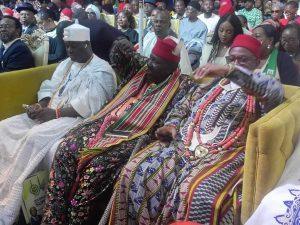
Chief Edun noted that the impact of the Nigerian economy was measurable, saying the economy, under President Tinubu, is growing faster than it was over a decade ago, and that more progress would soon be recorded.

The 8th Secretary General of the United Nations (UN), Mr. Ban Ki Moon, in his keynote address, described the summit as a gathering of great significance.

He said addressing global uncertainties was vital, and initiatives like the Imo Investment Summit will help create a more peaceful society.

Mr Moon noted that Africa holds the key to unlocking most of the challenges the world is currently facing, including the Sustainable Development Goals (SDGs).

Without addressing the challenges Africa is facing, we would not say we have a sustainable world.,” he said, just as he requested for a special technology fund support for the continent.

Implementimg Resolutions

The former UN scribe stated that implementing the resolutions of the summit will help enhance Imo State’s socio-economic development and help elevate prosperity as well as transform the state into an investment hub.

In his goodwill message, President/Chief Executive of Dangote Industries Limited, Aliko Dangote, hailed the good policies of the Tinubu administration, which he said provided the right atmosphere for business.

The richest man in Africa urged Nigerian businessmen to continue to invest at home, assuring Governor Uzodimma that the Dangote Industries “will be one of your biggest investors in Imo.”

Immediate past Executive Vice President of AFREXIM Bank, Mr Benedict Oramah, said Afrexim bank is currently building a multi million dollar facility in Imo State to help support the production and export of quality compliance products for export to the global market.

He commended Governor Uzodinma for opening up the state for business through the Orashi River dredging and special economic zone project.


Confidence Okwuchi

NSCDC Launches Anti-Corruption Unit to Strengthen Governance

0

The Nigeria Security and Civil Defence Corps (NSCDC) has inaugurated the Anti-Corruption Unit in all its commands to curb corruption and promote good governance within its workforce.

The Commandant General of NSCDC, Professor Ahmed Audi, in Abuja, reinforced the Corps’ commitment to integrity by inaugurating new heads of its Anti-Corruption and Transparency Unit (ACTU) and unveiling a robust Corruption Prevention Strategy.

Professor Audi charged the ACTU leaders to lead by example, enforce compliance without fear or favour, and resist undue pressure by upholding the values of transparency, accountability, and integrity.

Represented by the Deputy Commandant General (Administration), Adeyinka Fasiu Ayinla, Professor Audi delivered the keynote address at the inauguration and integrity award ceremony held at the Corps’ National Headquarters in Abuja.

He explained that the new Corruption Prevention Strategy is designed to reduce misconduct, promote due process, and reinforce internal discipline across the Corps. He also applauded the support of President Bola Ahmed Tinubu, GCFR, through the Minister of Interior, Dr. Olubunmi Tunji-Ojo.

Professor Audi reminded the newly inaugurated officers of their responsibilities and urged all members of the Corps to cooperate with the Anti-Corruption Unit by avoiding corrupt practices.

The Chairman of the Independent Corrupt Practices and Other Related Offences Commission (ICPC), Dr. Musa Adamu Aliyu, SAN, represented by Mr. Olusegun Adigun, highlighted that corruption undermines service delivery, erodes public confidence, distorts development priorities, and weakens national security. He assured the NSCDC of ICPC’s continued partnership in implementing preventative measures across Ministries, Departments, and Agencies (MDAs).

Earlier, the Acting Chairman of NSCDC ACTU, Commandant Audrey Obeh, described the inauguration as a “transformative moment” reflecting the Corps’ dedication to integrity and national development. She commended Professor Audi for providing an enabling platform for the ACTU to thrive, adding:

“The inauguration of ACTU Heads, integrity awards, and unveiling of the NSCDC Corruption Prevention Strategy all demonstrate how we are intentionally strengthening the pillars of accountability within our system.”

Goodwill messages were delivered by representatives from sister agencies, including the Nigeria Immigration Service, the National Emergency Management Agency (NEMA), and the National Identity Management Commission (NIMC).

Several NSCDC officers received integrity awards, including Professor Ahmed Audi, who was recognised as an Integrity Champion and Visionary Award recipient.

Confidence Okwuchi

General Musa Vows Swift Results in Strengthening Nigeria’s Security

The newly sworn-in Minister of Defence, General Christopher Musa (rtd.), has assured Nigerians of his full commitment to strengthening the nation’s security, declaring that “within the shortest possible time, Nigerians will see results.”

Speaking after taking the oath of office on Thursday before President Bola Ahmed Tinubu at the State House, Abuja, General Musa affirmed that safeguarding the country remains his foremost priority.

READ ALSO: President Tinubu Swears in General Musa as Defence Minister

He underscored the importance of unified national efforts in addressing Nigeria’s security challenges, stressing that effective synergy is central to achieving lasting results.

General Musa highlighted that the Ministry would deepen collaboration among the armed forces, security agencies, and citizens, noting that national security cannot be achieved in isolation.

“The synergy between the armed forces, other security agencies, and all Nigerians being carried along—as we have always said, security is everybody’s responsibility. It is that synergy that we need to build on and work on, and that’s what we are going to do. I can assure you, within the shortest possible time, Nigerians will see results. I want to use this medium to appreciate all Nigerians. Nigerians have shown me love, and I will guarantee them that I am going to work whatever it takes to ensure that Nigeria is secured,” he said.


General Musa also disclosed the President’s charge to him upon assuming office, noting that President Tinubu emphasised the imperative of restoring security and public confidence across the country.

The Defence Minister noted that President Tinubu issued a clear directive prioritising the restoration of security nationwide, with emphasis on creating an environment where citizens can live, work, and move freely without fear.

“Yes, I just met Mr. President, and he reiterated his mind on the aspect that we must make sure that Nigeria is secured. Nigerians should go back and sleep with their eyes closed. Go back to their farms. Schools open without being molested. Everyone being carried  along together to make sure that Nigeria continues to grow in line with the renewed program of Mr President,” he added.

Catholic Bishop of Sokoto Diocese, Matthew Hassan Kukah, was among the dignitaries at the ceremony, attending in a dual capacity as representative of the Sultan of Sokoto and as a kinsman of the new Defence Minister, given their shared roots in Sokoto and Southern Kaduna.

Clear Intent On Nigeria’s Security

Bishop Kukah noted that President Tinubu had shown a clear intent to reposition the nation’s security architecture and expressed confidence that, with General Musa Rtd appointment, the responsibility is in capable hands.

He says, “First of all,  I’m wearing two caps. I’m representing the Sultan of Sokoto, because General Musa was born in Sokoto, and I am in Sokoto, and he’s from Southern Kaduna, and I was born in southern Kaduna, so the Sultan knows I’m here and he brings his greetings, but look, I mean, everybody knows what the problem is. 

“We just need restoration of normalcy in this country by any means possible. And I think that this job is in very good hands. It does seem very clearly that the President wants to reposition issues of security, and I think the situation is in very good hands.”

Bishop Kukah stressed the urgency of restoring order across the country, emphasising that every necessary measure must be taken to confront security threats and stabilise affected communities.

He noted that Nigerians have endured prolonged hardship as a result of insecurity and insisted that those responsible for destabilising the nation must be decisively dealt with to allow normal life to return.

“We are on all fours as long as that is concerned ,look, rain, thunder, sunshine, whatever it takes to get this mess under control. These guys need to be flushed out. Normalcy needs to return to our country. Laughter and joy has to come back to Nigeria within the shortest time possible, all we do is to pray for the best.” Bishop Kukah added.

Recall that President Bola Tinubu has sworn in General Christopher Gwabin Musa (Retired.) as Nigeria’s new Minister of Defence on Thursday, marking a decisive move in the administration’s ongoing security reforms.

The Nigerian Leader on his official X handle @OfficialABAT described General Musa as a “fine gentleman” whose track record in service positions him to drive a more integrated national security response.


Confidence Okwuchi

Nigeria Pledges Full Support for UNESCO MIL Institute Launch

0

Nigeria’s Minister of Information and National Orientation, Mohammed Idris, has assured UNESCO of the country’s commitment to deepening technical efforts to ensure that the Media and Information Literacy (MIL) Institute meets global standards and delivers measurable impact.

The Minister made the pledge when he received the Head of Office, United Nations Educational, Scientific and Cultural Organisation (UNESCO), Dr Jean-Paul Ngome Abiaga, during a courtesy visit in Abuja.

Idris reaffirmed the administration’s readiness to support the Institute’s establishment.

“Nigeria will not delay this global responsibility. The UNESCO Media and Information Literacy Institute will commence operations in February 2026, with full support from the Federal Government. We are ready, and we will deliver. We will continue to work with you to advance the cause of mankind here and all over the world. The Institute is not just for Nigeria; it is a global institution designed to help media practitioners and everyone interested in discerning good news from fake news. It will be crucial at a time when we face the menace of disinformation, misinformation, and fake news. We are building a world-class institution that will train people who will, in turn, train others worldwide,” he said.

Global Institution

The Minister stressed that the Centre would be a global institution serving humanity while strengthening national unity through media literacy.

He noted that the Centre aligns with the Federal Government’s national orientation drive under President Bola Ahmed Tinubu’s Renewed Hope Agenda, aimed at empowering citizens with factual, responsible, and developmental information.

To ensure the smooth launch of the Institute, Idris outlined immediate actions already underway, including the finalisation of legal and operational frameworks and the appointment of a pioneer Director-General to lead the Centre ahead of its February 2026 commencement.

He further revealed that work has begun on developing international-standard training programmes for media professionals, public information managers, policymakers, educators, researchers, youth leaders, and digital communicators from Nigeria and across the globe.

Idris expressed his gratitude to UNESCO for entrusting Nigeria with the hosting rights .

“Let me place on record our happiness and gratitude to UNESCO for finding Nigeria worthy of its hosting of the Category 2 Media and Information Literacy Centre that you have granted us. Right from the time that Nigeria got into this bit, we took it very seriously when I came on board; it didn’t start while I was minister. My predecessors actually started it. But when I came in and I was briefed by my team, I took this really very seriously”, he added
He reiterated that UNESCO’s confidence in Nigeria is a powerful message to skeptics of the country’s development trajectory.
“At a time when some doubt Nigeria’s capacity, UNESCO has reaffirmed our place as a true partner in global development. We will honour that confidence,” he said.

Speaking earlier, the UNESCO Head of Office, Abuja, Dr. Jean-Paul Ngome Abiaga, explained that the visit was to congratulate Nigeria for securing the first Media and Information Literacy Associated Centre globally.

“It is important for us to come and introduce our team that works on communication and information, and to congratulate the Honourable Minister for the big achievement that Nigeria has managed to achieve at the last UNESCO General Conference in Samarkand,” he said.

He expressed UNESCO’s pride in Nigeria’s leadership and international example.

He said, “To have the first in the world Media and Information Literacy Institute established here is something we are very proud of. Nigeria is showing the example, not only in Africa, but also across the world.”

Dr Abiaga stressed that Nigeria’s success represents a continental victory.

“If we succeed in Nigeria, it is the whole of Africa which succeeds,” he stated.

Other highlights of the event included the Minister’s presentation of the Federal Government of Nigeria’s CONNECT Magazine to the visiting UNESCO team, showcasing national communication strategies, public awareness initiatives, and development-focused storytelling led by the Ministry.


Confidence Okwuchi

Nigeria Unveils NASS 2022/2023 Report to Improve Agriculture

The Federal Government has unveiled the much-anticipated National Agricultural Sample Survey (NASS) 2022/2023 Report, marking a major milestone in Nigeria’s efforts to strengthen evidence-based agricultural policymaking and accelerate national food security goals.

Speaking at the event at the UN House in Abuja, FAO Representative in Nigeria and to ECOWAS, Hussein Gadain, said the NASS 2022/2023 report provides reliable, comprehensive, and credible data needed to guide transformative policies within Nigeria’s agriculture sector.

“Reliable data is the foundation upon which sound policies are built. These findings are not merely numbers; they are tools for transformation guiding decisions that address food security, enhance resilience, and unlock opportunities for sustainable growth,” he said.

Gadain highlighted that the survey offers detailed insights into crop production, livestock, fisheries, land use, post-harvest losses, farming systems, and the socio-economic realities of agricultural households. He noted that the report aligns with FAO’s Four Betters agenda—Better Production, Better Nutrition, Better Environment, and Better Life—as well as Nigeria’s Country Programming Framework (CPF).

He commended the Federal Ministry of Agriculture and Food Security, the National Bureau of Statistics (NBS), and the World Bank Group for their technical leadership and partnership, reaffirming FAO’s continued commitment to supporting Nigeria in strengthening agricultural statistics and driving food systems transformation.

“Together, we can transform data into decisions, and decisions into results that improve lives and livelihoods across the country,” Gadain added.

Speaking on behalf of the Statistician-General of the Federation and NBS Chief Executive, Prince Adeyemi Adeniran, the Director of Agriculture and Business Enterprise Statistics expressed gratitude to FAO and the World Bank for their “continued partnership and unwavering support” in producing reliable agricultural data.

The NBS said the 2023 survey provides essential statistics on crop production, livestock, aquaculture, labour, and farm input indicators critical for shaping effective programmes and national planning.

“The findings from the NASS 2023 represent a significant milestone in strengthening our national data system. They offer a clearer understanding of current realities across the agricultural value chain and highlight areas requiring targeted interventions,” the NBS said.

It emphasised that accurate agricultural statistics are central to designing strategies that enhance productivity, address food security challenges, and build the resilience of farming households nationwide. The Bureau reaffirmed its commitment to global best practices, noting improvements in survey methodology, field operations, digital data-capture tools, and quality assurance.

The NBS urged policymakers, researchers, development partners, and other stakeholders to fully utilise the evidence provided by the report.

“Let us translate the data into informed decisions, effective policies, and impactful programmes that will strengthen our agricultural sector, enhance food security, and support the livelihoods of millions of Nigerians,” it said.

Minister Kyari: “A Nation That Measures Well Governs Well”

In his keynote address, the Honourable Minister of Agriculture and Food Security, Senator Abubakar Kyari, described the survey as a critical tool for precise, accountable, and impactful agricultural planning.

“Every effective agricultural system rests on two pillars: the work of our farmers and the quality of the data that directs national policy. When these two align, progress becomes inevitable,” he stated.

Kyari highlighted that the survey covers all 36 states, the Federal Capital Territory, and 767 local government areas. He stressed that credible data is essential in a country of over 232 million people, where food demand continues to grow.

The Minister further disclosed key production statistics from the 2023 major cropping season:

  • Cassava – over 21 billion kilograms

  • Yams – 18.7 billion kilograms

  • Maize – 17.3 billion kilograms

  • Rice – over 13 billion kilograms

For the minor season, onions led with 2.67 billion kilograms, followed by tomatoes and rice, demonstrating year-round agricultural potential, particularly with improved irrigation and value-chain support.

Kyari noted that the survey aligns with regional commitments under the Comprehensive Africa Agriculture Development Programme (CAADP) and the Kampala Declaration, which emphasise accountability and measurable progress.

“Nigeria’s leadership in producing a survey of this quality strengthens Africa’s collective agricultural transformation efforts. A nation that measures well governs well. And food security begins with information security,” he concluded.

Olusola Akintonde

NSA Reaffirms Inclusive Approach to Conflict Prevention

0

The National Security Adviser (NSA), Mallam Nuhu Ribadu, has reaffirmed the administration’s commitment to an inclusive national approach to preventing violence and conflict, calling for deeper collaboration among communities, institutions, and development partners.

Ribadu made the remarks at the National Peace Committee Dialogue on a Whole of Society Approach to the Prevention of Violence and Conflict in Northern Nigeria, held at the National Counter Terrorism Centre in Abuja.

According to the NSA, the dialogue reflects growing national and international recognition that peacebuilding and security require the participation of all sectors of society. He commended the National Peace Committee for convening leaders, experts, and stakeholders at a critical time for the country.

Strengthening Collaboration

Ribadu emphasised that strengthening collaboration across government, communities, civil society, women and youth groups, traditional and religious institutions, development partners, and the private sector is essential to achieving lasting stability in Northern Nigeria.

“This initiative is a clear demonstration that peacebuilding is not the business of government alone, but of all stakeholders, and for this, I thank you. Today’s dialogue reinforces a principle we in this administration have consistently advocated: security is everyone’s business,” he said.

The Chief of Defence Staff (CDS), General Olufemi Oluyede, also reaffirmed the Armed Forces of Nigeria’s commitment to a collective, people-centred, and preventive security strategy, stressing that lasting peace in Northern Nigeria requires broad national participation. Represented by the Chief of Defence Civil Military Relations, Rear Admiral Sabiru Lawal, he noted that the dialogue is timely given the volatile and evolving security landscape in the north.

“It is indeed a great honour to partake in this all-important dialogue on vital matters of Nigeria’s peace and security. The theme of this dialogue, a whole of society approach to the prevention of violence and conflict in Northern Nigeria, is both timely and critically relevant,” the CDS explained.

Security Environment

Oluyede described the security environment in the north as volatile, uncertain, complex, and ambiguous, demanding broad-based solutions that integrate all elements of Nigeria’s national power. He said the essence of the dialogue aligns with the inclusive and collaborative strategy needed to strengthen national security.

Collective Framework

The CDS highlighted that a collective framework features strongly in his military strategic philosophy, guiding the Armed Forces of Nigeria. He emphasised the need to consolidate capabilities, ensure enhanced jointness, improve welfare, and maintain strong administrative structures to reinforce Nigeria’s sovereignty within a whole-of-government model.

He assured that the Armed Forces remain fully committed to supporting all initiatives that strengthen peace, dialogue, and cohesion, expressing confidence that the dialogue will produce actionable recommendations advancing stability in Northern Nigeria.

The European Union Ambassador to Nigeria, Gautier Mignot, also called for a unified national effort to confront rising insecurity across the country. He stressed that preventing violence in Northern Nigeria requires collective responsibility anchored in dialogue, community engagement, and government leadership.

Mignot highlighted that Nigeria’s security challenges, marked by attacks, kidnappings, and community-level disruptions, have reached a scale demanding urgent, coordinated engagement across all levels of society.

“It is a fact that there are many drivers for violence in Nigeria, and violent attacks affect families and communities across religious and ethnic lines. They disrupt the full enjoyment of fundamental rights, including freedom of religion and belief. We support Nigeria in its effort to fight violence and insecurity and address the complex drivers of conflict. Security is a primary responsibility of government, but the whole-of-society endeavour is required to reduce and prevent violence and conflicts in Nigeria,” he said.

The Ambassador noted that violent attacks, including recent abductions in Niger State, continue to generate deep anxiety nationwide, echoing past incidents that shook communities and tested national resilience. He emphasised that solidarity with victims and affected families remains central to the EU’s engagement.

Mignot reaffirmed the EU’s partnership with Nigerian authorities and local stakeholders in funding security, peacebuilding, and conflict-prevention programmes across states and communities. These interventions address immediate threats and long-term root causes, including education gaps and climate-related pressures.

He described the National Peace Committee dialogue as a timely and necessary platform, given the urgency of current security developments and the importance of joint action among government, security agencies, traditional institutions, civil society, and international partners.

Confidence Okwuchi

South Sudan: Stakeholder Seeks Adoption of Mobile Money

0

A multimedia journalist Ngor Deng Matem, an expert on financial behaviour and digital transformation in South Sudan, says the adoption of mobile money, while still limited, has the potential to reshape economic activity in the country.

Speaking with VON Business and Finance Correspondent, the stakeholder noted that expanding digital literacy, building trust in electronic transactions, and equipping merchants to accept payments digitally are key to unlocking the benefits of mobile finance.

Digital financial platforms such as MoMo, DigiCash, and mGurush now provide an opportunity to stabilise the country’s financial ecosystem and modernise commerce.

“Digital payments must move from the margins to the mainstream of economic activity,” he said, highlighting that a traveller to Wau, Aweil, Rumbek, or Yei should be able to book transport, pay for fuel, and settle hotel bills entirely via mobile money—even when cash is scarce.

Restaurants, supermarkets, retail outlets, and transport operators—including airlines, buses, rickshaws, and boda bodas—can strengthen efficiency and convenience by embracing secure digital payment systems, Matem added.

He also highlighted benefits for landlords and shop owners, who can improve transparency and record-keeping through digital rent and stall payments, while everyday transactions such as groceries and wholesale purchases can gradually shift onto electronic platforms to reduce dependence on physical cash.

Achieving this vision requires strong institutional leadership. Matem emphasised the role of the Council of Ministers and the National Legislative Assembly in providing a legal framework that builds confidence in digital finance.

While the Central Bank, mobile money operators, and telecom networks have established core infrastructure, broader government support is essential. The Ministry of Finance and the South Sudan Revenue Authority can integrate e-banking into public financial management, including salary disbursement and digital tax payments.

Matem said other ministries also have a role: the Ministry of Trade, Industry and Investment can guide businesses in adopting digital platforms; the Ministry of Transport and Civil Aviation can enforce electronic payments in public transport; the Ministry of Interior can digitise payments for IDs, licences, passports, and permits; and the Ministry of Education can introduce mobile payments for tuition and fees.

Local governments, chambers of commerce, and business unions are equally critical to creating an environment that encourages widespread digital finance adoption.

The benefits, Matem explained, are significant: reducing cash shortages, enhancing market transparency, strengthening accountability, improving tax collection, and minimising risks associated with carrying physical cash. Digitisation also supports anti-corruption efforts and strengthens security for individuals and businesses.

He stressed that digital payments can extend into governance operations, ensuring, for example, that traffic fines are collected digitally, promoting transparency and efficiency at all levels.

“South Sudan is at a decisive moment. Embracing digital finance is not just a technological upgrade—it is the foundation for a modern, resilient, and inclusive economy,” Matem said.

With trust, accessibility, institutional support, and digital literacy, the country can overcome recurring cash crises, increase revenue collection, and build a robust financial future. Digital finance has the potential to empower households and businesses alike, fostering safer, more efficient, and more inclusive markets nationwide.


Victoria Ibanga

Nigerian Troops Rescue 318 Kidnapped Victims in November

0

Nigerian troops have rescued 318 kidnapped victims, while more than 69 terrorists and their family members surrendered during operations across the country in November 2025.

The New Director of Defence Media Operations, Major General Michael Onoja, announced the development during the weekly briefing on ongoing military operations coordinated by the Armed Forces in Abuja.

He said troops foiled oil theft worth N217,664,618, recovering 201,700 litres of crude oil and 88,177 litres of AGO, while 16 illegal refining sites were deactivated.

Operation Hadin Kai – North East
General Onoja said Joint Task Force North East Operation HADIN KAI (OPHK) troops sustained operational momentum, denying Boko Haram, ISWAP, and JAS terrorists freedom of action. Troops neutralised several terrorists, arrested informants and logistics suppliers, recovered weapons, and dismantled terrorist networks.

Their operations enabled the safe resettlement of displaced persons. Six collaborators, informants, sympathisers, and spies were arrested, and five kidnapped victims were rescued. Significant quantities of arms, ammunition, vehicles, and motorcycles were recovered, while terrorist camps were destroyed.

The Air Component of Operation HADIN KAI provided close air support to ground troops in Dikwa, New Marte, and Gajibo areas of Borno State, boosting operational effectiveness against ISWAP/Boko Haram terrorists.

Operation Fanasan Yamma – North West
Troops of Operation Fanasan Yamma sustained their operational tempo across Dankon Wasagu, Dandi, Kebbe, Zuru, and Bagudu LGAs of Kebbi State. Several terrorists were neutralised, 13 apprehended, and nine kidnapped victims rescued. Weapons, vehicles, livestock, and other items were recovered.

Air operations targeted and engaged terrorist positions with bombs and rockets, destroying camps and logistics, while battle damage assessments confirmed multiple casualties.

Operation Enduring Peace – Plateau State
Troops responded to distress calls on terrorist activities across Plateau State. Firefights resulted in the neutralisation of extremists, the arrest of 16 criminals, and the rescue of 10 kidnapped victims. Weapons, ammunition, motorcycles, and vehicles were recovered.

Operation Whirl Stroke – Benue, Nasarawa, Taraba
Troops neutralised several extremists, arrested 20 suspects, and rescued six kidnapped victims. Arms, ammunition, vehicles, and livestock were recovered. In other operations, 12 suspects were arrested and 14 kidnapped victims rescued, with additional arms and ammunition recovered.

Operation Delta Safe – South South
Troops in Bayelsa, Delta, Imo, and Rivers states foiled oil theft worth N12,120,020, recovering 11,850 litres of crude oil and 540 litres of AGO.

Additionally, they discovered and destroyed 4 illegal refining sites and arrested 25 oil thieves and other criminals, while assorted arms and ammunition were also recovered. 

During the operations, troops neutralised several criminals, arrested 3 suspects, while arms and ammunition were also recovered from them,” he said.

Furthermore, troops of Operation UDO KA sustained an offensive posture throughout the week.

The Director said that troops conducted offensive operations in Udenu and Oji River LGAs of Enugu State, as well as Ikwo LGA of Ebonyi State, and that operations were also carried out in Bende and Biase LGAs of Abia and Cross River States.

During the operations, several terrorists were neutralised, four were arrested, and four kidnapped victims were rescued. Arms, ammunition, vehicles, and improvised explosive devices were recovered and rendered unusable.

The Director noted that, in support of the ongoing joint clearance operations, the Air Component of Operation UDO KA conducted air interdiction at terrorists’ locations in Ezeagu LGA of Enugu State.

Targets were acquired and engaged with rockets and cannons in successive passes.

“Battle Damage Assessment revealed that several terrorists were neutralised, while their camps and logistics were destroyed,” he said.

Defence Headquarters commended the troops for their bravery and urged them to maintain the momentum, while the Armed Forces of Nigeria (AFN) solicited continued sharing of credible information to enhance operational effectiveness.

Meanwhile, the AFN informed Nigerians that all necessary measures, systems, and activities were being employed to ensure that the remaining students recently abducted are rescued and returned safely to their families.

A minute of silence was observed for officers who lost their lives defending their fatherland.


Confidence Okwuchi