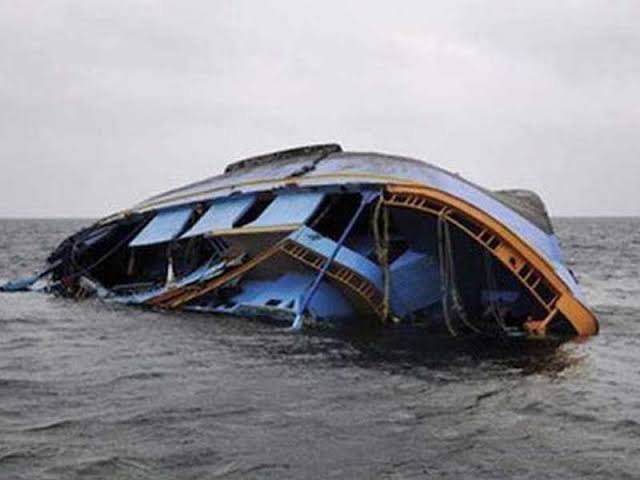
The Nigeria Governors’ Forum (NGF) has expressed deep sorrow over the tragic boat mishap in Borgu Local Government Area of Niger State, which reportedly claimed about 60 lives.
In a statement signed by its Chairman and Governor of Kwara State, AbdulRahman AbdulRazaq, the Forum extended heartfelt condolences to the government and people of Niger State, North-Central Nigeria.
Governor AbdulRazaq commended the swift rescue operations launched by the administration of Governor Umar Bago in response to the incident.
“Our thoughts and prayers are with the families who lost relatives to the tragedy. We wish those who survived but are in critical conditions safe recovery,” the Governor said in the statement on Friday.
He said; “As we again mourn the victims of this accident, we restate our concern at the rising incidents of boat mishaps whose causes include overcrowding, old boats, or night travel. These incidents are avoidable if everyone plays by the rule and respects the sanctity of the human life.”
The Forum similarly called for strict adherence to the use of life jackets during water travel, especially as the Nigerian and State Governments have repeatedly donated life jackets to save lives.
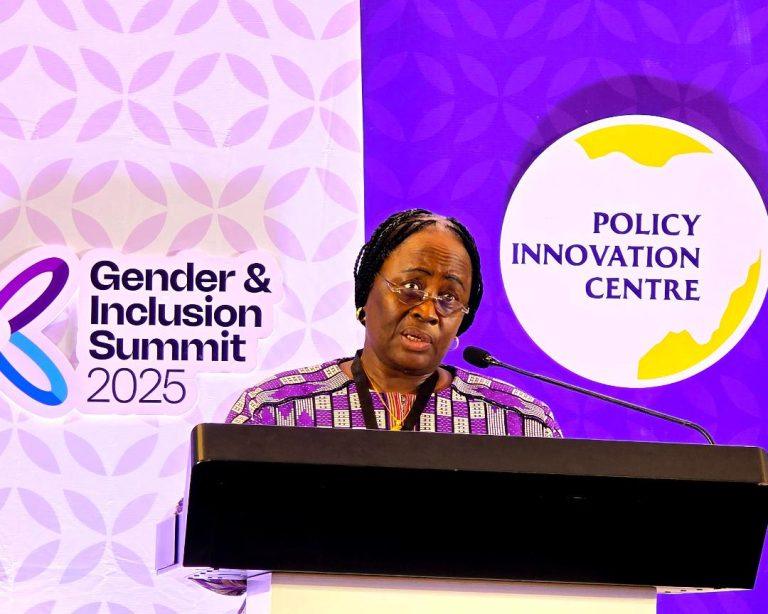
The United Nations Women Country Representative to Nigeria and ECOWAS, Beatrice Eyong, has urged for bold structural reforms to accelerate gender equality and inclusive development.
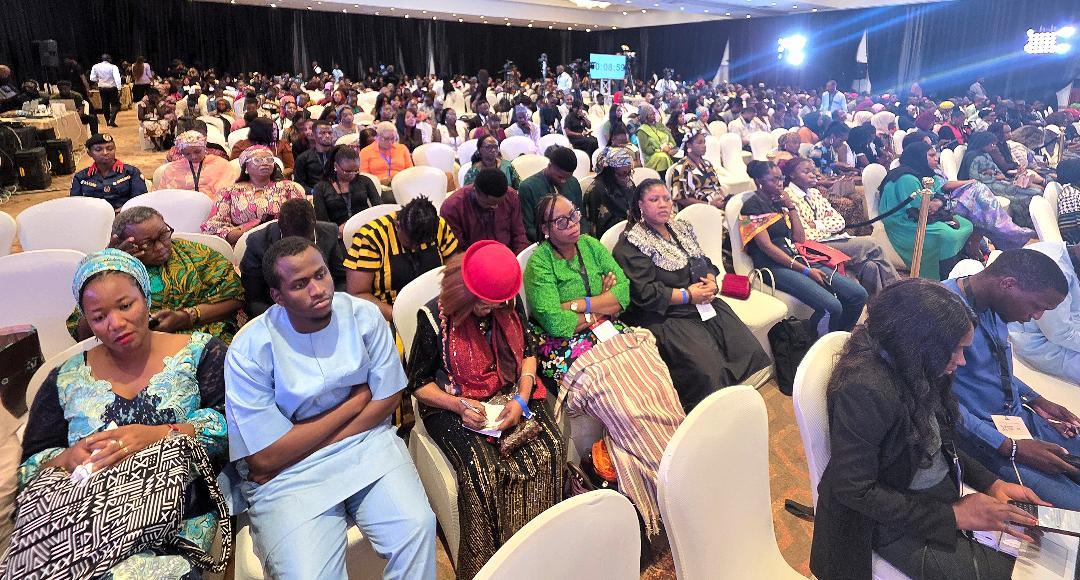
Speaking at the 2025 Gender and Inclusion Summit in Abuja, themed “New Voices and New Approaches for Accelerating an Inclusive Society,” Eyong reaffirmed UN Women’s commitment to working with government, civil society, and the private sector to expand opportunities for women across sectors, insisting that equality is not charity but justice and sound economic policy.
“UN Women has effectively integrated gender-responsive planning and budgeting into the Federal Budget Call Circular, influencing allocations across multiple ministries,” she explained.
She also highlighted partnerships with Kaduna and Lagos States on affirmative procurement policies, which have opened access for women-owned businesses in public procurement.
“In Kaduna and Lagos States, we supported affirmative procurement to expand women-owned businesses’ access to public contracts, while also promoting women’s participation in peacebuilding,” she said.
On peacebuilding, she underscored UN Women’s contribution to policy frameworks.
“We have supported the formulation and execution of the National Action Plan and several State Action Plans, establishing robust frameworks to safeguard and advance women’s involvement in peacebuilding efforts,”she stated.
While acknowledging progress, Ms. Eyong stressed that challenges remain.
“Fiscal pressures have restricted funding for gender initiatives; gender-based violence remains remarkably high; women are underrepresented in political and economic leadership; and women-led businesses face ongoing barriers in gaining access to credit, markets, and investment opportunities,”she said.
To address these gaps, she called for transformative reforms, including reserved seats for women in legislative houses, a private sector–led Gender-Based Violence Fund, and a national accountability framework to track Nigeria’s commitments. She also emphasised the care economy.
“It is equally important to recognise unpaid care and domestic work as vital to economic growth and social cohesion,” she argued.
Eyong further recommended a philanthropic fund to support grassroots women’s organisations and blended financing models to expand affordable credit for women-owned businesses.
She concluded: “Gender equality should not be regarded as an act of charity but rather as an essential component of sound economic policy, national development, and justice. Empirical research suggests that addressing gender disparities could potentially enhance Nigeria’s Gross Domestic Product. It is evident that investing in women yields the most substantial benefits for societal progress.”
Speaking, Director-General of the National Institute for Legislative and Democratic Studies (NILDS), Professor Abubakar Sulaiman, called for a collaborative reset in Nigeria’s political landscape to address entrenched gender gaps and exclusion of marginalised groups.
Represented by Dr. Shuaibu Danwaka, he observed that despite accounting for nearly half of the population, women occupy just 4.2% of parliamentary seats, while the youth, who make up more than 60% of the citizenry, remain largely excluded from decision-making.
According to him, these imbalances weaken democracy and stall development. “Exclusion fuels unemployment, insecurity, irregular migration and social vices, reinforcing cycles of alienation and poverty,” he cautioned.
Highlighting NILDS’s collaborations with the National Assembly and stakeholders on constitutional and electoral reforms, including the proposed Special Seats Bill for Women and the Diversity, Equity and Inclusion Bill, he affirmed that meaningful change is possible through shared commitment.
“Our Institute attaches great importance to co-operating with international organisations, civil societies and women’s networks towards ameliorating the plight of vulnerable and marginalised persons in Nigeria… I am personally committed to working with partners to advance gender inclusion as a cornerstone of our democratic journey,” he declared.
He urged stakeholders to see inclusion not as a burden but as a pathway to solutions, saying “gender and inclusion are not just about equity—they are about strengthening our democracy, unlocking development potential, and securing a better future for generations to come.”
Stakeholders at the summit noted that these calls reinforce President Bola Tinubu’s Renewed Hope Agenda, which prioritises women’s empowerment, social inclusion, and sustainable growth as key drivers of Nigeria’s transformation.
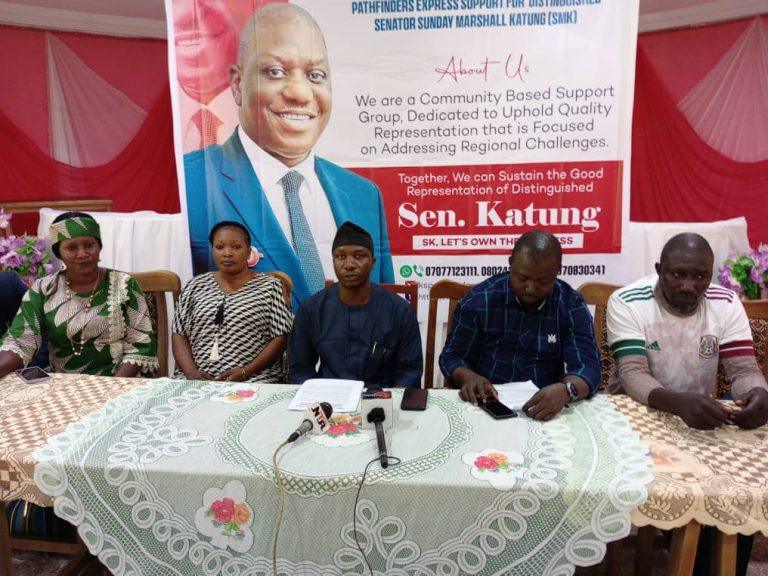
A group, Pathfinders, has applauded the significant progress recorded in tackling insecurity across Southern Kaduna, attributing the successes to stronger collaboration between the Federal Government, the Kaduna State Governor and other stakeholders.
Speaking during a press briefing in Kaduna on Friday, the convener of the group, Habila Isah Kayit, said the region, once challenged by insecurity, is now embracing renewed opportunities for development and community growth.
However, in recent months, coordinated efforts led by the military high command with the support of the state government and effective representation in the Senate have restored relative calm and renewed hope for the people.
Kayit described Senator Katung as a “bridge-builder and strategic leader” who has consistently pressed for stronger security interventions at the national level while working closely with local communities to ensure peace and stability.
“Security is the foundation of every meaningful development. For years, Southern Kaduna suffered unimaginable losses, but today we are witnessing real progress because of the synergy between the Chief of Defence Staff, Governor Uba Sani, and our Senator, Sunday Marshall Katung,” Kayit said. “He is not just representing us in Abuja; he is working hand in hand with the right institutions to ensure our people live in peace and can pursue their livelihoods without fear.”
The group stressed that the improved security climate has paved the way for renewed economic activities, increased community confidence, and greater federal presence in the region.
Partisan politics
They noted that Katung’s ability to coordinate with relevant authorities at both federal and state levels underscores his commitment to placing Southern Kaduna’s interests above partisan politics.
Kayit further argued that sustaining these gains requires continuity in leadership. “It is unreasonable to change your best player in the middle of a crucial match when he is delivering results.
What we need now is to rally behind Senator Katung so that the current momentum in tackling insecurity and driving development is not lost,” he said.
The Pathfinders pledged to continue mobilising Southern Kaduna citizens to support leaders who demonstrate vision, courage, and capacity to solve pressing challenges.
According to the group, Senator Katung’s leadership represents a rebirth anchored on security, peace, and sustainable development that must be consolidated in the interest of all.
They called on the people of Southern Kaduna to unite behind their senator, emphasising that only through collective ownership of the process can the region continue to enjoy peace and the dividends of democracy.
The Super Eagles of Nigeria will face the Amavubi of Rwanda in a high-stakes 2026 FIFA World Cup qualifier on Saturday at 5 pm (WAT) at the Godswill Akpabio Stadium in Uyo, Akwa Ibom.
The three-time African champions stand at a crossroads. After missing the 2022 finals in Qatar, the prospect of consecutive failures looms dangerously over Nigerian football’s proud reputation.
Rwanda, however, are not expected to roll over. Their record shows two defeats in the last four qualifiers, coupled with poor away form, losing 60 per cent recently.
PREVIEW
So far, the World Cup qualifying campaign has been marked by frustrating draws for Nigeria. The Super Eagles have managed four stalemates in six matches, in spite of conceding only a solitary goal throughout the qualifiers.
Nigeria’s margin for error has disappeared. The three-time African champions sit fourth in Group C with seven points, nine (9) adrift of leaders South Africa after six matches with a game in hand.
Super Eagles in Training.
Rwanda, meanwhile, sits third with eight points, with Benin now on 11 points, so the East Africans know this clash is equally pivotal in their fading pursuit of the group’s sole automatic qualification ticket.
Head coach Eric Chelle and his squad face immense pressure. With star forwards misfiring and midfield creativity inconsistent, questions linger over both selection and tactical discipline.
Super Eagles head coach, Eric Chelle.
“For us, we are ready with our game plan,” Chelle said. “I want my players focused only on this match, not the World Cup Qualifiers as a whole.”
The match against Rwanda, followed by a highly anticipated clash with group leaders South Africa, will be a true test of Chelle’s managerial prowess and the team’s resolve.
A draw at home would keep them stuck in mid-table and pile unbearable pressure ahead of Tuesday’s trip to Bloemfontein. A defeat would effectively end their campaign.
The mood around the Super Eagles camp is one of urgency and silent optimism. Since the 2026 qualification campaign began, Nigeria have managed just one win, away to Rwanda in March.
They also squandered opportunities in draws against Zimbabwe, Lesotho, and South Africa before falling 2-1 to Benin. Head coach Eric Chelle is set to field a strong side in Saturday’s clash.
In what is considered a must-win match for Nigeria, Chelle is expected to deploy a fluid and attacking formation, likely a 4-3-3, to maximise the team’s potent attacking options.
Supporters have grown restless. The weight of expectation has always been heavy, but after the heartbreak of 2022, patience has evaporated. The team must now deliver.
The sense of urgency is palpable. Nigeria must not only win against Rwanda but sustain momentum for tougher assignments, including an away clash against South Africa.
For now, the Super Eagles sit fourth in the group with seven points, trailing South Africa on 16, Benin on 11 and Rwanda with eight.
Nevertheless, Rwanda remains a dangerous opponent. Their pace and discipline have troubled stronger teams before, and Nigeria cannot afford complacency given their precarious position in Group C.
Rwanda in training.
Rwanda arrive in Uyo as underdogs, but not without hope. Under Adel Amrouche, appointed in March, the Amavubi have shown resilience, even if results remain mixed (W2 D2 L2 in qualifiers).
Their blunt attack, just four goals in six games, is offset by a disciplined defence that has conceded the same number. Head coach Adel Amrouche has promised his side won’t roll over.
Rwanda in training.
“We must respect ourselves. We have a nation behind us,” Amrouche said. “We don’t teach our people to be weak. “
“Maybe Rwanda against Nigeria is not good on paper, but our country is progressing, and we want to be among Africa’s big teams.”
Rwanda also carry the memory of a 2-1 win in Uyo during AFCON qualifiers two years ago; a result that may yet fuel belief they can rattle Nigeria again.
Head To Head
History offers encouragement as Nigeria holds a clear upper hand, regularly triumphing against Rwanda in past encounters, including victory in their most recent meeting. This psychological edge could prove significant.
Nigeria have dominated this fixture on paper, winning three of their eight meetings with Rwanda and losing just once. But that single defeat still lingers: a 2-1 home loss last November in AFCON qualifiers, when Augustine Eguavoen’s makeshift side collapsed in Uyo.
Chelle’s team responded earlier this year with a 2-0 win in Kigali, thanks to a Victor Osimhen brace, but Saturday’s clash carries heavier weight. This time, World Cup qualification is on the line.
Victory over Rwanda would raise Nigeria to ten points, narrowing the gap with second place. Defeat, however, would practically extinguish hopes of finishing top.
Team News
Nigeria’s Eric Chelle named a 23-man squad for the qualifier. Goalkeeper Stanley Nwabali returns after missing the Russia friendly, while Captain William Troost-Ekong leads the defence, with Chidozie Awaziem expected to step in for injured Semi Ajayi.
Midfield is loaded with Ndidi, Iwobi, Onyeka, Onyedika, Dele-Bashiru and Uche all in contention. In attack, Victor Osimhen shoulders the burden, having scored three of Nigeria’s last four goals in qualifiers.
For Nigeria, this is win or bust. Anything less leaves them on the brink of another World Cup absence. For Rwanda, victory would be seismic, not only keeping their qualification dream alive but proving they can stand tall against one of Africa’s giants.
With South Africa cruising, Group C is quickly becoming a race for survival. Uyo could define whether the Super Eagles are still in it or already out of it. For Nigeria, this isn’t just a qualifier. It’s the battle to keep their World Cup dream breathing.
Even second place guarantees nothing. Only the four best runners-up from nine African groups proceed to a playoff, followed by a punishing intercontinental series. The margin for error is minimal.
The Uyo encounter, therefore, carries significance beyond three points. It is a test of mentality, leadership, and Nigeria’s ability to overcome adversity at a critical footballing juncture.
The match starts at 5 pm (WAT). Follow Voice of Nigeria for more.
The Safety Awareness and Environmental Support Initiative (SAESI) has called on Kaduna residents in Northwest Nigeria, particularly those in vulnerable areas, to exercise caution in light of recent weather patterns, as flood warnings are issued for certain areas in the country.
The CGS highlighted the alarming rise of the River Kaduna, which has reached precarious levels, creating an imminent flood risk for those living nearby.
“It is imperative for people living along riverbanks, in low-lying, flood-prone, or waterlogged regions, to relocate to safer, higher ground immediately. It is better to be proactive than to face the devastating consequences of flooding,”he advised.
The safety awareness campaign underscored SAESI’s guiding principle: prevention over response. “The protection of lives and property must always take precedence,” Muhammed reminded the public, noting that “relief materials can never replace lost lives.”
He lauded the concerted efforts of stakeholders, volunteers, and humanitarian organisations for their ongoing initiatives to educate communities about the importance of proper waste disposal and the risks associated with polluting drainages and waterways.
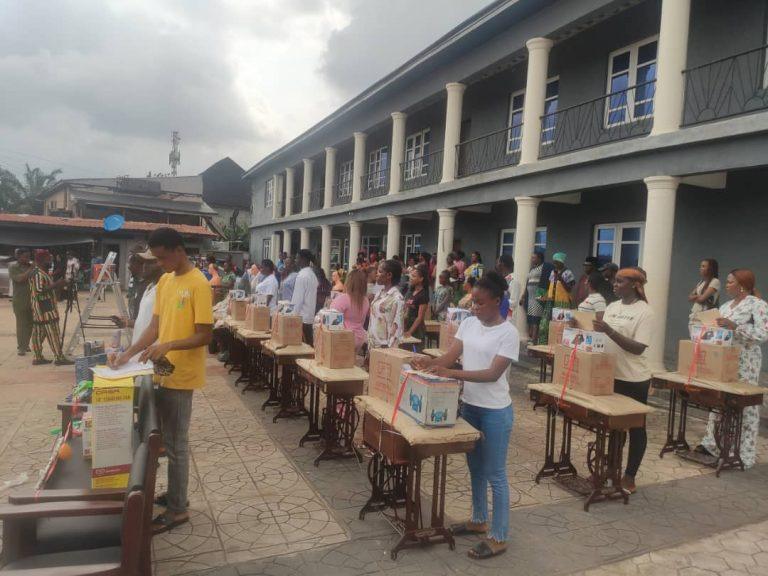
The Searite Foundation has trained 40 young people in Anambra State, Southeast Nigeria, with vocational skills and essential tools to start their own businesses in an effort to promote economic self-reliance.
The initiative aims to mitigate poverty through direct investment in human capital development.
Beneficiaries, chosen from across the community, received training in high-demand fields such as fashion design, bakery and confectionery, electrical work, hairdressing, welding, furniture making, shoe making, and grilling.
Upon completing their training, each graduate received a starter kit of professional-grade tools relevant to their trade. The kits included items such as sewing machines, baking ovens, drilling machines, hair dryers, and grilling equipment, providing a critical foundation for their new ventures.
“This program is about giving our youth a hand-up, not just a hand-out,”said Chief Oraeto. “By providing both skills and the physical means to produce, we are building a foundation for sustainable growth and a crime-free society.”
The event also highlighted cultural preservation, with the foundation awarding cash prizes to eight pupils and four students from local public schools for exceptional performance in the Igbo language. Their teachers were also recognised for their roles in this academic achievement.
The Nigerian Army has alerted the public to a false publication in circulation claiming that applications for the 90 Regular Recruitment Intake have commenced.
The Army described the report as ‘misleading and fraudulent,’ urging members of the public to disregard it in its entirety.
This was made known in a statement signed by the Acting Assistant Director of Army Public Relations, Directorate of Recruitment, Captain Abubakar Hammanga.
The statement reads; “The Directorate of Recruitment maintains a transparent procedure for announcing all recruitment exercises. Authentic information is released strictly through its verified official platforms.
“The publication is false, misleading and should be disregarded in its entirety. Authentic information regarding recruitment will only be published through the Nigerian Army’s verified official platforms.”
The Nigerian Army further assured the public that once the portal for the 90 Regular Recruitment Intake is formally opened, due notification will be provided through official channels.
It added that the Army remains committed to transparency and professionalism in its recruitment process, cautioning Nigerians against falling prey to fraudulent schemes.
The National Shea Products Association of Nigeria , NASPAN , has commended the Federal Government’s ban on the export of shea nuts from Nigeria.
The President of the Association, Mohammed Kontagora, made the commendation at a news conference in Abuja on Friday.
Mohammed Kontagora (middle), president of NASPAN, other members of the association at a news conference in Abuja
The Federal Government on Aug. 26, placed a six-month temporary ban on the export of raw shea nuts from Nigeria.
The aim, it said, was to boost the local shea industry by providing raw materials for domestic processing, creating jobs, as well as adding value to the product.
According to the federal government, the ban will also ensure significant short-term and long-term economic benefits through improved revenue generation.
Kontagora described the ban as “strategic and critical,” saying it would go a long way in repositioning Nigeria as the global leader in shea competitiveness.
“Though announced suddenly during the peak of seasonal transactions in shea nut harvest, processing and trading, the ban is a welcome decision that NASPAN fully supports.
“It represents a paradigm shift in the regulation of shea resources, with the official integration of a critical economic product of wide domestic benefit and high export value.
“The grounds for the ban, which include boosting local processing capacity, curbing informal trade, job creation, rural economic transformation, sustainability for women pickers and resource optimisation, are valid and justifiable.’’ he said.
Kontagora added that the ban would stem local price volatility, as actors in the value chain would review emerging realities to explore ways in which the policy enhanced mutually beneficial trade relationships.
According to him, integrating shea into the Nigerian Commodity Exchange platform would also foster price stability, transparency, and fair returns to farmers, women pickers, and processors.
The national president of NASPAN said that the policy was a demonstration of the Federal Government’s readiness to formalise shea trading as well as curtail informal trading with huge economic losses.
A growing grassroots movement in Plateau State, North Central Nigeria, is transforming the landscape of child nutrition, despite the economic downturn and limited resources.
Families and health workers across various communities are standing together to fight childhood malnutrition starting from birth.
At the heart of this movement is exclusive breastfeeding for the first six months of life, followed by the introduction of complementary foods made from locally available ingredients. This approach, supported by community health centres and organisations like UNICEF, is yielding promising results in child health and development.
Not long ago, child nutrition was considered the sole responsibility of mothers. Today, the narrative is changing. Fathers are now stepping into active roles, supporting their partners, and ensuring children receive optimal nutrition.
At the Primary Healthcare Centre along the Bukuru expressway, Eric Jimwan, a first-time father, shared his experience. “My wife and I have been attending clinic sessions together since her pregnancy. I ensure we follow the nutritional advice and provide the recommended local foods for our baby’s feeding,”he said. Their child, exclusively breastfed for six months, has remained healthy apart from routine immunisations. “The outcome has been tremendous,” he added, urging more men to get involved.
Health professionals stress that such involvement is essential. Yerima Jacob, chief nursing officer at the same health facility, emphasised the importance of exclusive breastfeeding during antenatal sessions. “We always encourage both parents to engage. It’s not just about feeding; it’s about long-term child development. And many families are responding positively,” he said.
Jacob also discouraged reliance on imported baby food. “Local grains are not only more affordable but also nutritionally superior.”
Mothers across Jos and beyond are echoing similar successes. Elizabeth David, who practised exclusive breastfeeding, found that locally made complementary foods made night-time nursing easier. Her toddler now eats meals enriched with millet, guinea corn, crayfish, soybeans, and dates as natural sweeteners. However, she admitted that the rising cost of food poses a challenge.
In Jos North LGA, mothers at the Township Primary Health Centre shared how they’ve adapted. Dim Bridget fed her baby exclusively for six months before introducing pap enriched with vegetables and fish. “Even with limited resources, I ensure his meals are rich. He’s active and rarely falls sick,” she shared. Her husband also takes an active role in caring for their child.
For Tabitha Solomon, motherhood sparked entrepreneurship. She now makes and sells homemade complementary food. “It’s cheaper and safer than artificial options. I know exactly what my baby is eating,”she said proudly.
According to Paula Hata, Nutrition Focal Person for Jos South LGA, there has been a visible reduction in severe malnutrition cases. “We’re seeing real changes. More mothers now understand the value of local foods, and they’re making the most of what’s available,”she noted.
Beyond community-driven strategies, Plateau State is stepping up its commitment to modern nutrition interventions. Philomena Irene, nutrition specialist with UNICEF Nigeria’s Bauchi Field Office, stressed the importance of prevention. “No child should die of malnutrition. It costs ₦21,000 to prevent malnutrition in a child but up to ₦198,000 to treat one,”she explained.
A key part of the strategy is the use of Small Quantity Lipid-Based Nutrient Supplements (SQ-LNS), a groundnut-based paste enriched with milk, oils, vitamins, and minerals. Given to children aged 6 to 23 months, the supplement helps bridge essential nutrient gaps without replacing family meals.
“Research shows SQ-LNS reduces child mortality by 27%, severe wasting by 31%, stunting by 17%, and iron-deficiency anaemia by 64%,” Irene said. She emphasised the importance of the first 1,000 days of life, calling it “a critical window for lifelong development.”
Nigerian youths have been urged to take full advantage of the Tinubu-led administration’s youth-focused initiatives to unlock their potential and contribute meaningfully to national development.
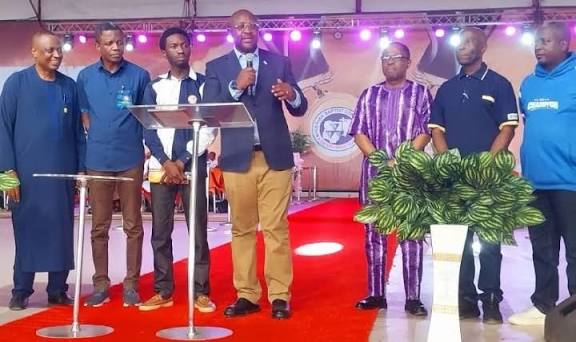
The Special Adviser to the President on Media and Public Communications, Sunday Dare, made the call while addressing over 24,000 young people at the Arise Congress 2.0 with the theme “The Emergence of Champions” held at the Baptist International Convention Centre in Lagos.
Dare described Nigerian youths as key drivers and champions of President Bola Tinubu’s administration.
He highlighted that President Bola Tinubu has “launched several initiatives aimed at empowering the youth by developing their talents and skills, citing programmes such as the NELFUND Tuition Loans and Stipends, the Renewed Hope Conditional Cash Transfer, and ongoing efforts to promote food security and reduce poverty.”
Dare, who also chairs the Youth and Student Ministries Advisory Board of the Nigerian Baptist Convention, emphasised the importance of character, discipline, determination, and self-motivation.
He clarified that his message was not political but an appeal for youths to embrace available opportunities and transform their communities positively.
The four-day Congress, will run from September 3 to 6, 2025.