


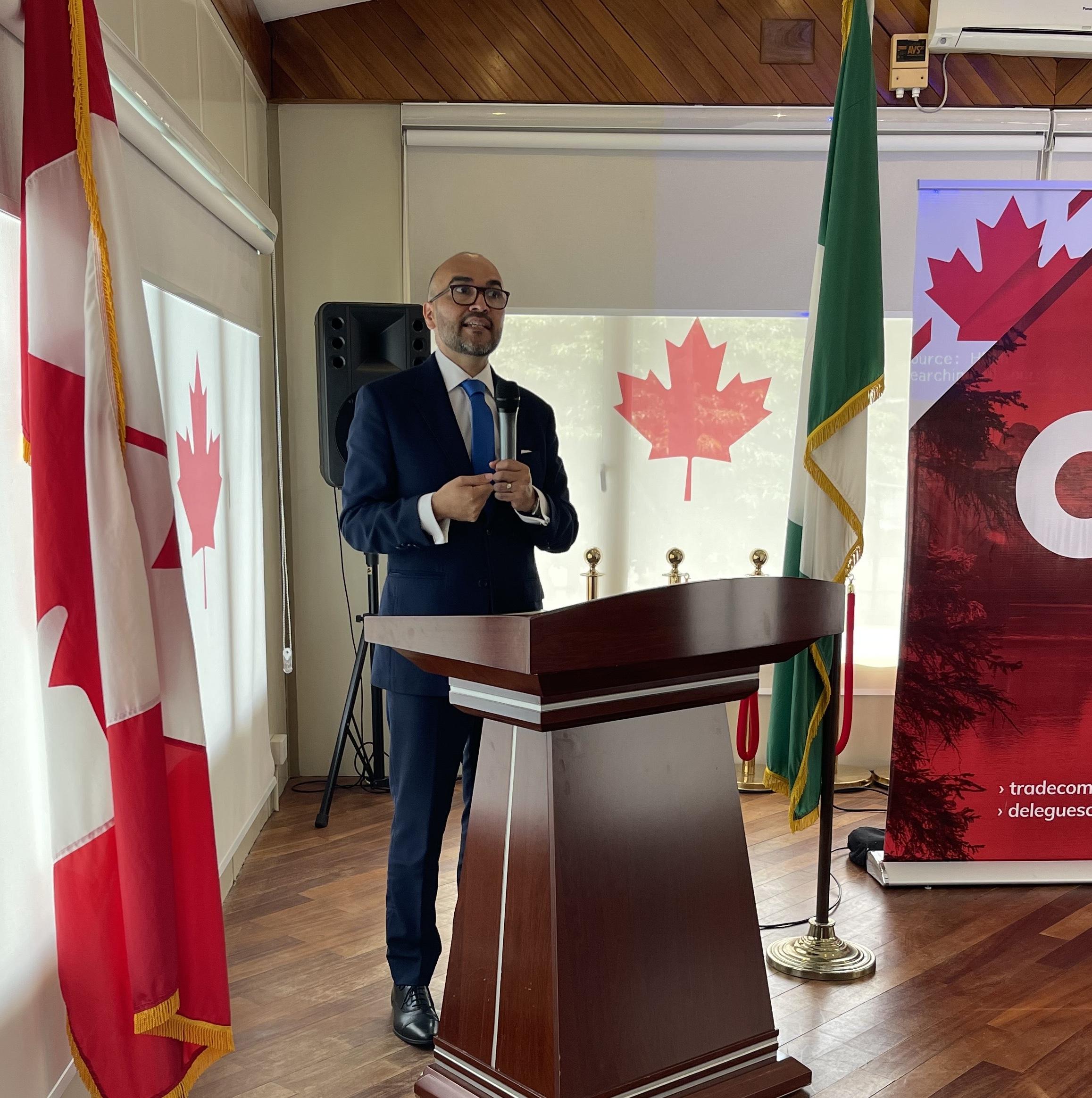
Nigerian private business owners and companies with dealings in Canada have been urged to push for clearer business frameworks that can strengthen bilateral trade between both countries.
This call was made by the Deputy High Commissioner of Canada to Nigeria, Carlos Rojas-Arbulú, while addressing business leaders at the third annual Nigeria Canada Business Association (NCBA) Business Roundtable held in Lagos.
Rojas-Arbulú said that “agreements such as the 2014 Foreign Investment Promotion and Protection Agreement (FIPA), which has yet to be ratified, offer a great deal of flexibility and should be reconsidered.”

He said, “If there was one economic priority we have in Nigeria for Canada, it is the FIPA. The question for me is how do we get there? And the sub question for me is that what is the role of private organizations such as the NCBA in that space?”
According to him, “There is a role and there is a place for NCBA to share, convey, advocate certain issues that are important to you, as private sector organizations, as companies that will then advance your interests. And that is an advocacy that can come in parallel and in tandem with the advocacy that we are trying to do to advance that same conversation.”
He further identified air transportation as Canada’s second economic priority with Nigeria.
While noting that direct flights could unlock billions of dollars in new trade and investment and boost cargo movement essential for both imports to Canada and exports from Canada, he said key concerns still need attention.
On trade diversification, Rojas-Arbulú noted that “the next few years are expected to be economically challenging for Canada and stressed the need for more intentional partnerships with international markets. He described Nigeria and Africa as strong prospects in this regard.’
Legal and Policy Concerns Over the FIPA
Speaking on the unratified 2014 FIPA, Franca Ciambella, Senior Consulting Counsel at Dentons, explained that for an international treaty to be implemented, it must be ratified and supported by local legislation, something that did not happen in Nigeria.
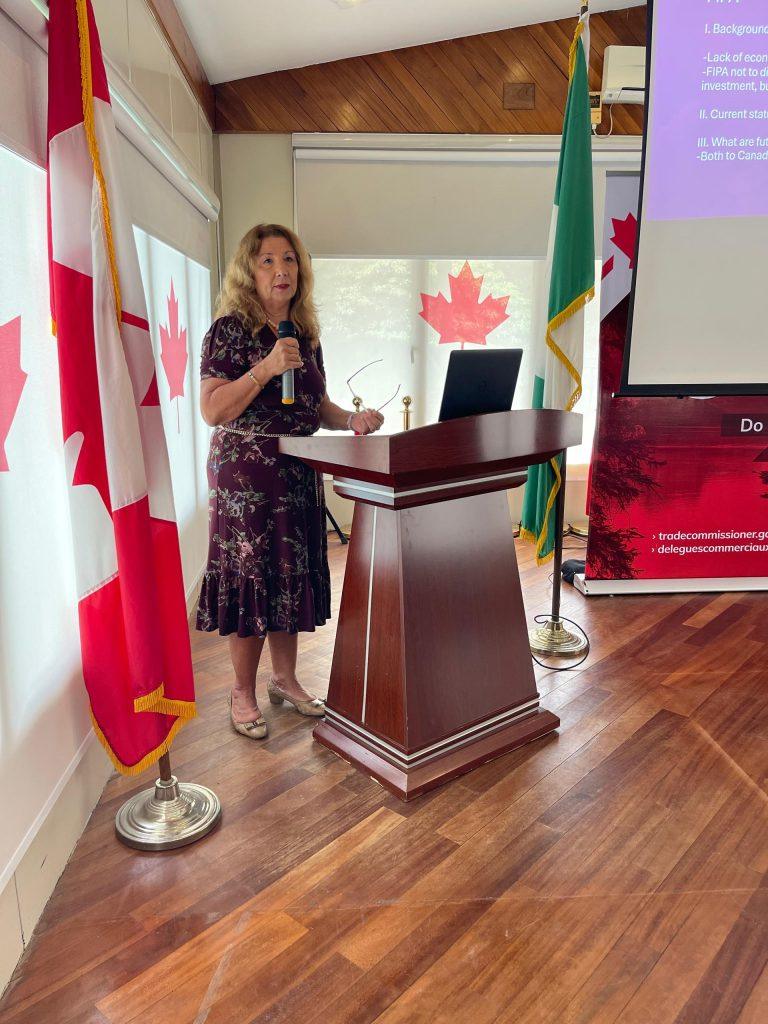
She asked: “Where does that leave us? There is no free trade agreement with Africa. What are the next steps? Are there any possibilities? Do we then assume that there is a commitment and an interest to conclude the FIPA? Do we use the old FIPA that was negotiated in 2014 and try to get Nigeria to ratify it or do we start over again and present the new model FIPA that Canada adopted in 2023 and also adopt the new Nigerian modification that it made to its FIPA?”
Ciambella said: “At this moment as we speak, we don’t know what the steps are. Maybe with our advocacy, we can push them to come to a commitment to move forward. But as we speak, we don’t know the direction that’s going to be taken.”
She noted that one of the main reasons Nigeria did not ratify the FIPA was a clause on transfers that required all transfers relating to a covered investment, including profits and capital earnings, to be moved freely and without delay across borders in a convertible currency.
Nigeria, she explained, had concerns about guaranteeing such quick conversions due to persistent foreign currency shortages. While the funds would eventually be available, they would not be “that quick and easy.”
She added that this challenge “has been sorted out with crypto currency.”
Tax Reforms and Investment Climate
Partner, Tax, Regulatory and People Services at KPMG Nigeria, Akinwale Alao, highlighted how Nigeria’s recent tax reforms could affect investment and trade.
According to him, the new four-legged tax reform act, which comes into effect on January 1, 2026, would help mitigate the impact of excesses on companies.
Alao also outlined strategic guidance for Canadian investors navigating the reformed tax environment, noting that the government has introduced incentives to encourage investors and businesses.

Why the FIPA Matters
Canada’s Foreign Investment Promotion and Protection Agreements (FIPA) provide a predictable, rules-based investment climate for investors from Canada and partner countries.
Although a comprehensive agreement was signed with Nigeria in 2014, it has not been ratified, leading to sustained calls for its finalization.
The goal of the FIPA is to support Canadian and Nigerian investors by offering predictability and protection, a step that could strengthen cooperation in sectors such as fintech, agriculture, energy, renewable energy and the digital economy, and foster job creation and sustainable growth.