

Under the provisions of the Armed Forces Act which prohibits certain behaviours, shapes personnel conduct, ensuring the enforcement of the same laws, “civilians can be court-Marshal under certain conditions”.
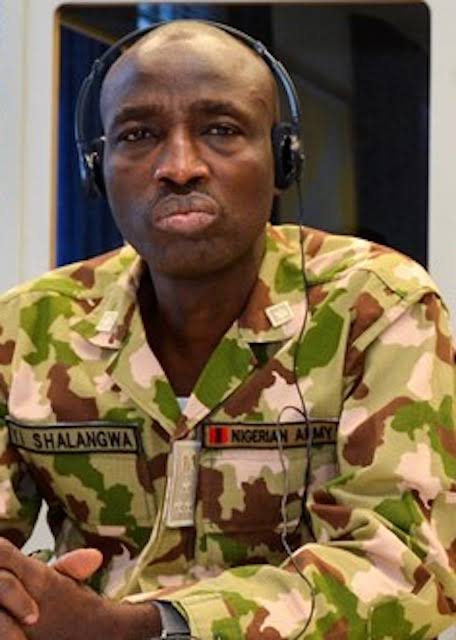
The Executive Director and Chief Legal Counsel of Strategic and Compact Law Chambers, retired Major General Yusuf Shalangwa stated this in Abuja, Nigeria’s capital during an interview.
According to Major General Shalangwa, a Former Director Legal Services Nigerian Army, Military Law capture all laws that are applicable to the military, which can be both strictly military law and civilian laws that are contained in the military act.
While speaking on the fundamental legislation governing the military in Nigeria and the application of the the act, he explained that by the provisions of the Armed Forces Act, civilians can be subject to a Court Martial under specified conditions which include being an employee of a military establishment or accompanying the military on operational environment.
“The Armed Forces Act says that even civilians could be subjected under two conditions. Condition one, such a civilian must have been employed or is an employee of a military establishment, a military department or unit.
For instance, you can have civilians working in the Ministry of Defence, where you have soldiers, or even army Headquarters. Some could be junior, senior employee, resource persons lecturers and so on.
For journalists, the scenario is if you accompany the military as journalists on Operational tour or embedded, then condition one has been fulfilled. The second condition is that it must have been during war or military operation. That’s why the Armed Forces Act says it must be during active service. Active service refers to when the military is engaged in serious military operations, like the Operation HADIN KAI and you committed an act which violates any of the provisions, any of the offences provided in part 12 of the Armed Forces Act, section 45 to 114 of the Armed Forces Act, such a civilian or journalist now becomes subject to the Act and can be tried by court martial, or even summarily dismissed and appropriate punishment prescribed by the Act will be awarded”
The Legal Practitioner who spoke extensively on “Introduction to Military Law and Discipline” and a veteran of the defunct Economic Community of West African State Monitoring Group, (ECOMOG) Affirms that Military law is a very wide piece of legislation and comprehensive enough for the discipline of service personnel and to ensure compliance of the whole gamut of military laws.
He also highlighted certain behaviours that are checkmated by the rules governing the military that can attract punishment including fighting and quarreling, sleeping on duty, or just dozing off are all offences.
“And even getting drunk is an offense and that aspect is very interesting because military personnel are not prevented from drinking beer, which we know is alcoholic and can get somebody drunk. But if you drink and get drunk, and you are noticed, and it is reported, and investigated and confirmed that you actually were actually drunk, you could be court marshalled. If you are behaving in such a way that you bring the military into disgrace, especially if you are in uniform even out of uniform, and are identified or shown on social media, investigated and found wanting, you’ll be court martial and jailed” he said.
Olusola Akintonde