

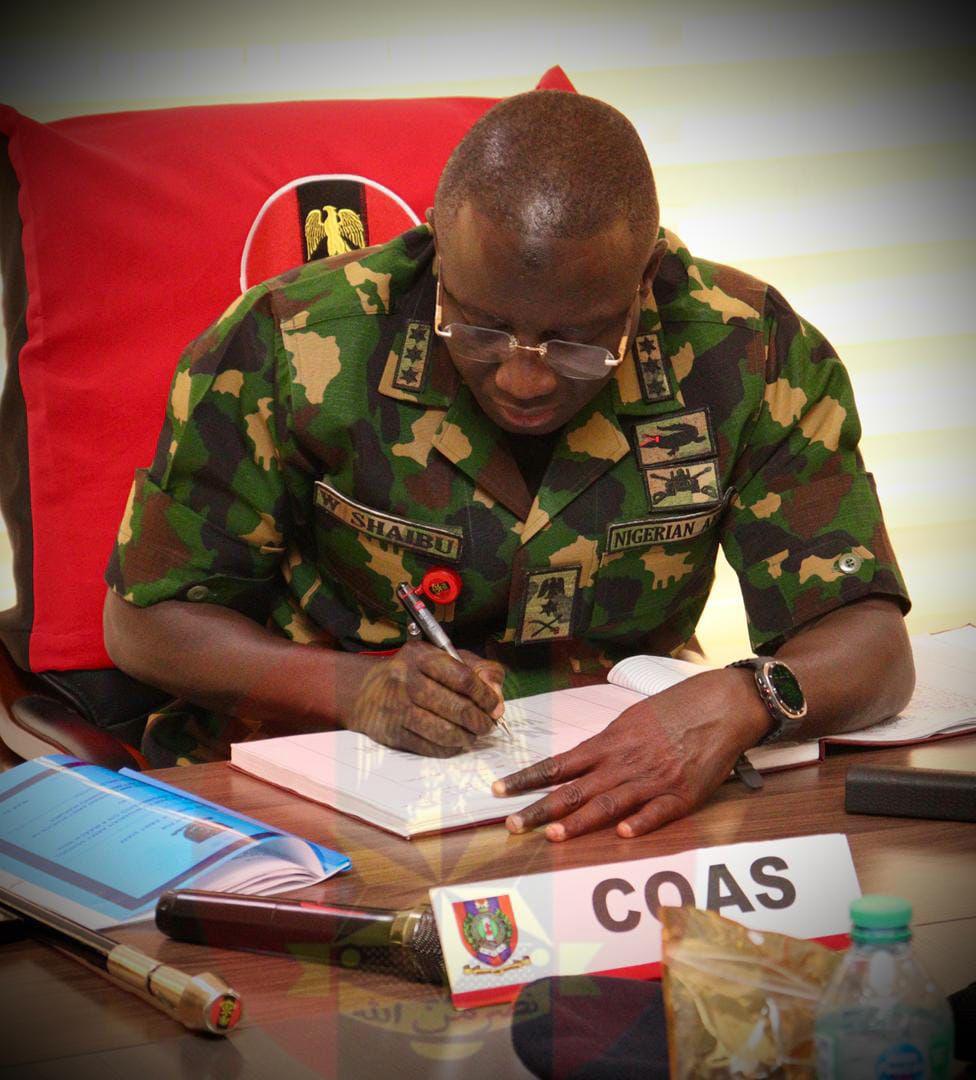
The Chief of Army Staff, Lieutenant General Waidi Shaibu, has directed the Nigerian Army School of Military Engineering to sustain rigorous, mission-oriented training aimed at producing highly competent combat engineers capable of supporting operations across multiple theatres.
A statement issued by the Acting Assistant Director, Army Public Relations at NASME, Lieutenant Nkuma Mba, confirmed that the directive was delivered during the Army Chief’s maiden operational visit to the institution’s headquarters in Makurdi on 4 March 2026.
During the engagement, the Army leadership emphasised the strategic role of engineering capability in modern warfare, noting that specialised technical expertise remains essential to mobility operations, infrastructure support, battlefield survivability and force sustainment.
The Army Chief noted that NASME remains a central institution in developing the technical manpower required to support engineering operations across Nigerian Army formations and units. He stressed that training must remain realistic, practical and aligned with evolving operational conditions to ensure graduates can effectively support combat formations in complex environments.
Reaffirming his command philosophy, the Army Chief also underscored the importance of troop welfare, noting that improved accommodation and living conditions within NASME Barracks would remain a leadership priority as part of broader efforts to strengthen morale and operational efficiency.
Earlier, the Commandant of NASME, Major General Idongesit Essien Ekpenyong, expressed appreciation for the Army leadership’s continued support to the institution. He provided a detailed briefing on ongoing training programmes, operational commitments and infrastructure challenges affecting the barracks community.
The visit featured operational briefings, presentation of a commemorative memento and group photographs, reinforcing the Army leadership’s continued engagement with training institutions responsible for developing specialised military capabilities.
The engagement signals renewed institutional focus on strengthening combat engineering capacity as the Nigerian Army adapts to the technical demands of contemporary security operations.