


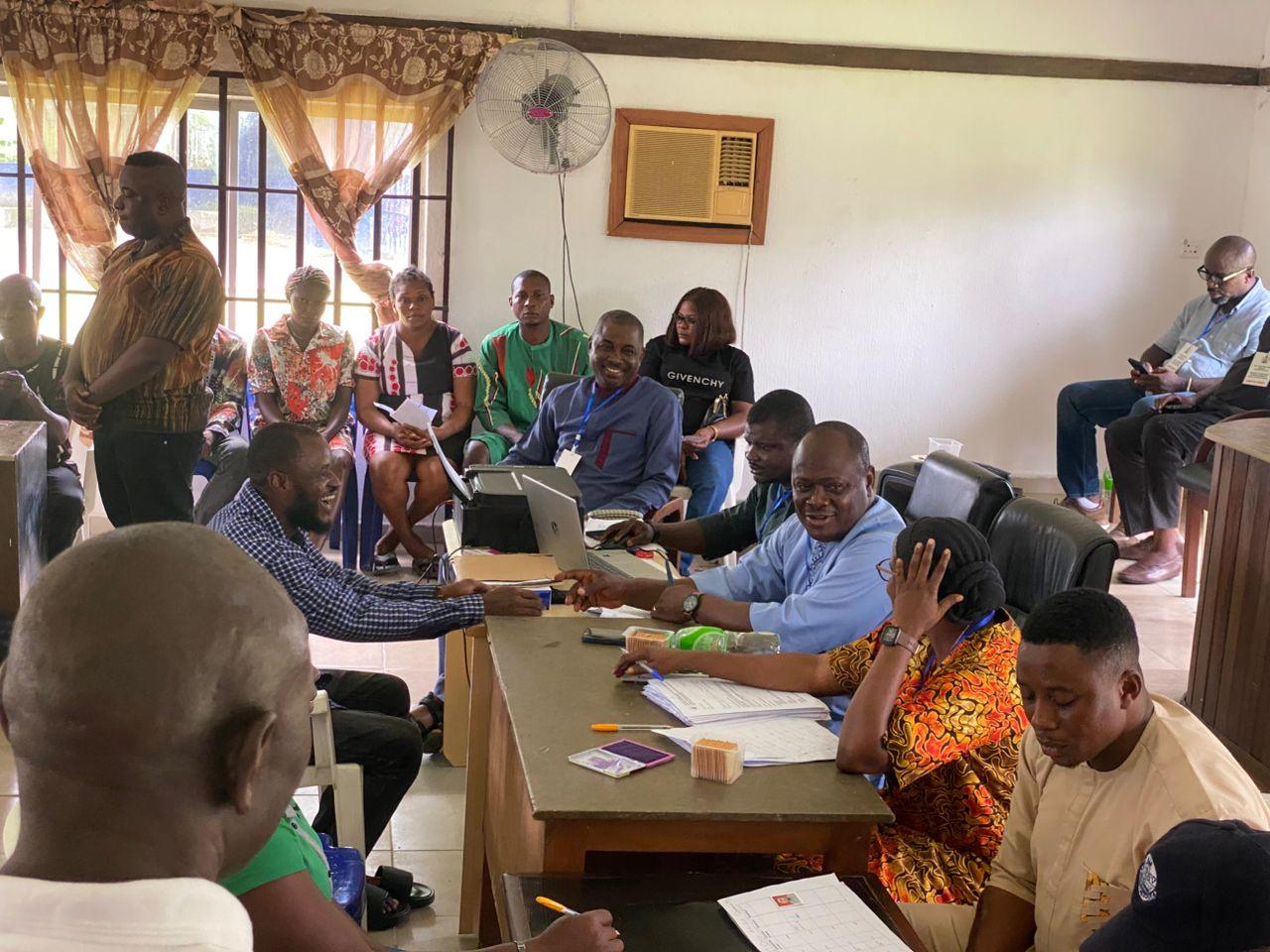
The Nigerian Government has commenced the payment of compensation to residents of the Cross River communities affected by the construction of the Lagos – Calabar Coastal Highway.
The Federal Controller Works in Cross River State, southern Nigeria, Yinka Onafuye, said the gesture was to give relief to those residents whose farmlands and buildings were taken over for the project.
Onafuye, who is also part of a 15-member committee set up by the Ministry of Works to oversee the disbursement process, confirmed that payments were being made to verified beneficiaries across the impacted settlements in State.
According to Onafuye, “the compensation process is targeted at 700 to 1,000 affected residents with farmlands in Section 3A of the project, which cover Akamkpa and Odukpani Local Government Areas based on valuations conducted by certified professionals.”

He further disclosed that payments have already been concluded in the two communities of Awi and Njagachang under Akamkpa local government area, while the process is continuing in Odukpani, where over ten communities — including Ikot Okon Akiba, Oduyama, Atan, Ekemkpo, Mkpara Otop, Kaifa, Nduoduo, Oboroko, Esuk Ekong, Nkitta and Ekong Atan Oku — are being processed.
The Federal Controller of Works, who is also a Deputy Director at the Ministry disclosed that payments were being made directly to the beneficiaries rather than through a third party for accountability.
“The exercise is going well. We have been able to capture almost 700 to 1,000 affected persons depending on their property and claims. The valuers have done their work; our mandate is to ensure payment is made correctly,” he said.
Challenges
On challenges encountered during the process, Onafuye explained “some do not have account numbers or valid identification. We cannot pay through proxies. We insisted that every beneficiary must open a personal account. So, we brought Zenith Bank, Wema Bank, UBA and others to enrol them right here on site.”
Continuing, he said, “we received instruction to stop all third-party payments. Cheques already issued to consultants were withdrawn. We now capture each claimant afresh, forward the details and ensure the contractor makes payment directly.”
He further explained that the last batch forwarded for payment stood at nearly ₦1 billion.
“Disbursements of this magnitude require strict verification procedures, sometimes causing brief delays. But, I can assure you that for these affected persons from Odukpani many would have received their compensation by now,” he noted.
Speaking on the progress of construction, Onafuye said, “the project will span three years. You cannot complete a development of this scale in six months. Work is ongoing despite weather challenges, with only a brief break for Christmas and New Year.”
Unprecedented Process
During brief interviews, the traditional leaders of the affected areas commended the Nigerian Government, the Minister of Works, Dr. David Umeahi and other officials for a process they described as “transparent, orderly and unprecedented in scope.”
The Secretary of the Akamkpa Traditional Rulers Council, Bassey Okon Edet, who represented the Paramount Ruler, described the payment system as historic, saying “this is the first time compensation is being paid in this manner and in such amounts directly to the people.
“The format is commendable and the claimants are happy because their properties were properly valued. Anyone, who attempts to truncate the ongoing construction work will be treated as a saboteur. Village councils and youth leaders are already working to prevent it,” he further assured.
Also, the traditional ruler of Nkitta community in Odukpani LGA, Akom Asuquo Effiong, described the process as “peaceful and successful.
“We will not allow anybody to tamper with anything so work can proceed smoothly. We are happy with the compensation and even happier that the road passes through our land.”
A representative of Zenith Bank, one financial institutions participating in the process, Hilary Akah highlighted the impact on financial inclusion, noting that the bank had enabled the enrolment of over 200 beneficiaries.
He explained, “even without ID, once they obtain their NIN we open their accounts, issue BVN and link everything for payment. So far, we have assisted more than 200 person attain financial inclusion.”
Most of the beneficiaries, especially the traditional leaders, expressed optimism that the coastal highway project when completed would boost land value, investment, employment and connectivity, stressing that cooperation remains key to its success.
Confidence Okwuchi