


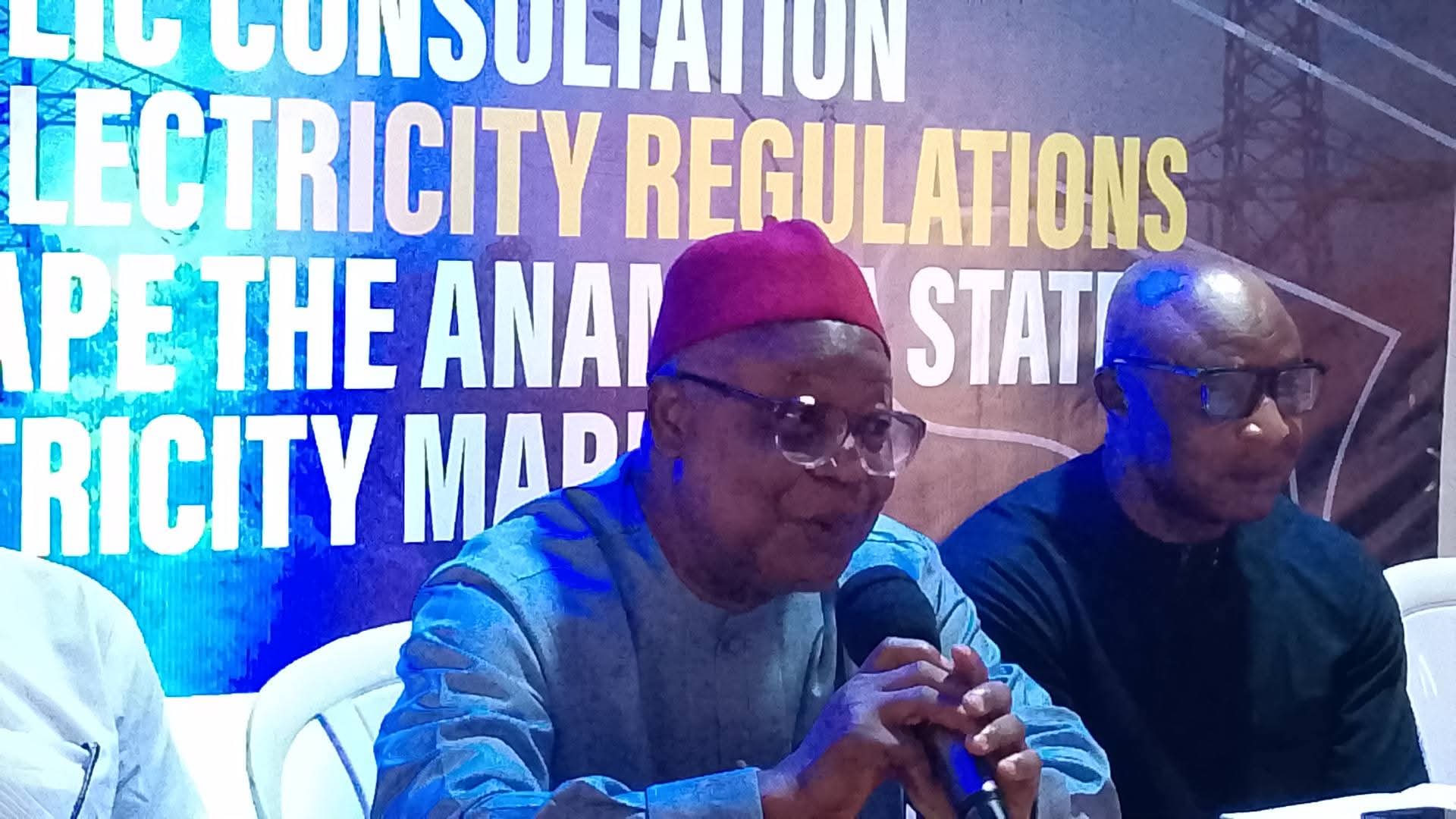
The Anambra State Electricity Regulatory Commission (ASERC) has stepped up efforts to reform the electricity sector in Anambra State, with a focus on transparent billing, stronger consumer protection, and improved service delivery in line with Nigeria’s ongoing power sector reforms.
Commission Drives Power Sector Reforms in Anambra State
Speaking at a public consultation in Awka, the Chairman and Chief Executive Commissioner of ASERC, Frank Nwoye Okafor, said the commission is tackling persistent structural challenges, including estimated billing and high energy losses, to enhance accountability and efficiency across the electricity market.
He explained that estimated billing has historically been used to manage technical and commercial losses, which could rise to about 40 percent if not properly addressed.
He noted, however, that the commission’s reforms are aimed at aligning billing practices with transparency, fairness, and global regulatory standards.
“Electricity is fundamental to modern economic development,” Okafor said. “Our responsibility is to ensure minimum service standards, fair and cost-reflective tariffs, and improved service delivery, while building trust between operators and consumers.”
Okafor emphasized that ASERC, established under the Anambra State Electricity Law, 2025, operates as an independent regulator, not a power provider, with a mandate to enforce compliance, protect consumers, and promote efficiency in the sector. He also urged customers to formally report service-related issues to enable timely intervention.
Also speaking, ASERC’s Executive Commissioner for Customer Protection and Regulation, Anosike Emmanuel, disclosed that the commission has received more than 86 complaints within its first six months of operation, most of them related to billing concerns.
“We are focused on ensuring fair billing, proper metering, reliable service, and standard delivery,” he said. “Customers have the right to challenge bills, seek redress, and receive compensation in cases of verified overbilling or wrongful disconnection.”
He outlined service obligations for electricity distribution companies, including defined timelines for new connections and complaint resolution. He added that “inspections and connections are officially free of charge and warned against unauthorized fees”. Customers, he noted, may suspend payment on disputed bills until resolution is reached, after which verified balances are settled.
From the operator’s perspective, the Managing Director of First Power Electricity Distribution Company, Okechukwu Okafor, highlighted operational realities, including energy losses exceeding 20 percent and the capital-intensive nature of electricity supply.
He said the company is working to improve service delivery, address billing concerns, and enforce accountability, including disciplinary and legal action against staff involved in malpractice.
Representing consumers, the Coordinator of the Electricity Consumers Network, Osita Obi, stressed the importance of transparent billing systems, particularly through the deployment of prepaid meters that reflect actual consumption.
He said accurate metering would enhance fairness, reduce disputes, and strengthen trust between consumers and service providers.
ASERC said stakeholder feedback from the consultation will guide the development of new regulations aimed at strengthening accountability, improving service delivery, and building a transparent, efficient, and sustainable electricity market in Anambra State, an effort that aligns with broader electricity sector reforms across Nigeria.