

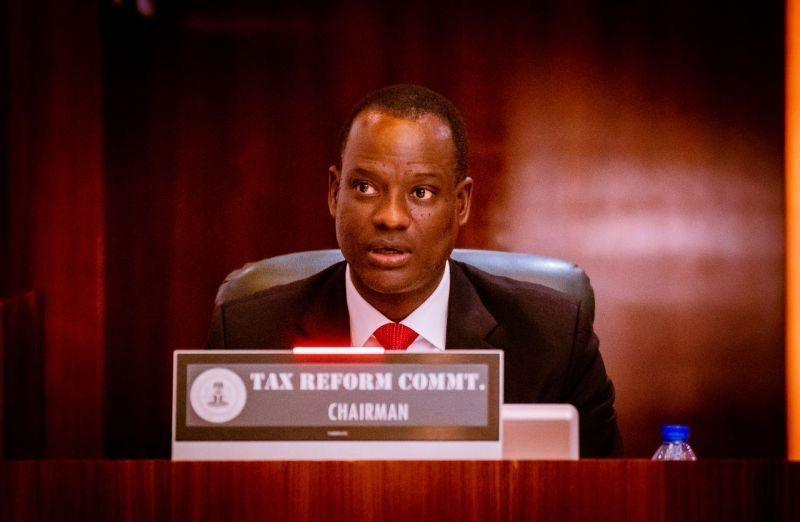
The Presidential Fiscal Policy and Tax Reforms Committee has rejected key aspects of a recent publication by KPMG on Nigeria’s newly enacted tax laws, describing much of the analysis as based on “misunderstandings of policy intent, mischaracterisation of deliberate reforms, and the presentation of opinions as facts.
The Committee Chairman said in a statement that while it welcomes constructive feedback and acknowledges that some of KPMG’s observations on implementation risks and clerical issues were useful, “the bulk of the firm’s commentary failed to properly reflect the objectives and design of the reforms.”
According to the Committee, many of the issues described by KPMG as “errors” or “gaps” were either incorrect conclusions, a lack of appreciation of the broader reform context, or areas where the firm preferred alternative policy outcomes to those intentionally adopted by the government.
The Committee emphasised that policy disagreements should not be framed as technical errors, adding that other professional firms engaged more effectively by seeking clarification and contributing directly during the reform process.
Addressing Concerns Over Taxation of Shares
On concerns regarding the taxation of shares, the Committee dismissed claims that the new chargeable gains provisions would trigger a stock market sell-off. It clarified that “the applicable tax rate on share gains is not a flat 30 per cent, but a graduated structure ranging from zero to a maximum of 30 per cent, with plans to reduce the top rate to 25 per cent.”
“Contrary to the presumption that the new tax provisions on chargeable gains would trigger a sell-off on the stock market, the fact is that the applicable tax rate on share gains is not a flat 30%. The tax framework is structured from 0% to a maximum of 30%, which is set to reduce to 25%. Furthermore, a significant majority of investors (99%) are entitled to unconditional exemption, with others qualifying subject to reinvestment,” the Committee explained.
Implementation Timing and Indirect Transfers
Regarding the commencement date of the new laws, the Committee argued that KPMG’s recommendation to align implementation strictly with the start of accounting periods was “overly simplistic.” It explained that “comprehensive tax reforms affect multiple assessment bases, transactions spanning different periods, and issues related to audits, deductions, credits, and penalties, which cannot be resolved by a single accounting date.”
Also Read: President Tinubu Seeks Backing for New Tax Laws
The Committee defended provisions on the indirect transfer of shares, describing them as consistent with global best practices and the OECD’s Base Erosion and Profit Shifting (BEPS) framework.
“The measure is intended to close long-standing loopholes exploited by multinationals and does not undermine Nigeria’s competitiveness,” it said.
VAT and Other Misunderstandings
On Value Added Tax (VAT), the Committee stated that a specific exemption for insurance premiums is unnecessary, as insurance premiums “do not constitute a taxable supply under Nigerian tax law.” It described calls for an amendment in this regard as academic.
The Committee also addressed other perceived misunderstandings by KPMG, including concerns about the inclusion of “community” in the definition of a taxable person, the composition of the Joint Revenue Board, the treatment of dividends from foreign companies, and requirements for non-resident taxpayer registration. It maintained that “these provisions align with established principles of statutory interpretation and deliberate policy choices, and are consistent with both Nigerian practice and international norms.”
Rejected Proposals
The government further rejected proposals attributed to KPMG that it said would undermine key reform objectives. These include calls to exempt foreign insurance companies from tax on Nigerian-sourced premiums, allow tax deductions for foreign exchange sourced from the parallel market, and remove the link between VAT compliance and deductibility of expenses.
According to the Committee, “these measures are designed to protect local industries, support monetary policy objectives, discourage tax evasion, and promote fairness within the tax system.”
Personal Income Tax and Competitiveness
Responding to criticism of the new top marginal personal income tax rate of 25 per cent, the Committee argued that the effective rate could be lower due to pension contributions and remains competitive internationally.
“While KPMG acknowledges the reform objective of fairness and progressivity, the firm disagrees with a top marginal tax rate of 25% for the highest earners. In reality, the effective tax rate can be as low as 22% for an individual earning billions a year simply by contributing 10% to pension.
This rate is competitive when compared to many other countries, including Angola 25%, Egypt 27.5%, Ghana 35%, Kenya 35%, the U.S. (Federal) 37%, South Africa 45%, and the U.K. 45%. So, the rate is not ‘oppressive’ or one that will negatively affect economic growth as claimed, rather it ensures progressivity without compromising competitiveness. From a broader policy objective perspective, the increase in top marginal rate for high-income earners and the reduction in corporate tax rate is designed to address the existing higher tax burden associated with business formalisation,” the Committee said.
The Committee reiterated that the tax reforms followed extensive consultations, including public hearings during the legislative process, and that mechanisms were available for all stakeholders to contribute technical input. It acknowledged that clerical inconsistencies may arise in a reform of this scale, noting that “government is already addressing them through administrative guidance, regulatory clarifications, and, where necessary, future amendments.”
“In any comprehensive overhaul of a nation’s tax framework, clerical inconsistencies or cross-referencing gaps may arise, and the government is already identifying them. The tax reform represents a bold step toward a self-sustaining and competitive Nigeria,” the Committee added.
It urged stakeholders to move beyond what it described as “static critique” and adopt a more collaborative approach focused on clarification and effective implementation, in line with Nigeria’s goal of building a competitive and self-sustaining economy.