

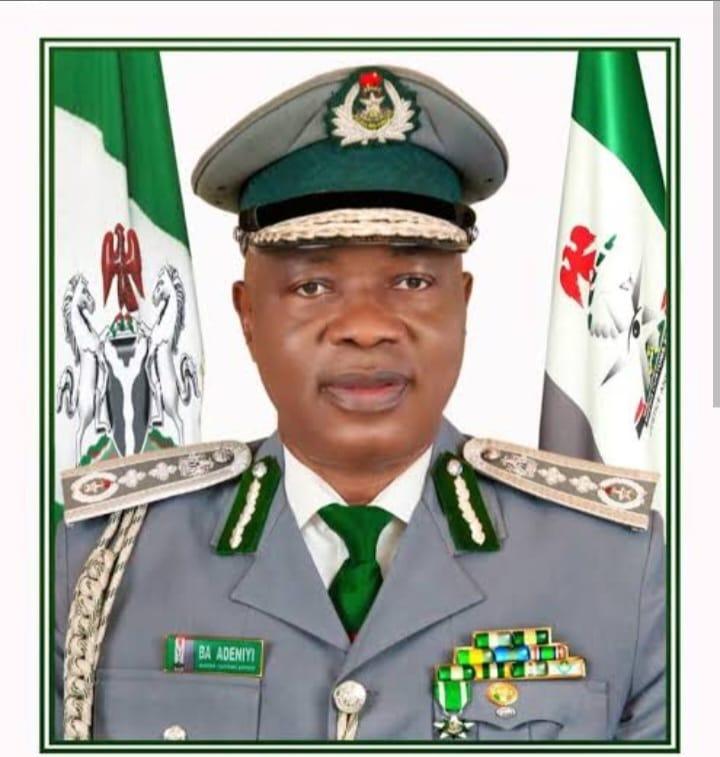
The Comptroller-General of the Nigeria Customs Service, Bashir Adewale Adeniyi, has emphasised that the Service plays a vital role in combating illicit financial flows (IFFs).
He made this statement during the opening session of the National Conference on Combating Illicit Financial Flows, held in Abuja.
According to Adeniyi, Customs’ daily operations include strict monitoring of cross-border movements of cash and negotiable instruments, as well as enforcing mandatory declarations for transactions above the threshold value.
“In the last six months, Customs has tightened loose ends at all our borders to ensure that declaration protocols are diligently implemented,” he stated.
However, the Comptroller-General warned that the scale and complexity of IFFs require more than border enforcement. He called for a coordinated approach involving all key stakeholders, especially as Nigeria prepares for its Financial Action Task Force (FATF) mutual evaluation.
“Addressing IFFs goes beyond one institution. It requires a collaborative framework where each agency contributes its expertise to ensure a secure and financially transparent environment,” he said.
He identified the Nigeria Customs Service, Economic and Financial Crimes Commission (EFCC), tax authorities, and other relevant agencies as critical players whose roles must be aligned to effectively tackle the issue.
Also speaking at the event, Minister of State for Finance, Dr. Doris Anite, noted that Nigeria had historically relied on volatile oil revenues, which she described as unstable and inadequate for long-term fiscal sustainability.
She emphasised that current reforms are aimed at building a resilient and diversified revenue base, particularly through improved taxation and financial governance.
“For decades, Nigeria relied heavily on volatile oil revenue. Our current reforms recognize the urgent need to diversify our revenue base, shifting focus to non-oil sources, particularly tax,” Anite said.
She urged participants to support the creation of a more inclusive, accountable, and equitable fiscal framework capable of funding national development, reducing dependency on debt, and ensuring all sectors contribute meaningfully to economic growth.
“The participating members should create a more inclusive and accountable fiscal framework capable of funding national development, reducing debt dependency, and ensuring all sectors contribute fairly to growth,” she added.
The conference brought together representatives from the Nigeria Customs Service, EFCC, Federal Inland Revenue Service (FIRS), financial institutions, civil society organizations, and development partners. It forms part of Nigeria’s broader efforts to plug revenue leakages, combat money laundering, and restore confidence in the financial system—while aligning with global standards set by FATF and other international regulatory bodies.
Hauwa Abu