


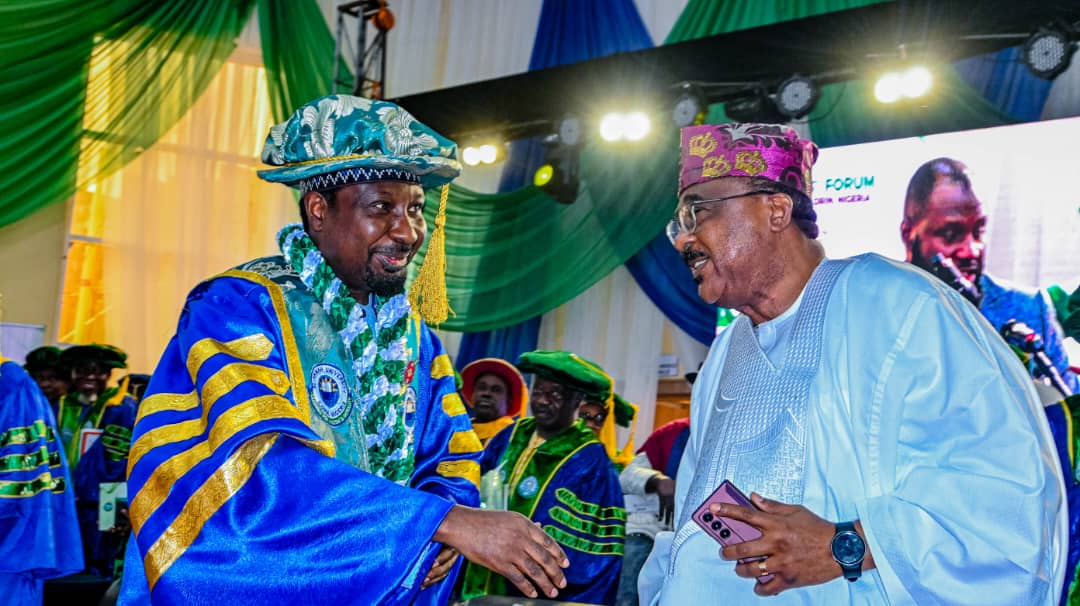
Nigeria’s Deputy Senate President, Senator Barau Jibrin, has called for stronger cooperation and mutual respect between the Executive and the Legislature, as a critical pathway to consolidating democracy in the country’s Fourth Republic.
Speaking at the 15th convocation ceremony of Al-Hikmah University in Ilorin, Kwara State where he delivered the convocation lecture, Barau warned that persistent friction between both arms of government continues to weaken governance outcomes and public trust in democratic institutions.
The lecture titled “Managing Executive–Legislature Relations towards Democratic Consolidation in Nigeria’s Fourth Republic,” examined the impact of inter-institutional relations on democratic stability since Nigeria’s return to civil rule in 1999.
Barau said although Nigeria has recorded relative democratic endurance over the past two and a half decades, the quality of governance has remained largely dependent on how effectively the Executive and Legislature manage constitutional boundaries and shared responsibilities.
Democratic Consolidation
He noted that democratic consolidation goes beyond the conduct of periodic elections and must include strict adherence to constitutionalism, separation of powers, accountability, and the rule of law.
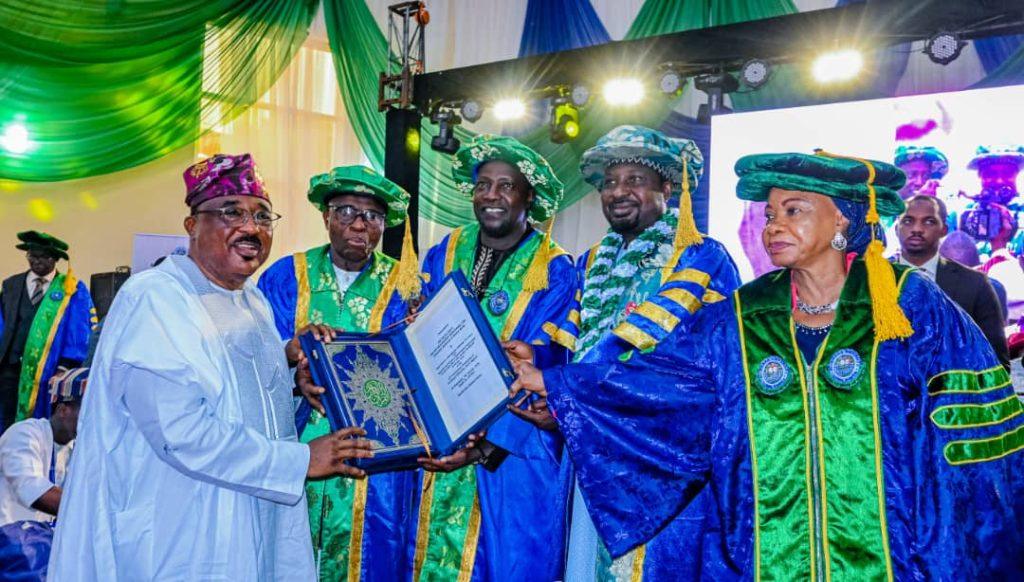
According to him, early years of the Fourth Republic were characterised by intense confrontations between the Presidency and the National Assembly over leadership tussles, budgetary processes, impeachment threats, and oversight functions, developments he said reflected institutional weaknesses inherited from years of military rule.
The Senate leader identified executive dominance, weak legislative capacity, partisan rivalry, and personalisation of power as major drivers of such conflicts.
He stressed that legislative oversight should not be viewed as hostility but as a constitutional responsibility aimed at ensuring accountability and transparency in governance, warning that politicisation of oversight erodes public confidence in democratic institutions.
Budget Delays
Barau also said budget delays in Nigeria often stem from deficits in trust and poor engagement rather than flaws in the 1999 Constitution, stating that effective governance requires timely dialogue and respect for institutional mandates.
He highlighted the role of political parties in shaping executive–legislature relations, cautioning that excessive executive control of party structures undermines legislative independence and weakens democracy.
To strengthen democratic governance, Barau advocated regular structured engagement between both arms of government, enhanced legislative capacity through research and institutional support, strict adherence to constitutional provisions, and improved civic education.
He cited the establishment of the National Institute for Legislative and Democratic Studies and the National Assembly Library Trust Fund as reforms aimed at strengthening legislative effectiveness and reducing political tensions experienced in the early years of the Fourth Republic .
The lawmaker also urged political leaders to place national interest above personal ambition, arguing that ethical leadership remains central to Nigeria’s democratic future.
Addressing the graduating students, Barau charged them to uphold democratic values and contribute to accountable governance, describing democracy as a system sustained not only by institutions but by enlightened citizens.
He commended Al-Hikmah University for promoting knowledge integrated with moral and civic responsibility, and expressed optimism that Nigeria’s democracy would continue to grow in strength and stability.
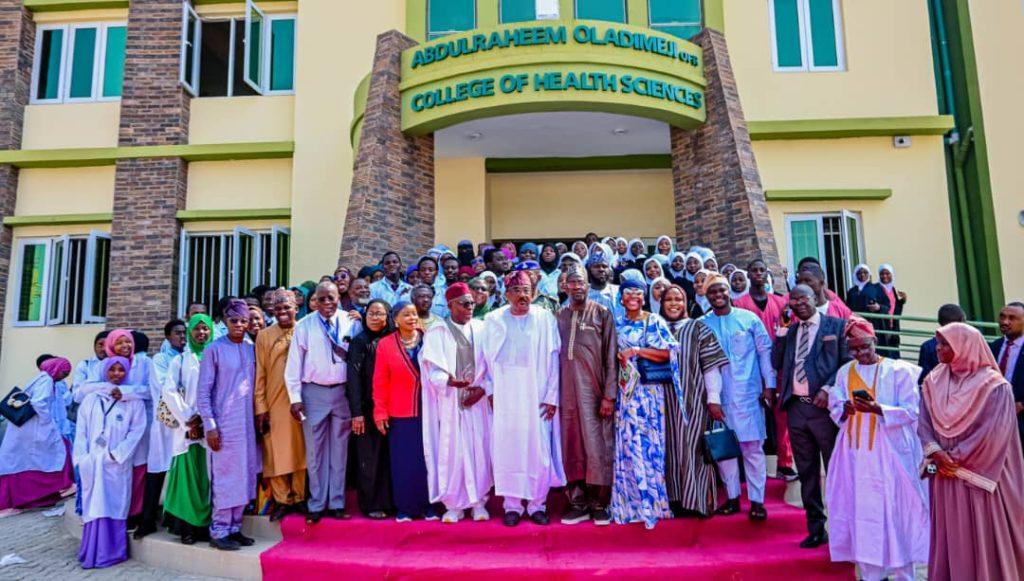
The event was attended by dignatories across the country and beyond including the the Kwara State Governor, Mallam Abdulrahman AbdulRazaq, who was represented by his deputy, Mr. Kayode Alabi, the former Chief of Staff to late President Muhamadu Buhari, Professor Ibrahim Gambari.
Others are, the Founder of the University, Alhaji Raimi Oladimeji, the Arogundade of Lagos and Jagunmolu of Igbominaland, the Ciroma of Ilorin, Prince Abubakar Bature Sulu -Gambari SAN, and the Kuliyan Ngeri of Ilorin, Yusuf Olaolu Alli, SAN as well as the President of NACCIMA, Alhaji Jani Ibrahim.