

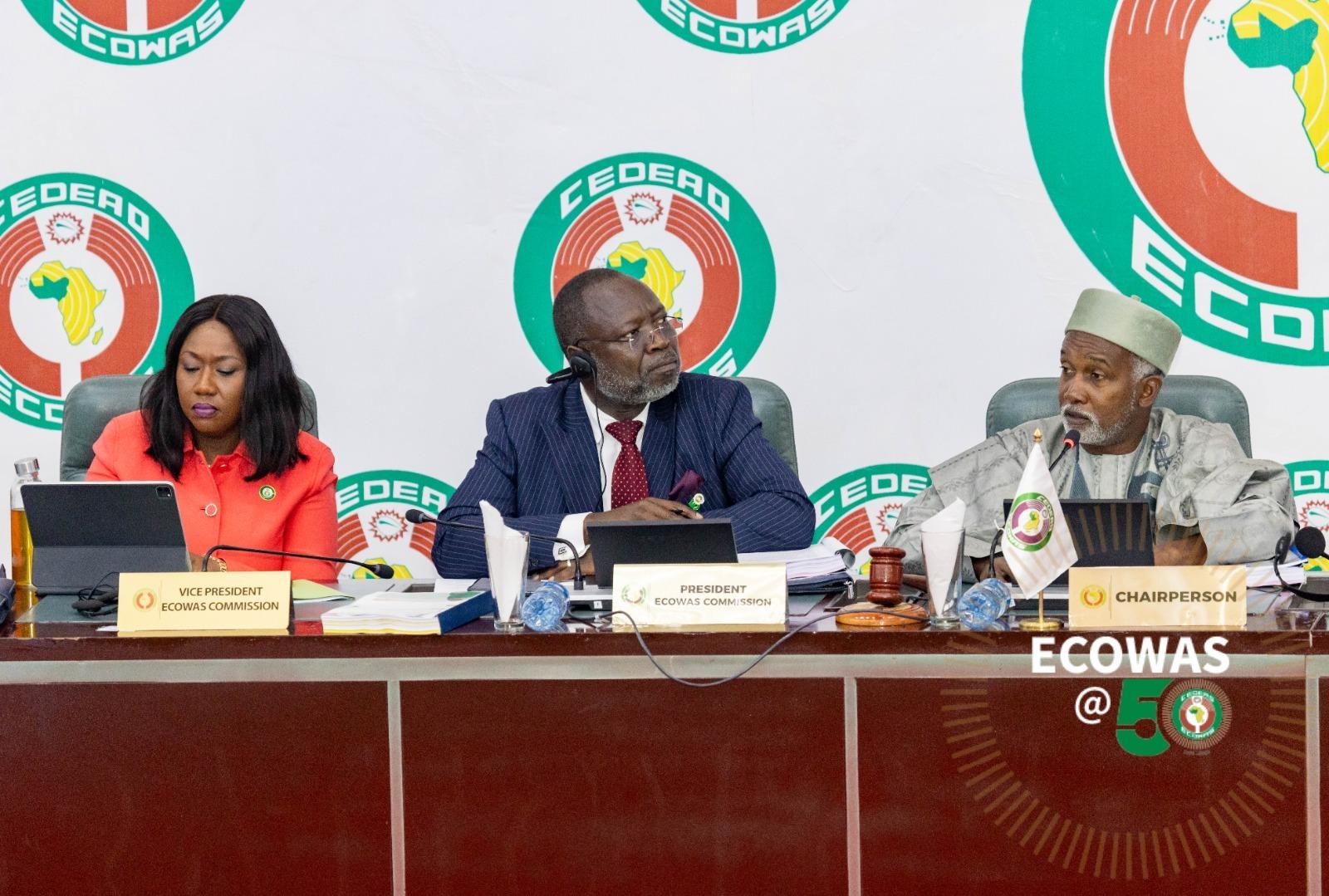
The Economic Community of West African States (ECOWAS) Council of Ministers has called for urgent action to eliminate non-tariff barriers (NTBs) that hinder trade and economic integration in the region.
The President of the ECOWAS Commission, Dr. Omar Touray, made the call during the 94th session of the ECOWAS Council of Ministers held in Abuja, Nigeria.
He emphasised that ECOWAS institutions remain committed to their mandates of promoting regional integration and sustainable development.
“ECOWAS institutions have continued to pursue their various mandates for the integration and development of our region. In this regard, various memoranda will be presented to you, relating to the progress made in the promotion of regional integration and development. We shall present the outcome of the Joint Meeting of ECOWAS Ministers of Trade and Industry, who met to examine and validate key regional instruments, as well as to discuss regional and continental issues relating to trade, industry, and investment promotion,” Touray said.
He noted that the ministers specifically examined the issue of non-tariff barriers (NTBs) within the framework of the ECOWAS Trade Liberalisation Scheme (ETLS) and the African Continental Free Trade Area (AfCFTA).
“Your Excellencies, the non-tariff barriers have become a perennial obstacle to boosting regional trade, investment, industrialisation, competitiveness, and economic growth in our region. Despite numerous initiatives, including the Presidential Task Force on the Trade Liberalisation Scheme, the problem persists,” he added.
Dr. Touray explained that the meeting seeks ways to address challenges posed by NTBs along regional trade corridors—including border delays, bureaucratic procedures, and inspection-related inefficiencies—which continue to undermine the goals of both the ETLS and the AfCFTA.
He noted that the Ministers of Trade and Industry also considered the Cooperation Agreement between the ECOWAS Regional Competition Authority (ERCA) and Member States on the implementation of competition and consumer protection rules within ECOWAS. The ministers urged Member States to take the necessary steps to sign the agreement by the end of June 2025.
The ministers further approved the ECOWAS Trade and Investment Promotion Strategy and called on Member States to accelerate the ratification of the WTO Fisheries Subsidy Agreement and the AfCFTA.
Speaking on external trade relationships, the ECOWAS Commission President disclosed that the Council reviewed the West Africa–European Union Economic Partnership Agreement (WA-EU EPA) and recommended broader national consultations with key stakeholders—particularly the private sector—to chart a way forward.
He also addressed concerns surrounding the new U.S. tariff policy, noting that the ministers discussed the need for a coordinated regional response.
“Your Excellencies, the issues of standards and the mutual recognition of inspection certificates are critical to both regional trade and industrialisation,” Touray stated. “In this regard, progress has been made on the Industry Standards Harmonisation Model (ECOSHAM), the revised ECOWAS Quality Infrastructure Scheme document, the mutual recognition agreement for inspection certificates, and fifty-eight (58) ECOWAS standards (ECOSTANDS) related to the textile value chain.”
These developments, among others, will be presented during the session as part of ongoing efforts to strengthen the regional market and economic integration.
Dr. Touray also expressed the Council’s readiness to strengthen cooperation with Burkina Faso, Mali, and Niger in the fight against terrorism and violent extremism. He reaffirmed ECOWAS’s commitment to promoting peace, political stability, and sustained development across the region.
Hauwa Abu