

The Director of Free Movement of Persons and Migration at the Economic Community of West African States, ECOWAS, Mr Albert Siaw-Boateng, says that free movement of persons and structured labour mobility has been underscored as key to deepening regional integration and unlocking the full benefits of the African Continental Free Trade Area (AfCFTA).
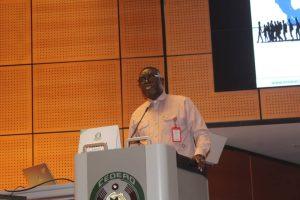
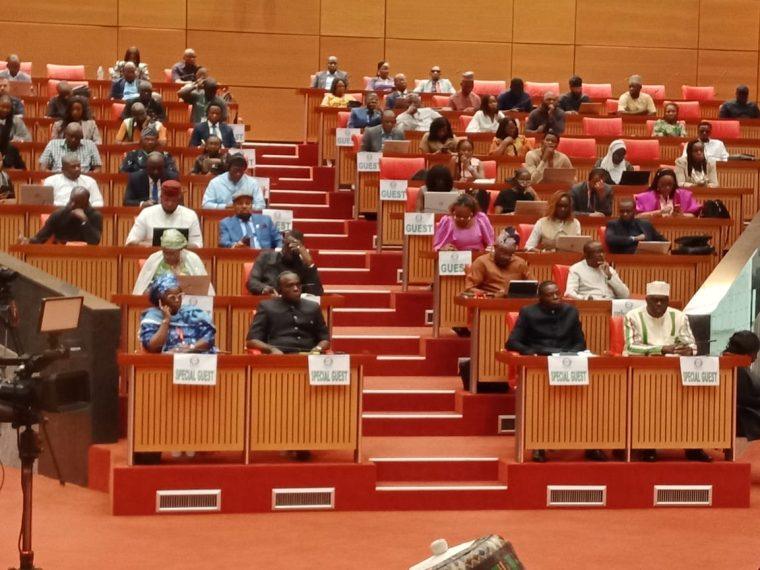
He stated this at the ongoing ECOWAS Parliament Session and the Parliamentary Seminar being held in Abuja, Nigeria’s capital.
In a presentation on the theme: “Free Movement of Persons and Labour Mobility as Catalysts for Regional Integration and AfCFTA Success,” Mr. Siaw-Boateng said human mobility was not a peripheral issue but a core driver of intra-regional trade, productivity, and shared prosperity across West Africa.
“Our objective is to highlight the clear link between human mobility and regional integration, examine labour mobility as a driver of intra-regional trade, assess the progress made under the ECOWAS Free Movement Protocol, and identify the challenges that continue to affect labour migration governance in the region,” he said
He described the ECOWAS Free Movement Protocol as a foundational pillar of the regional integration agenda, recalling that it was adopted in 1979 and revised in 1993 to respond to evolving realities.
“The Protocol was designed to create a borderless region that aligns with the Continental Free Movement vision and remains community-driven in its implementation.”
Siaw-Boateng explained that the Protocol is structured in three phases covering the right of entry, residence, and establishment.
“Under the first phase, which guarantees the right of entry, ECOWAS citizens are entitled to travel without a visa using a valid passport and health certificate, commonly known as the Yellow Card. The 90-day limit is being progressively abolished in national legislations to give fuller effect to this right.”
In the second phase, he noted that the supplementary protocol on the right of residence allows citizens to seek and undertake income-earning employment in other Member States in accordance with national laws.
“Migrants are permitted to apply for jobs, take up employment, and remain in the host country in line with national provisions, even after the termination of employment,” he explained.
According to him, the third phase provides for the right of establishment.
“This allows migrants to participate in economic activities, create and manage enterprises and companies under the principle of non-discrimination. It is about enabling ECOWAS citizens to become economic actors wherever opportunities exist within the region,” he noted
Beyond the Protocol, Siaw-Boateng pointed to the ECOWAS Regional Migration Policy as a comprehensive framework aimed at addressing both the opportunities and challenges posed by migration.
“The policy seeks to harness the benefits of migration for the socioeconomic development of the ECOWAS region and its Member States. A harmonised regional data collection and management system provides the very foundation for policymakers to develop evidence-based migration and development policies tailored to the region’s demographic realities.”
He further outlined pillars of the Regional Migration Policy, which include:
“Promoting free movement and regional integration, improving border management, managing labour migration and student mobility, strengthening protection for people on the move, addressing the gender dimension of migration, tackling climate-induced mobility, improving statistical data on migration and reinforcing regional migration governance.”
Siaw-Boateng stressed that labour migration policies have evolved significantly over the years, recalling that the ECOWAS Common Approach to Migration was adopted in 2008 by Heads of State and Government to link migration with development and minimise negative impacts.
” The ECOWAS Labour Migration Strategy and Action Plan (2025–2030), validated in May 2025, aims to promote “safe, regular, and rights-based labour mobility in West Africa.”
He added that the ECOWAS Decent Work Regional Programme seeks to address decent work deficits, including through strengthened Labour Market and Migration Information Systems.
“Outcome 1.2 of the programme provides new, standardised, reliable, and valid data at both regional and national levels to improve evidence-based labour and employment policies. Without credible data, we can not manage mobility effectively.”
Assessing the current situation, the Director said the right of entry under the Free Movement Protocol is fully implemented across Member States, while efforts are ongoing to abolish the 90-day stay limit in domestic laws and strengthen border capacities to facilitate labour mobility.
“There is limited labour inspection coverage for migrant workers, weak portability of social protection benefits, and insufficient labour market information sharing. Our priority is to align free movement with labour standards and protections so that mobility translates into decent work, ”
Siaw-Boateng disclosed that the ECOWAS Commission, through its Directorates of Free Movement of Persons and Migration and Humanitarian and Social Affairs, is constitutionally mandated to coordinate the implementation of regional decent work, labour migration and social protection programmes.
“We work closely with Member States and key partners such as the International Labour Organization, the International Organization for Migration, the International Centre for Migration Policy Development, and the African Union Commission,” he said,
noting that collaboration is central to implementation.
Among ongoing initiatives, he cited the European Union-funded Support to Free Movement and Migration of Persons Project (FMM West II), a joint ECOWAS, EU, IOM and ILO initiative, as well as efforts to implement the ECOWAS National Biometric Identity Card, harmonise drivers’ licences and introduce the ECO-Visa.
He also referenced the Regional Mechanism for the Removal of Obstacles and Harassment for Inter-State Vehicles, the Joint Labour Migration Programme with the African Union Commission, and a technical cooperation project focused on social protection portability.
He stressed that the Regional Labour Migration Statistics Programme (2024–2028), harmonising methodologies to address data fragmentation across countries.
Siaw-Boateng, however, warned that weak migration data systems remain a major challenge that needs to be addressed.
According to him, inconsistent definitions and fragmented migration data have complicated policy coordination, while about 70 per cent of migrant workers operate in the informal sector.
“Regional Migration Policy emphasizes that building a harmonized regional data collection and management system provides the foundation for policymakers to develop evidence-based migration and development policies. In response, ECOWAS is advocating for the inclusion of informal workers into social protection systems. We are also strengthening compliance monitoring, addressing skills mismatches through regional TVET and qualifications frameworks, and developing a cross-border labour inspection network to close rights protection gaps.”
He maintained that labour mobility makes tangible contributions to industrial development, helps address skills shortages, encourages small and medium-scale enterprise participation, promotes the inclusion of women and youth, and strengthens informal cross-border trade.
Looking ahead, Siaw-Boateng identified opportunities in the robust implementation of the ECOWAS National Biometric Identity Card, deeper private sector engagement, digital labour mobility systems, and skills mobility partners.