

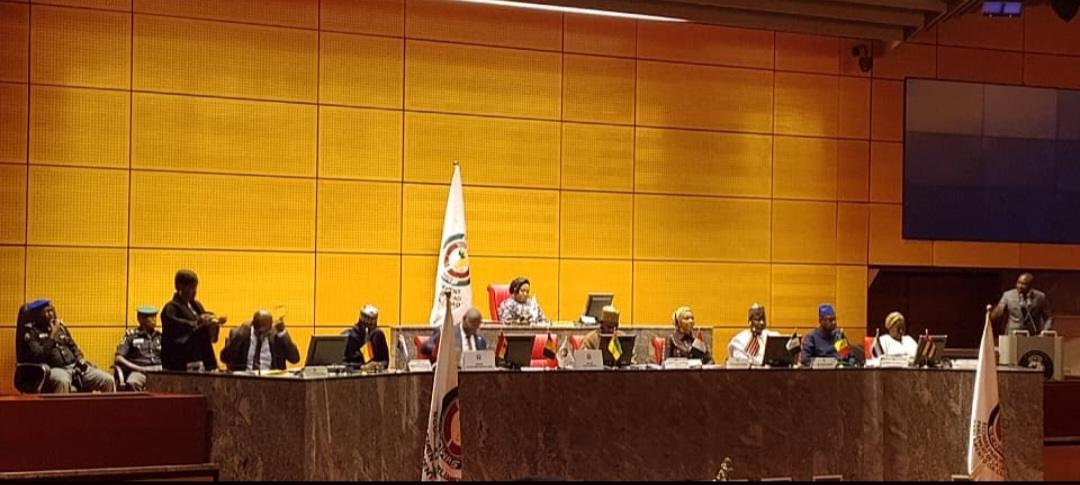
The ECOWAS Parliamentarians have been charged to promote an effective, results-oriented institution that commits to enhancing and implementing the African Continental Free Trade Area (AfCFTA) to deliver concrete trade and economic gains for West Africa.
The Speaker of the ECOWAS Parliament, Mrs. Hadja Mémounatou Ibrahima, made the call in Abuja, Nigeria, at the opening of the ECOWAS Parliament First extraordinary session and the Parliamentary seminar with the theme: “Deepening Regional Integration through the African Continental Free Trade Area (AfCFTA): Opportunities and Challenges for the Expansion of Intra-Community Trade within the ECOWAS Region.”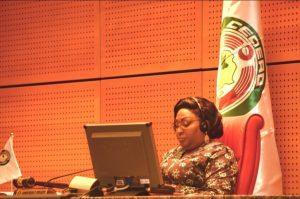
Declaring the session open, the Speaker of the ECOWAS Parliament, said there is need to renew commitment to deepen regional integration and expand intra-community trade through the African Continental Free Trade Area (AfCFTA). While move from advocacy to concrete action to enhance economic integration for the benefits of citizens.
“The AfCFTA represents a historic opportunity to make our region an integrated, prosperous, and resilient economic power. But it will only succeed if embraced by all governments, private sector, civil society, women, youth, and technical partners,” she said.
According to her with nearly fifty years of integration experience, ECOWAS is uniquely positioned to drive implementation.
“Our responsibility is clear: to make this instrument a lever for structural transformation in West Africa.ECOWAS cannot merely accompany this process. It must lead, coordinate, and harmonize it.”
While noting that the bloc has recorded an average growth rate of about five percent over the past decade and established instruments such as a Common External Tariff and regional payment systems, Ibrahima expressed concern that intra-regional trade remains below 10 percent of total trade.
“As parliamentarians, our role is decisive. We must harmonize legal frameworks, remove non-tariff barriers and obstacles to free movement, oversee the use of Community resources, and ensure that integration remains inclusive and socially progressive,” she said.
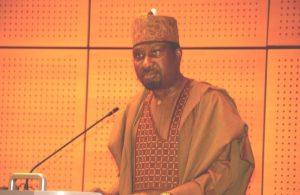
Also speaking, the Nigerian Senate President Godswill Akpabio who was represented by the First Deputy Speaker of the Ecowas Parliament Jibrin Barau, described the gathering as taking place at a defining moment for the region.
“We are gathered at a decisive hour in the history of our region an hour that tests our resolve, defines our unity, and determines our future,” he said.
Akpabio warned that democracy in parts of West Africa had been bruised by instability and constitutional disruption, while global protectionism and distant conflicts continue to disrupt food systems, fuel markets and currencies across the continent.
“In such a world, survival does not belong to the isolated. It belongs to the organized. It rewards the united. West African states to must act like a phalanx, resolute and disciplined, bound not merely by geography but by shared purpose.”
Describing the AfCFTA theme as not administrative but civilizational, the Senate President said lawmakers must go beyond rhetoric and ensure that regional commitments are backed by coherent national legislation.
“If we fail in legislative coherence, then trade agreements will remain mere parchment. If we neglect oversight, then our declarations shall dissolve into bureaucratic dust. Our task is not merely to applaud ambition. It is to enact it,” he said.
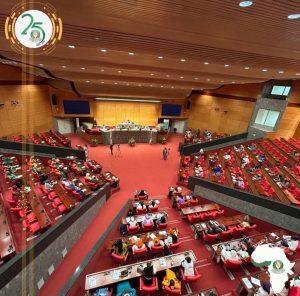
Linking security and economic growth, he stressed that integration must be measured by tangible outcomes.
“Integration shall not be measured by eloquence. It shall be measured by reduced costs, harmonized standards, swift ports, transparent customs, interoperable digital systems. Let it be measured by the young exporter whose goods cross borders without bribery or delay. Insecurity is the enemy of integration. Where instability flourishes, trade withers. Where constitutional order collapses, confidence erodes. Economic integration strengthens political stability, and political stability fortifies economic integration,” he stressed
Akpabio also called for industrialisation within the region, urging West African countries to process their own resources.
“Let us refine our minerals here, process our cocoa here, and assemble our machinery here. If we do not industrialize together, we shall remain suppliers of raw hope to the factories of others. West Africa’s youthful population presents a major opportunity if properly harnessed. If AfCFTA remains confined to conference halls, then we shall failed. It must unlock digital commerce, fintech innovation, agro-processing clusters and creative industries,” he said.
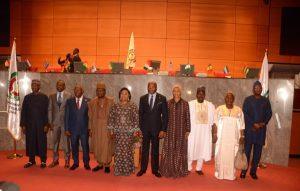
On her part, Nigeria’s Minister of State for Foreign Affairs, Ambassador Bianca Odumegu-Ojuku, stressed that, West Africa must urgently consolidate its integration agenda, strengthen institutional coherence, and respond collectively to emerging political, soc-economic, and security challenges.
“In practical terms, this entails promoting the ratification and harmonization of trade-related legislation, ensuring budgetary allocations for AfCFTA implementation, exercising oversight over executive compliance, and fostering stakeholder engagement, including the private sector, customs authorities, and civil society.”
She added that, through legislative advocacy, policy scrutiny, and parliamentary diplomacy, the ECOWAS Parliament can help eliminate regulatory bottlenecks, encourage the removal of non-tariff barriers, and ensure that Member States fully leverage the opportunities presented by the AfCFTA. Ultimately, sustained parliamentary engagement will be indispensable in translating continental aspirations into tangible economic benefits for the peoples of West Africa.
The Parliamentarians are optimistic that deliberations would generate clear orientations, actionable recommendations, and transformative resolutions to advance regional integration and shared prosperity.