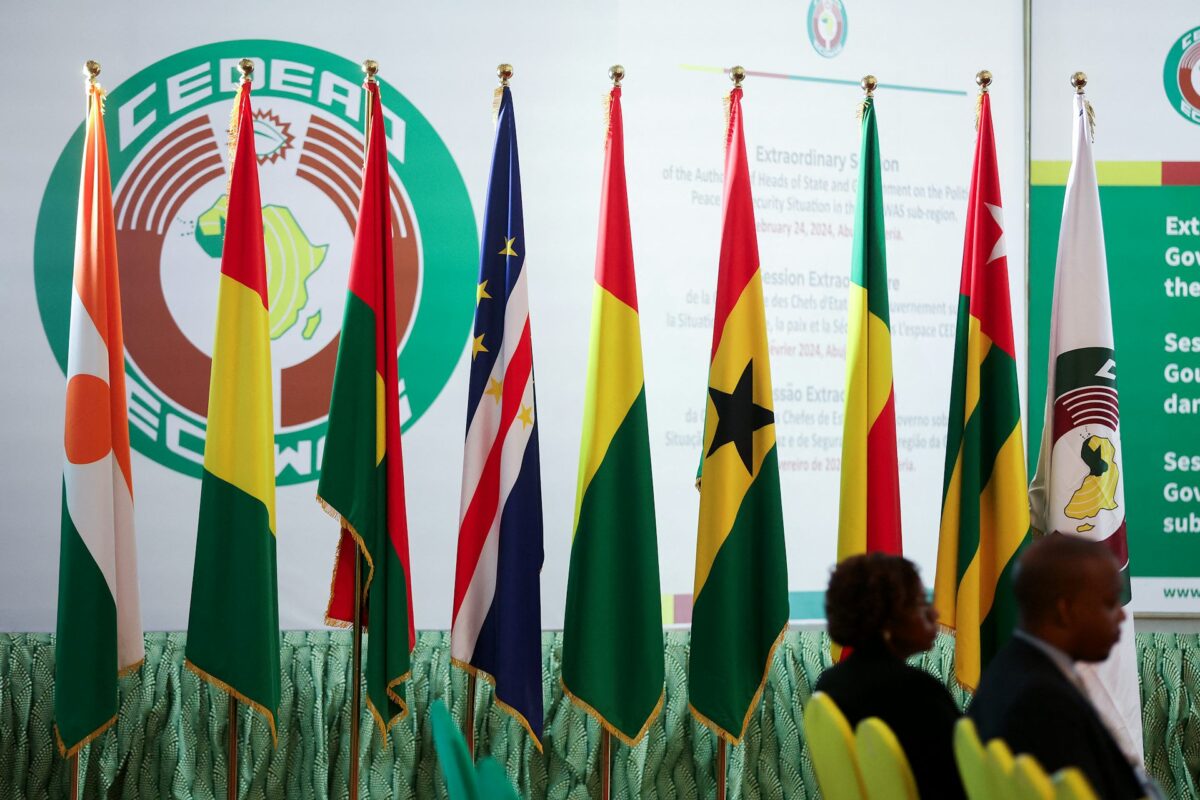
The President of the Economic Community of West African States (ECOWAS), Dr Omar Touray, says the commission has trained no fewer than 500 regional journalists in recent years.
He said this while delivering his routine Community Work Programme speech, an account of the commission’s activities, at the ongoing 2026 First Ordinary Session of the ECOWAS Parliament in Abuja.
Dr. Touray explained that the training of journalists from across the sub-region was aimed at combating misinformation and disinformation, considering the dangerous impact of fake news on peace, democracy and regional stability.
ALSO READ: ECOWAS Trains Journalists to Curb Misinformation
He said that ECOWAS had also reinvigorated its information management and strategic communication approach in a renewed effort to tackle the menace of fake news across West Africa.
“The ECOWAS Information and Communication Policy is currently being modernised to address emerging realities surrounding social media and artificial intelligence.
“ECOWAS has equally supported The Gambia in establishing the region’s first National Response Centre to Combat Misinformation, which is part of a broader effort to protect democratic institutions and public trust,” he said.
Regional Integration
While reaffirming the commission’s commitment to regional integration, he said that ECOWAS would continue to prioritise stronger cooperation, accountability and citizen-focused governance aimed at building a peaceful and prosperous West Africa.
Dr Touray assured that the regional body remained resilient toward achieving the goals of regional integration and economic development, in spite of mounting global economic and security pressures.
According to him, the region is steadily regaining economic momentum while confronting the prevailing surge of terrorism, political instability and disinformation across West Africa.
Economic Growth
He disclosed that the region’s economic growth improved from 4.3 per cent in 2024 to 4.8 per cent in 2025, with projections indicating a rise to 5.0 per cent in 2026.
“This progress stems from the reforms undertaken by Member States, improved fiscal management, declining inflation and renewed efforts to strengthen intra-regional trade under the ECOWAS integration framework.
“Member States are, therefore, encouraged not to relent in sustaining the economic reforms that are capable of driving industrial growth, job creation and regional competitiveness,” he said.
Major Interventions
Touray also highlighted ECOWAS’ major interventions in peace and security, including the intensified mediation and preventive diplomacy initiatives across troubled areas in the region.
He said that preparations for the proposed ECOWAS Regional Counterterrorism Force had reached an advanced stage amid the existential threat posed by terrorism and violent extremism across the bloc’s borders.
“ECOWAS has also strengthened maritime and border security mechanisms to address the security threats,” he said.
Diplomatic Engagement
He said ECOWAS still maintained diplomatic engagement with the breakaway Sahel countries of Burkina Faso, Mali and Niger, notwithstanding the political tensions surrounding their recent exit from ECOWAS.
Touray disclosed that more than 5.3 million vulnerable citizens across the region benefitted from the ECOWAS humanitarian interventions, particularly in conflict-affected and disaster-prone communities.
He said that ECOWAS also expanded empowerment opportunities for youths and women during the period under review and that the entrepreneurship support schemes, included academic mobility programmes and regional development initiatives targeted at reducing unemployment and social exclusion.
AP