


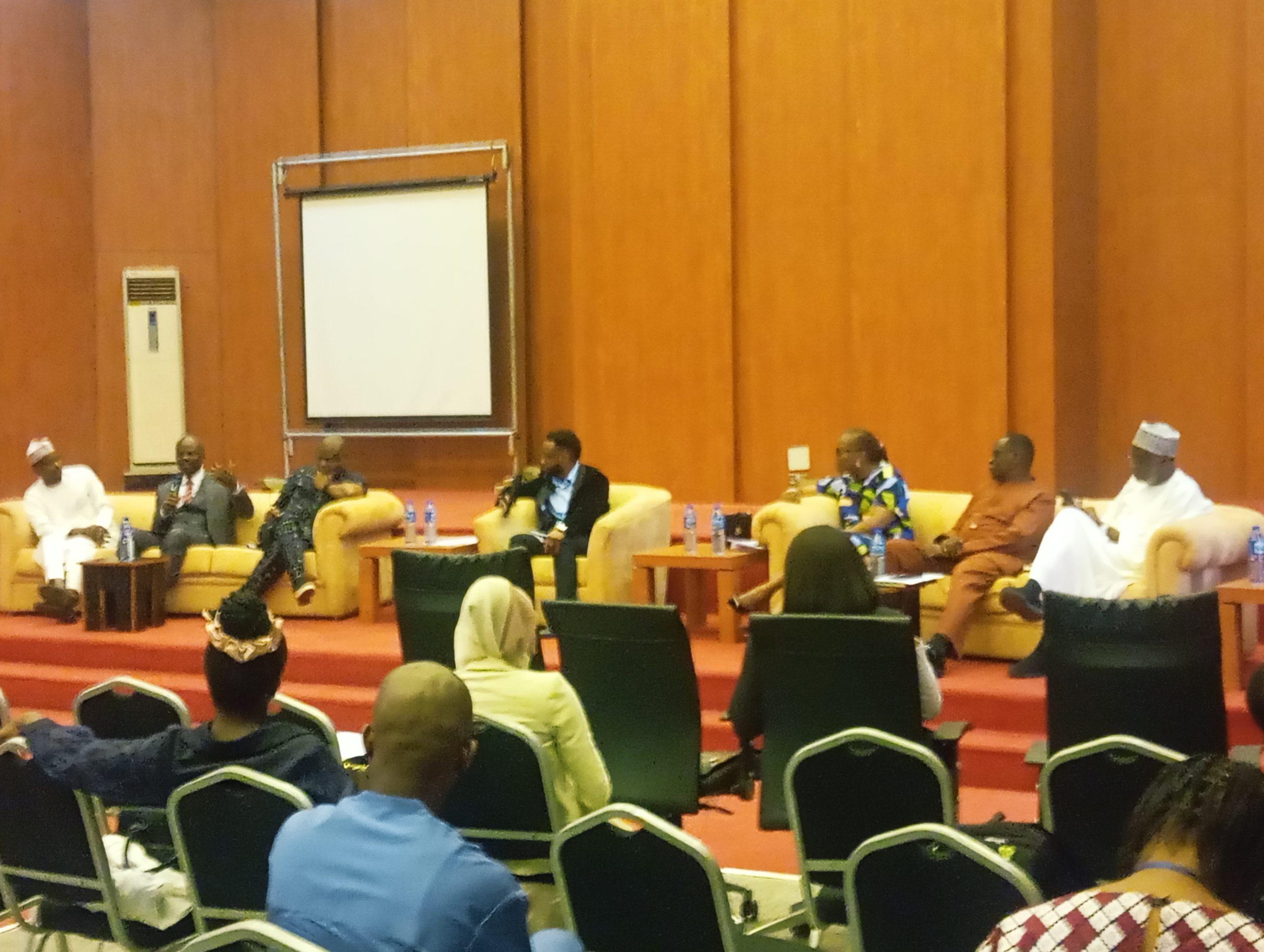
African youths have been urged to take a centre role in shaping peace, strengthening governance, and redefining leadership amid global uncertainty.
The Director of Centre for African Conflict and Development, Dr Michael Nwankpa emphasised the importance of youth involvement in creating sustainable solutions, promoting social justice, and advocating for resilience in communities.
Speaking at the National Youth Dialogue hosted by the Centre for African Conflict and Development, Dr Nwankpa said the dialogue was born out of a keen observation of an African spirit and desire to provide a much-needed intellectual space for youths in Africa to participate especially in governance and leadership.
“The dialogue today encompasses three interconnected themes, peace and security, interethnic relations and government,” he said.
Also speaking, the Executive Director of the Neem Foundation, Dr. Fatima Akilu said the world is confronting deep fractures in trust between citizens and institutions, fuelled by misinformation, economic hardship, and political polarisation.
According to her, the future of peace in the country “will be determined by the values, decisions, and leadership of young people,” rather than institutions alone.
Fatima challenged narratives that portray youth primarily as vulnerable to manipulation or violence, insisting that such vulnerabilities do not define young people.
She concluded by affirming that reconciliation and recovery are possible, but only when young people choose unity over division and actively build a shared future.
Dr Fatima Akilu was represented by Mrs Belsuk Tapgun- Alimikhena.
The director of the Institute for Peace and Conflict Resolution represented by the Deputy Director, office of the DG, Mr, Chukwuemeka Mba said that by actively participating in dialogues and decision-making processes, young people can drive innovation and foster inclusivity, ultimately contributing to a more stable and prosperous nation.
“The future of Nigeria’s peace architecture will be shaped not solely in government offices but in communities, campuses, innovative hubs, faith institutions and civic platforms where young Nigerians are actively designing leadership,” he added.