


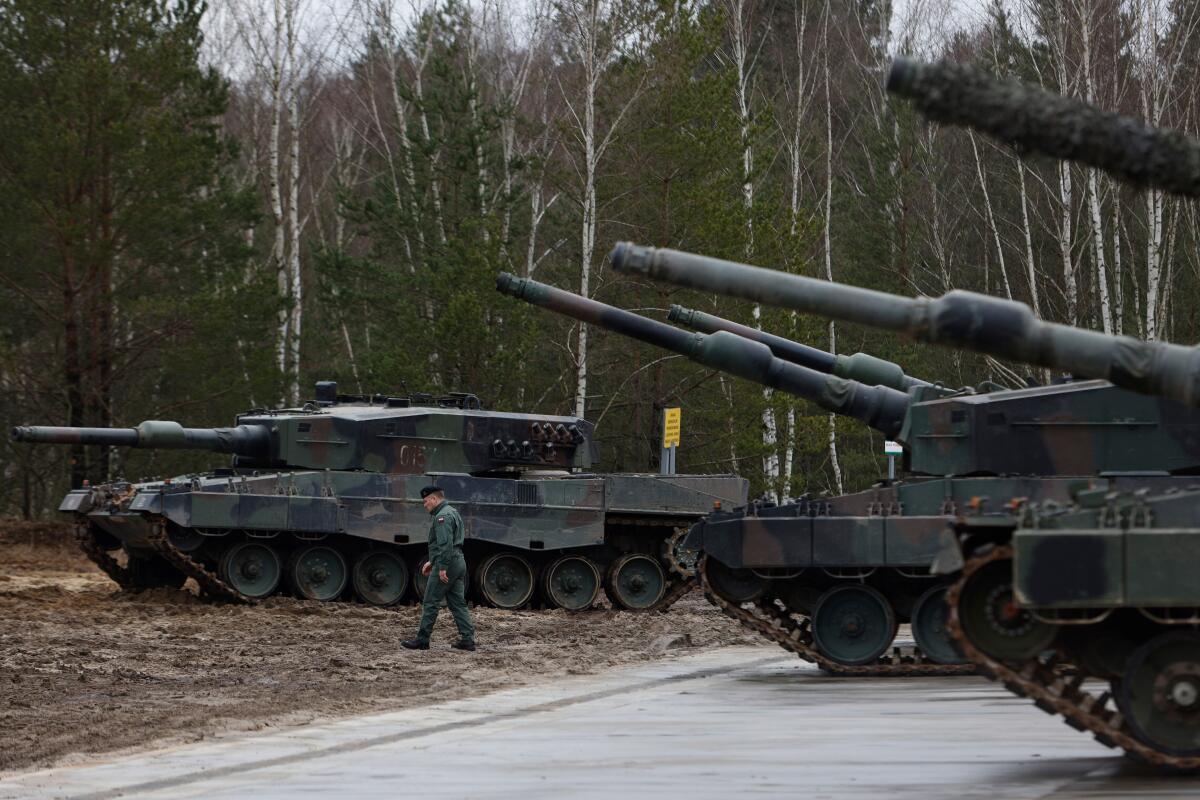
The European Commission has unveiled plans for an emergency system designed to speed up the cross-border movement of troops and military equipment in response to heightened security threats from Russia.
Under the proposal known as the European Military Mobility Enhanced Response System (EMERS), military transport operations would receive priority access to transport networks, infrastructure, and related services across the European Union during a crisis.
The plans also envisage exemptions from rules on drivers’ working hours, national notification procedures, and certain environmental or noise regulations. Rail vehicles could even be used outside their normally approved areas of operation.
EU foreign affairs chief Kaja Kallas said “fast movement of Europe’s militaries is essential for Europe’s defence.
“Defence readiness fundamentally depends on whether you can get your tanks and troops to where you need them, when you need them.
“Europe is facing unprecedented security threats. The case for better military mobility couldn’t be clearer.’’
Under the plans, military transport operations are to have priority access to transport networks, infrastructure, and related services across the European Union during a crisis.
They also foresee exemptions from rules on drivers’ working hours, national notification requirements and environmental or noise regulations. Rail vehicles could be used outside their normally approved areas of operation.
The proposal states: “In crises, when time is crucial to any response, Europe cannot afford to react slowly.”
“In such situations, we cannot rely on ad-hoc coordination and national goodwill. We must have a clear plan and a fast lane prepared for our military forces. Without it, our deterrence remains theoretical.”
EU ministers and the European Parliament are expected to scrutinise and debate the proposal. If approved, EMERS could be activated within 48 hours in the event of an emergency.
The initiative builds on existing efforts to facilitate cross-border military transport by reducing bureaucratic obstacles and improving transport infrastructure.
Currently, numerous bridges, ports, airports, and key road and rail routes remain unsuitable for large or heavy military vehicles.
NAN