

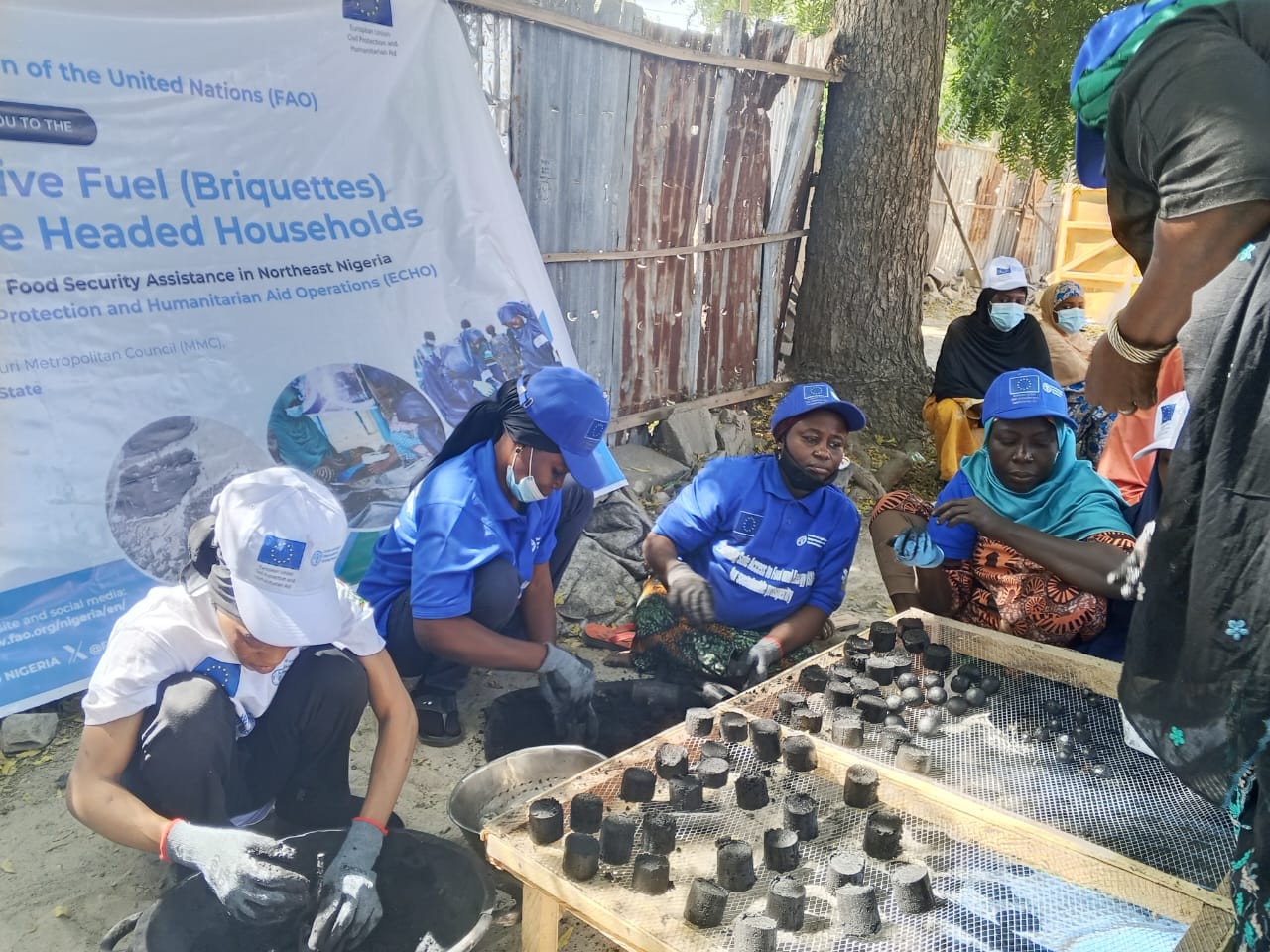
The Food and Agriculture Organisation of the United Nations (FAO), with support from the European Union Civil Protection and Humanitarian Aid Operations, has trained vulnerable women in Borno State on safer, more affordable and sustainable alternative fuel solutions.
The initiative aimed to reduce the health, environmental and economic risks associated with unsafe and unsustainable cooking practices while also strengthening household nutrition and livelihoods.
Speaking on the programme, Ali Galol from FAO explained that participants were introduced to highly efficient cooking methods designed to cut cooking time and costs, as well as minimise health risks linked to harmful traditional cooking techniques.
For women in the rural communities, cooking shouldn’t come with risk.🔥🍚
Thanks to @eu_echo, @FAO’s ongoing training is equipping female-headed households in northeast🇳🇬with skills to produce briquettes to cut reliance on firewood use, improving safety, and restoring dignity. pic.twitter.com/8u1RVpoOJK
— FAO Nigeria (@FAONigeria) February 3, 2026
He noted that prolonged exposure to smoke from unsafe fuels poses serious health challenges, particularly for women and children.
Galol added that with the support of donors such as the European Union, FAO is addressing the challenge across the entire value chain. According to him, the intervention goes beyond cooking to include production, processing and marketing, ensuring sustainability and long-term impact.
Also speaking, Professor Yakaka Bilkisu Maina from FAO also explained that the training aimed to create awareness of proper cooking methods to enhance household nutritional status.
She said participants were also trained on how to produce alternative fuel at home without purchasing it or going to the forest, thereby reducing protection risks and excessive household spending.
Professor Maina emphasised that the initiative helps women save income, improve safety, and adopt healthier cooking practices, contributing to improved well-being at the household level.